

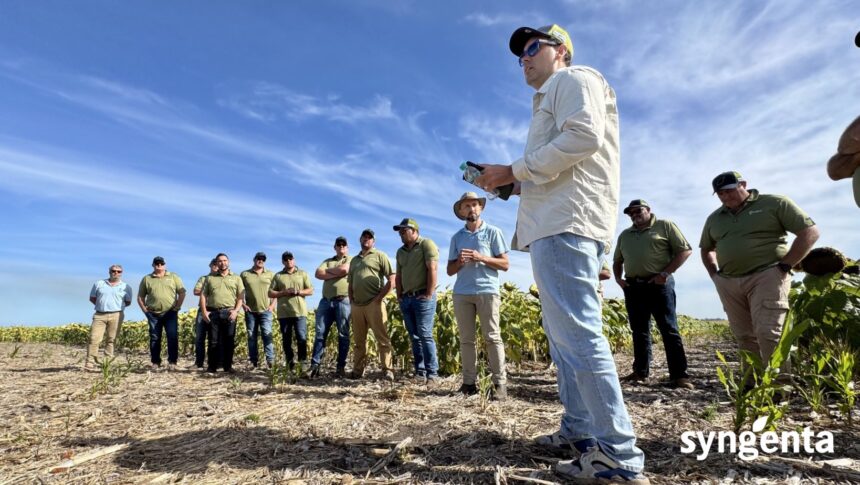
A group of South African farmers and industry representatives visited Syngenta’s Experimental Station in Camet yesterday, gaining first-hand insights into the Global Sunflower Breeding Programme. The programme focuses on developing sunflower hybrids for Argentina, other South American countries, and South Africa, combining advanced breeding techniques with extensive genetic resources. During the visit, the delegation received an overview of Argentina’s sunflower industry, including market trends, production practices, and challenges faced by growers. This introduction provided context for understanding how breeding innovations can improve yield, disease resistance, and oil quality. The engagement offered South African farmers an opportunity to compare practices across continents and learn strategies that could enhance productivity in their own sunflower crops.
The tour of experimental plots allowed the group to explore the technical aspects of sunflower cultivation, including planting density, nutrient management, and crop rotation strategies. Discussions with Syngenta researchers highlighted approaches to managing diseases such as downy mildew and rust, which can significantly impact sunflower performance. The farmers also observed trials focused on oil content, an important factor for both local and international markets. Researchers explained how the hybrids are tested under diverse environmental conditions to ensure adaptability and resilience. This hands-on exposure helped the delegation understand the practical applications of advanced genetics and how they can be integrated into South African farming systems.
Syngenta’s breeding programme provides South African farmers with access to improved sunflower hybrids that combine high yield potential with strong resistance to pests and diseases. By leveraging global research and field trials, the programme ensures that hybrids are tailored to local conditions, offering farmers reliable performance in varying climates and soils. The collaboration between researchers and growers promotes knowledge transfer, helping farmers implement best practices in planting, disease monitoring, and crop management. The exposure to international breeding standards also allows South African producers to remain competitive in global markets by producing high-quality sunflower crops. Access to these hybrids supports both commercial and emerging farmers, enhancing productivity and profitability across the sector.
The visit emphasized the importance of integrating research-driven innovations with practical farm management to strengthen the sunflower industry in South Africa. By learning from global breeding programmes, farmers can adopt hybrids that are more resilient to environmental stress and disease pressure, ultimately reducing risk and improving harvest outcomes. Interaction with industry experts also provided insights into market demands, allowing growers to align production with quality requirements for oil content and processing suitability. The hands-on experience reinforced the value of continuous learning and collaboration between farmers, researchers, and agribusinesses. Such engagement ensures that South African sunflower production benefits from cutting-edge science while remaining grounded in local farming realities.
The visit to Syngenta’s Experimental Station in Camet provided South African farmers with valuable exposure to the Global Sunflower Breeding Programme, highlighting the benefits of advanced hybrid development. The programme’s focus on yield, disease resistance, and oil quality equips farmers with tools to enhance productivity and market competitiveness. By observing experimental plots, discussing planting and disease management practices, and understanding genetic innovations, the delegation gained actionable insights for local cultivation. Access to these hybrids strengthens South Africa’s sunflower industry and supports sustainable farming practices. The initiative demonstrates how global research can be leveraged to drive practical improvements for farmers, ensuring higher yields, better crop quality, and long-term resilience.
Join 'Farmers Mag' WhatsApp Channel
Get the latest Farming news and tips delivered straight to your WhatsApp
CLICK HERE TO JOIN




