Broiler farming is one of the fastest-growing agricultural businesses in South Africa because it offers short production cycles and steady market demand. Chicken meat remains the most consumed protein source in the country, which creates consistent sales opportunities for both small and large-scale farmers. Many new farmers are attracted to broiler production because it does not require large land sizes compared to crop farming or livestock grazing. However, profit in this business depends on strict management, proper planning, and control of production costs. Understanding the full financial cycle is essential before starting a broiler farming operation in South Africa.
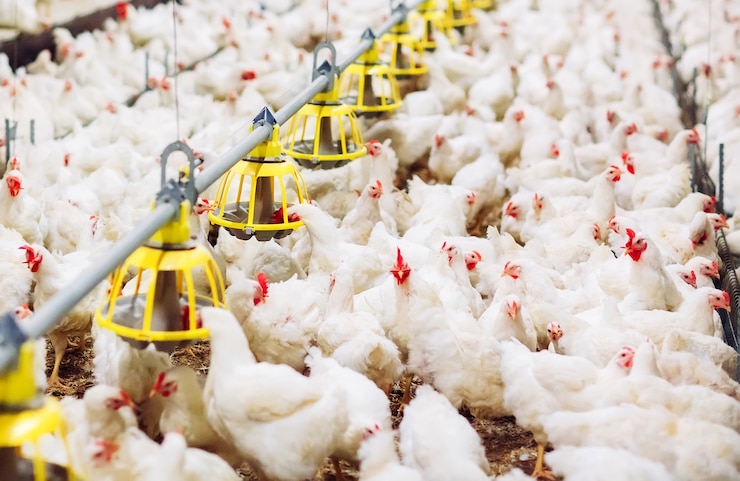
Starting a broiler farm requires careful investment in infrastructure, chicks, feed, and healthcare. A basic setup includes a well-ventilated poultry house, heating equipment for chicks, feeding systems, and clean water supply. Day-old chicks are usually purchased from certified hatcheries and require intensive care during the first weeks of growth. Feed is the largest cost in broiler farming, often accounting for up to 70 percent of total production expenses. In South Africa, farmers must also consider biosecurity measures to prevent disease outbreaks that can lead to major financial losses. Proper housing design and hygiene management directly affect survival rates and growth performance.
Profitability in broiler farming depends on production efficiency and market pricing. A standard production cycle ranges from 5 to 7 weeks, meaning farmers can complete multiple batches per year. For example, a farmer raising 500 broilers per cycle can produce several thousand birds annually if cycles are managed efficiently. If mortality rates are kept low and feed conversion ratios are optimised, profit margins can increase significantly. However, poor management, disease outbreaks or high feed prices can quickly reduce earnings. Successful farmers focus on reducing waste, improving growth rates and securing reliable buyers before production begins.
Feed management plays a central role in determining profitability in broiler farming. Broilers require starter, grower and finisher feeds at different growth stages, each with specific nutritional formulations. Poor quality feed can slow growth and increase production costs, which directly reduces profit margins. Many farmers in South Africa source feed from established suppliers such as NTK, Veejays Feeds or Astral Foods to ensure consistent quality. Efficient feeding strategies help farmers achieve optimal weight gain within the shortest possible time. This reduces overall costs and improves turnover per production cycle.
Market access is another key factor in broiler farming profitability. Farmers can sell chickens through informal markets, butcheries, supermarkets, restaurants or live bird sales in local communities. Prices vary depending on weight, demand and location, which means farmers must understand their target market before production begins. Some farmers secure contracts with retailers or food outlets to ensure stable income streams. Others rely on direct sales to consumers, which can offer higher profit margins but requires stronger marketing efforts. Strong relationships with buyers help farmers reduce losses and avoid unsold stock at the end of each cycle.
Risk management is essential in maintaining long-term profitability in broiler farming. Diseases such as Newcastle disease and avian influenza can cause sudden losses if biosecurity measures are weak. Vaccination programmes, controlled farm access and proper sanitation are critical for preventing outbreaks. Climate conditions also affect production, especially extreme heat or cold, which can stress birds and reduce growth rates. Farmers must invest in proper ventilation, temperature control and clean water systems to maintain healthy production environments. Insurance and financial planning can also help reduce the impact of unexpected losses.
A typical small-scale broiler farm in South Africa can generate profits depending on scale, efficiency and market conditions. For example, raising 1,000 birds per cycle can produce steady income if mortality is low and feed costs are controlled. However, profit margins vary widely and are often influenced by input prices and market competition. Farmers who scale gradually, reinvest profits and improve production systems tend to achieve better long-term results. Training, record-keeping and continuous learning are important for improving decision-making and farm performance. Successful broiler farming requires both technical knowledge and strong business management skills.
Broiler farming remains one of the most accessible agricultural opportunities for emerging farmers in South Africa due to its fast production cycle and high demand. However, profitability is not guaranteed and depends heavily on planning, discipline and efficient management practices. Farmers who control costs, maintain bird health and secure reliable markets are more likely to succeed in the long term. Access to quality feed, veterinary support and proper infrastructure also plays a major role in overall performance. With the right approach, broiler farming can become a sustainable and profitable agribusiness that supports food security, job creation and rural economic development across the country.
Join 'Farmers Mag' WhatsApp Channel
Get the latest Farming news and tips delivered straight to your WhatsApp
CLICK HERE TO JOIN