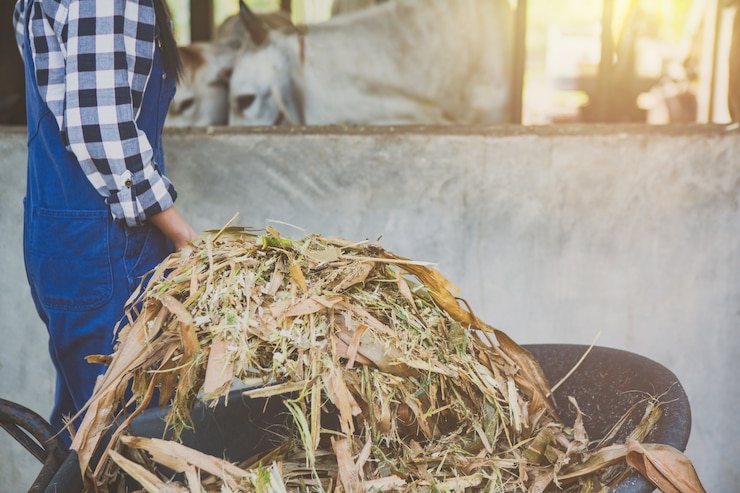
Feeding cattle sustainably is a major concern for farmers, especially during dry seasons or periods of feed scarcity. One of the most effective strategies is the use of crop residues, which include stalks, leaves, husks, and other by-products left after harvesting. Crop residues provide a cost-effective source of roughage and nutrients, reduce waste, and contribute to circular farming systems. By integrating crop residue management into livestock feeding programs, farmers can improve herd health, reduce feed costs, and maintain productivity year-round.
Crop residues such as maize stalks, wheat straw, sorghum stalks, and bean haulms are widely available on farms after harvest. While these residues are generally lower in protein and energy than fresh forage, they can form the basis of a balanced diet when supplemented with minerals, protein concentrates, or fodder legumes. Farmers can chop, crush, or ensile residues to improve digestibility and palatability for cattle. Ensiling, in particular, preserves nutrients and allows farmers to store feed for use during dry periods, reducing dependence on purchased feed.
Proper preparation of crop residues is key to sustainable feeding. Mechanical processing such as chopping or milling increases surface area, making residues easier for cattle to digest. Adding molasses, urea, or other supplements can improve nitrogen content and enhance fermentation if residues are ensiled. Farmers are encouraged to monitor the quality of crop residues, as mould or poor storage can reduce nutritional value and potentially harm livestock. Integrating residue management with pasture rotation also ensures that cattle receive a consistent diet while avoiding overgrazing.
Using crop residues as cattle feed has environmental and economic benefits. It reduces farm waste, lowers the need for commercial feed, and decreases pressure on grazing lands. By recycling nutrients from crop residues back into the livestock system, farmers create a closed-loop approach that supports soil fertility and reduces input costs. In addition, crop residue feeding can help small-scale and emerging farmers maintain herd growth during lean seasons without compromising animal health.
To maximise the benefits, farmers should combine residues with other feed sources such as fresh pasture, hay, or fodder crops. Planning feed allocation according to livestock class, age, and production stage ensures that nutritional needs are met. Farmers should also keep records of residue quantities, quality, and supplementation strategies to evaluate performance and optimise feeding practices over time.
Using crop residues to feed cattle sustainably is a practical, cost-effective, and environmentally friendly strategy. When properly prepared and supplemented, residues can support herd health, improve productivity, and reduce dependence on external feed sources. By integrating residue management into broader farm planning, farmers can maintain sustainable livestock systems, enhance resource efficiency, and contribute to long-term agricultural resilience.
Join 'Farmers Mag' WhatsApp Channel
Get the latest Farming news and tips delivered straight to your WhatsApp
CLICK HERE TO JOIN