

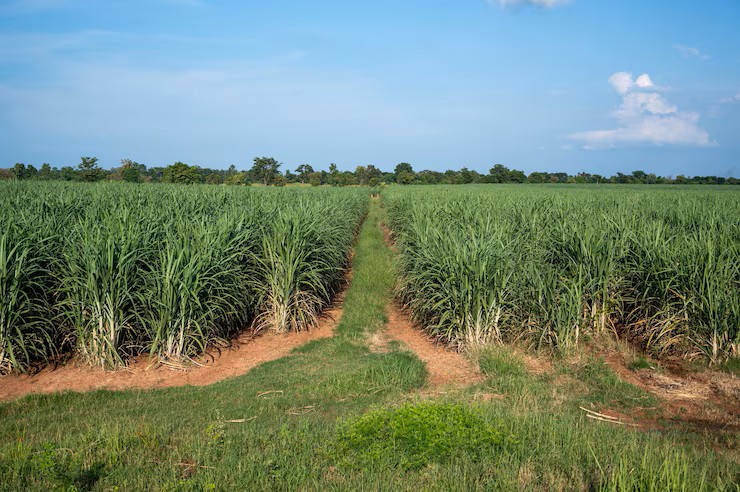
The decision to keep the Health Promotion Levy, also known as the sugar tax, unchanged in the 2026 Budget has been cautiously welcomed by SA Canegrowers. While the absence of an increase offers short-term relief, industry leaders stress that the levy continues to place heavy pressure on sugarcane growers already operating in a fragile environment. Higgins Mdluli, chairman of SA Canegrowers, made it clear that the industry needs urgent and coordinated support rather than temporary pauses in policy changes. The sugar sector plays a critical role in sustaining rural economies across South Africa, supporting thousands of jobs and livelihoods. Without decisive intervention, growers face mounting uncertainty as multiple challenges converge at once.
At the centre of the crisis is the potential liquidation of Tongaat Hulett, a key player in the country’s sugar value chain. The company operates as a cornerstone miller and runs South Africa’s only standalone white sugar refinery, making its stability vital for growers. Business rescue practitioners have already filed for provisional liquidation, with a court hearing set for 27 February 2026. If liquidation proceeds without funding, production would halt immediately, leaving about 18,000 of the country’s 28,000 sugarcane growers without access to functioning mills. This would be especially damaging with the 2026 milling season approaching in April, a critical period for harvesting and processing. The loss of milling capacity would disrupt the entire supply chain, from farm to market.
The pressure on the industry is compounded by a sharp rise in imported sugar, which continues to undercut local producers. Between January and December 2025, South Africa imported nearly 200,000 tons of sugar from countries such as Brazil, India and Thailand. This marks a dramatic increase compared to just 7,113 tons imported in 2021, highlighting the scale of the shift in the domestic market. These imports often enter under conditions that local producers view as unfair, driven by outdated tariff protections and global market distortions. As a result, local sugar prices have weakened, reducing revenue for both farmers and millers. This trend threatens the long-term viability of domestic production, even though South Africa has the capacity to meet its own sugar demand.
SA Canegrowers argues that the combination of policy pressure and market challenges is pushing the industry toward a breaking point. The Health Promotion Levy, despite its public health intentions, has had significant economic consequences for the sector. According to industry estimates, the tax led to the loss of 16,000 jobs and R2 billion in revenue within its first year. Since then, stakeholders claim there has been no clear evidence showing that the levy has reduced obesity or non-communicable diseases. In this context, the continued application of the tax adds strain to an industry already dealing with operational instability and declining margins. Growers are calling for a reassessment of the levy as part of a broader strategy to stabilise the sector.
Industry leaders are now urging stronger alignment across government departments, including National Treasury and the Department of Trade, Industry and Competition. Mdluli stressed that this is a critical moment that requires unified action to prevent the collapse of a key agricultural sector. The risks extend beyond farmers, affecting rural employment, food security, and the broader economy. If current trends continue, South Africa could become increasingly dependent on imported sugar, weakening local production capacity. This would have lasting consequences for agricultural sustainability and economic resilience in rural areas.
SA Canegrowers has reaffirmed its commitment to engaging constructively with government to find balanced and sustainable solutions. The organisation believes that policy adjustments, fair trade protections, and industry support can help restore stability and protect livelihoods. The decision to hold the sugar tax steady provides a brief window for dialogue, but it does not address the deeper structural issues facing the sector. With the future of Tongaat Hulett uncertain and imports continuing to rise, urgent action is required to safeguard the industry. A coordinated response can still preserve South Africa’s sugarcane sector, but delays will increase the risk of long-term damage to farmers, workers, and rural communities.
Join 'Farmers Mag' WhatsApp Channel
Get the latest Farming news and tips delivered straight to your WhatsApp
CLICK HERE TO JOIN




