The Eastern Cape Department of Agriculture, in partnership with the Agricultural Research Council, has implemented programmes that provide farmers and youth with practical training and knowledge to strengthen local agriculture. Initiatives such as the rice skills transfer programme at Orange Grove Farm in the OR Tambo District and the Agroecology Farmers’ Day at Phawu AgriPark in Willowvale offer opportunities to improve productivity, build climate resilience, and promote sustainable practices. These events combine hands-on demonstrations, field trials, and discussions that help farmers test new techniques, manage crops effectively, and increase yields. By bringing together farmers, youth interns, researchers, and stakeholders, the programmes foster collaboration and knowledge exchange, ensuring that innovations are adapted to local conditions. The initiatives also focus on youth empowerment and food security, providing participants with skills that support both economic growth and community well-being.
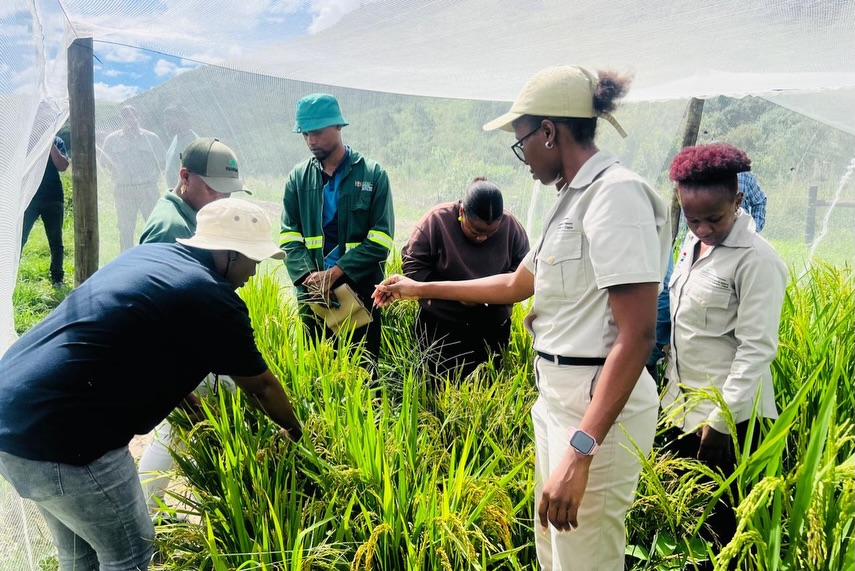
At Orange Grove Farm, the rice skills transfer programme, led by Ms Makhaga, teaches participants how to identify ripe rice, apply proper harvesting techniques, handle grain safely, and store rice to reduce post-harvest losses. This hands-on training links theory with practical application, helping farmers and interns gain confidence in managing crops effectively. Similarly, the Agroecology Farmers’ Day exposes participants to sustainable agricultural practices, including soil conservation, integrated pest management, use of organic inputs, and climate-smart techniques like drought-tolerant crops, mulching, and efficient irrigation. Both programmes emphasize approaches that maintain productivity while protecting natural resources, ensuring long-term resilience against environmental challenges such as erosion, unpredictable rainfall, and soil degradation.
Collaboration between farmers and researchers plays a key role in these initiatives. Scientific findings on nutrient management, crop diversification, pest control, and agroforestry are presented alongside local knowledge and experiences, creating a two-way dialogue that makes recommendations practical and contextually relevant. Stakeholders, including government officials and extension officers, provide guidance on support programmes, funding opportunities, and training resources, helping farmers expand production capacity and adopt sustainable practices. Demonstrations of techniques like crop rotation, intercropping, and soil enrichment allow participants to see real-world results, bridging the gap between research and everyday farming operations. This integration strengthens both smallholder and commercial farming systems across the Eastern Cape.
Food security and community resilience are central goals of both programmes. By promoting practices that improve yields, reduce post-harvest losses, and protect the environment, the initiatives help farming communities maintain stable food production. Participants are encouraged to adopt methods that increase efficiency while safeguarding soil health and water resources, ensuring that food production can continue for future generations. The programmes also highlight ways to strengthen local value chains through storage, processing, and distribution, enabling farmers to maximize returns and reduce waste. By equipping farmers with practical skills and knowledge, these initiatives contribute directly to economic growth, sustainable agriculture, and climate adaptation across the province.
The combined impact of the rice skills transfer programme and the Agroecology Farmers’ Day demonstrates the potential of practical, science-driven agricultural initiatives to transform farming in the Eastern Cape. Through training, demonstrations, and collaboration, farmers gain the tools and confidence needed to increase productivity, adopt sustainable practices, and build climate resilience. These initiatives support healthier soils, higher quality crops, and reduced environmental impact while fostering youth involvement and long-term food security. By connecting farmers, researchers, and stakeholders, the Eastern Cape is laying a strong foundation for a resilient and prosperous agricultural sector, ensuring that the province’s farming communities thrive today and into the future.
Join 'Farmers Mag' WhatsApp Channel
Get the latest Farming news and tips delivered straight to your WhatsApp
CLICK HERE TO JOIN