

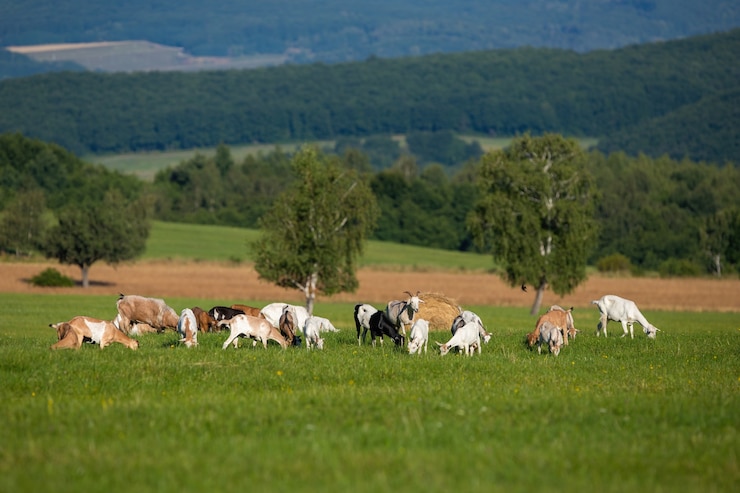
Integrated farming systems (IFS) combine crop production, livestock rearing, and agroforestry to maximise productivity, improve sustainability, and reduce risks on farms ranging from 50 to 100 hectares. By diversifying activities, farmers can generate multiple income streams, enhance soil health, and optimise the use of natural resources. This approach supports resilient agricultural enterprises, reduces dependence on external inputs, and increases long-term profitability for both commercial and emerging farmers.
In an integrated system, crops and livestock are strategically managed to complement each other. Livestock provide manure for fertilising crops, while crop residues serve as feed. Rotation of pastures and crops improves soil fertility and breaks pest and disease cycles. For example, planting legumes alongside cereal crops can fix nitrogen in the soil, supporting both crop growth and forage availability for livestock. Careful planning ensures that grazing patterns do not degrade land, while crop selection maximises production across seasons.
Agroforestry is a critical component of integrated farming systems. Trees are planted alongside crops or pastures to provide shade, reduce wind erosion, and improve water retention. Fruit and nut trees can generate additional revenue, while timber or fuelwood offers long-term economic value. Trees also create habitats for beneficial insects and wildlife, contributing to pest control and biodiversity. On 50–100 hectare farms, agroforestry can be implemented in strips, along boundaries, or as buffer zones, integrating seamlessly with crop and livestock operations.
Management of an integrated system requires careful monitoring and planning. Farmers must track soil fertility, water use, livestock nutrition, and crop yields to maintain balance and optimise outputs. Record keeping, rotational grazing, and crop rotation schedules help prevent overgrazing, soil depletion, and pest buildup. Modern tools, including farm management software, GPS mapping, and remote sensing, can assist in monitoring fields and livestock, making it easier to implement complex integrated practices efficiently.
Financial and environmental benefits of integrated farming systems are significant. Multiple income streams reduce vulnerability to market fluctuations or climate shocks, while soil conservation and nutrient recycling improve long-term productivity. Farms that combine crops, livestock, and agroforestry are better equipped to withstand drought, pests, and disease outbreaks. Additionally, integrated systems contribute to sustainable land use, carbon sequestration, and enhanced food security, making them an increasingly attractive model for farmers looking to scale operations between 50 and 100 hectares.
Integrated farming systems offer a holistic approach to agriculture by combining crops, livestock, and trees in a way that maximises productivity and sustainability. On medium-sized farms, careful planning and management can create resilient enterprises that generate multiple income streams, protect the environment, and strengthen local food systems. Adopting IFS practices positions farmers to meet the challenges of modern agriculture while ensuring long-term profitability and ecological balance.
Join 'Farmers Mag' WhatsApp Channel
Get the latest Farming news and tips delivered straight to your WhatsApp
CLICK HERE TO JOIN




