

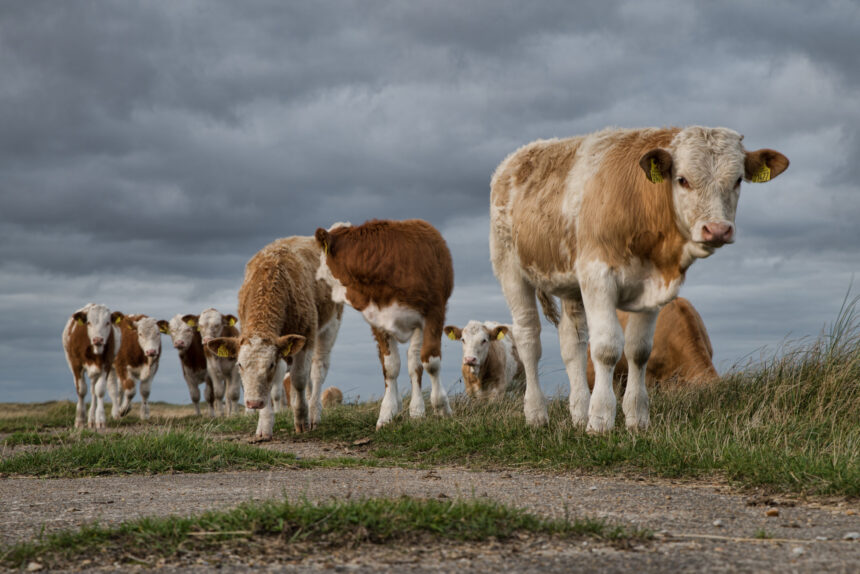
South African beef farmers operate in a diverse and often unpredictable agricultural environment where efficiency directly affects profitability. You deal with challenges such as drought, fluctuating feed costs, and disease pressure, all of which can limit herd performance. Crossbreeding provides a practical way to improve productivity without significantly increasing input costs. By combining the strengths of different breeds, you can produce cattle that grow faster, reproduce more efficiently, and survive under tough conditions. This approach has become a key strategy for both emerging and commercial farmers who want consistent results across seasons. When applied with clear goals, crossbreeding helps you build a resilient herd that matches your farm conditions and market demands.
Crossbreeding works by mating animals from different breeds to capture hybrid vigour, also known as heterosis, which improves overall performance. You will often see gains in fertility, calf survival, and growth rates when compared to purebred systems. For example, combining indigenous breeds like Nguni cattle with exotic breeds such as Angus cattle allows you to balance adaptability with meat quality. Indigenous breeds bring traits like heat tolerance, tick resistance, and the ability to thrive on low-quality grazing. Exotic breeds contribute faster weight gain and improved carcass characteristics that appeal to formal markets. This combination gives you a more efficient animal that performs well in South African conditions while still meeting buyer expectations.
You can apply different crossbreeding systems depending on your farm size, resources, and long-term goals. A simple two-breed cross is often the starting point, where you mate cows of one breed with bulls of another to improve specific traits. More advanced systems, such as three-breed or rotational crossbreeding, help you maintain hybrid vigour across generations while producing your own replacement heifers. Many South African farmers also use terminal crossbreeding, where all offspring are sold for beef and none are kept for breeding. In this system, you might use adapted cows like Nguni or Brahman cattle crossed with high-growth sires such as Charolais cattle. This method focuses on maximizing growth rate and feed efficiency, which is ideal if you supply feedlots or commercial processors.
Breed selection should always align with your environment and production system because not all cattle perform equally across South Africa’s varied climates. In hotter and drier regions, you benefit from breeds that can handle heat stress and parasites while maintaining body condition. In higher rainfall areas with better grazing, you can introduce breeds that excel in growth and carcass quality without compromising too much on adaptability. You also need to consider your target market, whether you sell weaners, finished cattle, or breeding stock. Matching your crossbreeding strategy to market requirements ensures that your animals meet weight, fat cover, and meat quality standards. This alignment helps you secure better prices and reduces the risk of producing animals that do not meet buyer specifications.
Effective management is essential if you want crossbreeding to deliver consistent results over time. You need clear breeding objectives and a structured plan that guides which animals you mate each season. Record keeping plays a critical role because it allows you to track performance indicators such as calving rates, weaning weights, and growth rates. Without data, you cannot identify which crosses perform best on your farm. Bull selection also has a major impact, since one bull can influence a large portion of your herd’s genetics. Choosing bulls with proven performance and adaptability ensures that you move your herd in the right direction each breeding cycle.
Many farmers make the mistake of crossbreeding without a defined system, which leads to inconsistent animals and reduced market value. Random mating often produces cattle with unpredictable traits, making it harder to manage and sell your herd. You should avoid introducing too many breeds at once because this complicates management and reduces uniformity. It is more effective to start with a simple system and refine it over time based on performance data. You also need to maintain discipline in your breeding program by culling underperforming animals and retaining those that meet your goals. Consistency in your approach leads to steady genetic improvement and better long-term returns.
Crossbreeding remains one of the most effective tools available to South African beef farmers who want to improve efficiency and resilience. It allows you to combine the best traits from different breeds while adapting to local conditions and market demands. When you apply the right system, select suitable breeds, and manage your herd carefully, you can achieve higher productivity with fewer inputs. This approach helps you stay competitive in a demanding industry where margins are often tight. With a clear plan and consistent execution, crossbreeding can transform your herd into a more profitable and sustainable operation.
Join 'Farmers Mag' WhatsApp Channel
Get the latest Farming news and tips delivered straight to your WhatsApp
CLICK HERE TO JOIN




