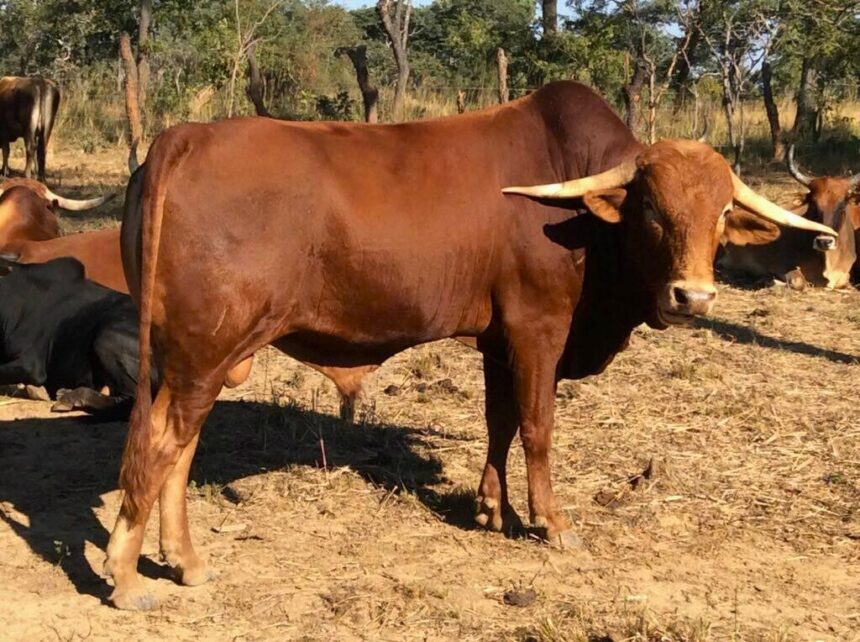
Afrikaner cattle are one of South Africa’s oldest and most iconic indigenous breeds, with a history that dates back centuries. Originating from the Khoikhoi people, these cattle were selectively bred for resilience, adaptability, and utility in harsh environments. Known for their striking red coat and large, drooping ears, Afrikaner cattle have played a central role in South African agriculture, providing both meat and draught power. Over generations, they have become a symbol of sustainable livestock farming, prized for their ability to thrive in arid and semi-arid regions.
The breed’s strengths lie in its adaptability, fertility, and longevity. Afrikaner cattle can withstand high temperatures, sparse grazing, and diseases that often affect imported breeds. Their natural resistance to parasites and ability to reproduce efficiently make them a reliable choice for small-scale and commercial farmers alike. Afrikaner cows have a high calving rate and produce healthy calves even under challenging conditions. These qualities reduce production costs, improve herd sustainability, and support consistent beef output over the long term.
In addition to hardiness, Afrikaner cattle are known for their meat quality. Their beef is lean, tender, and flavoursome, making it increasingly attractive to local and international markets. Modern breeding programs have focused on enhancing these traits while maintaining the breed’s natural resilience. Crossbreeding Afrikaner cattle with other beef breeds, such as Bonsmara or Brahman, has produced hybrid herds that combine growth rate, carcass quality, and adaptability. This strategy allows farmers to meet market demands without compromising the breed’s inherent strengths.
Afrikaner cattle also have cultural and historical significance. They have been integral to South African communities for centuries, used for draught power, milk, and ceremonial purposes. Today, breeders and agricultural organizations actively promote the conservation of purebred Afrikaner cattle. Registries and stud programs ensure the breed’s genetic integrity, while awareness campaigns educate new farmers about its value in sustainable and profitable beef production.
In modern agriculture, Afrikaner cattle remain highly relevant. Their resilience to climate variability, low maintenance requirements, and superior fertility make them an ideal choice for both commercial and emerging farmers. They support food security by providing a reliable source of high-quality beef and contribute to rural livelihoods through sustainable livestock farming. With continued breeding programs and strategic crossbreeding, Afrikaner cattle are set to remain a cornerstone of South African beef production for generations to come.
Join 'Farmers Mag' WhatsApp Channel
Get the latest Farming news and tips delivered straight to your WhatsApp
CLICK HERE TO JOIN