

South Africa’s thicket biome, once a dense and green landscape, has been heavily degraded over the past century. More than 80% of the ecosystem has been lost, mostly due to overgrazing and agricultural expansion. Today, only fragmented patches remain across the Eastern and Western Cape.
Efforts to restore this land are gaining international recognition. On 4 December 2025, the United Nations Environment Programme (UNEP) named South Africa’s thicket restoration a World Restoration Flagship. The initiative aims to restore 800,000 hectares by 2030, combining modern science, indigenous knowledge, and community-driven approaches.
At the heart of the restoration is spekboom, a hardy, drought-resistant succulent tree. Spekboom provides multiple benefits for farmers: it stabilises soil, retains moisture, regulates soil temperature, and improves grazing potential. Each hectare can sequester about six tonnes of CO₂ per year, offering an additional opportunity for income through carbon credits.
“Spekboom is an ecosystem engineer,” explains Nick Hamp-Adams, programme manager at Return to Thicket. “It creates shade, improves soil quality, and provides habitat for wildlife, all of which support more productive land over time.” Farmers can also benefit directly from its edible and medicinal properties.
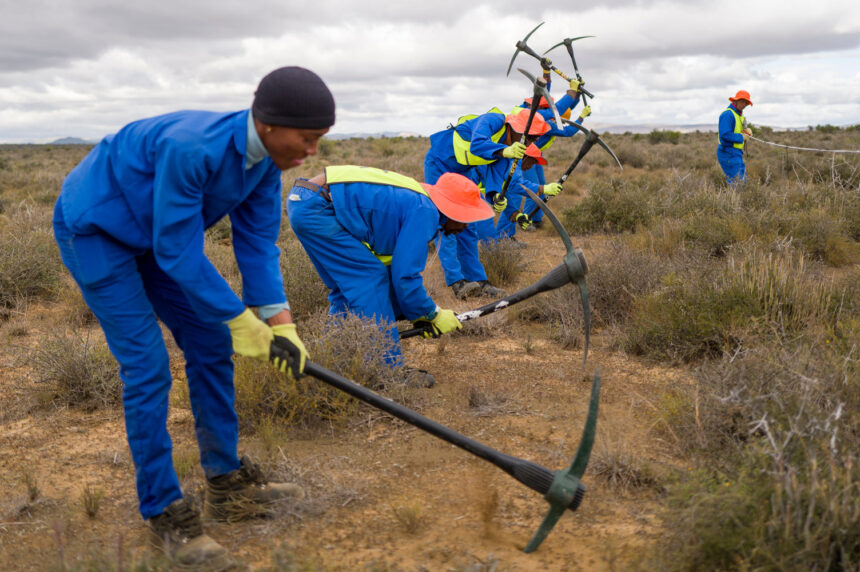
The project is labour-intensive, creating jobs for local communities while training them in sustainable land management. Activities include planting and caring for spekboom seedlings, monitoring soil health, and managing grazing practices. For farmers, these practices translate into lessons on soil conservation, rotational grazing, and restoring degraded fields.
Restoration also has practical implications for crop and livestock production. Healthier soils retain water better, support more nutritious forage, and reduce erosion. Farmers who integrate spekboom and thicket restoration into their land management can increase long-term productivity while building resilience against droughts and climate change.
Indigenous knowledge is central to the project. Local farmers and communities are involved in deciding where and how to plant, how to manage grazing sustainably, and how to protect young plants from overbrowsing. This ensures restoration is practical, locally relevant, and sustainable.
Carbon markets present another potential benefit. Restored spekboom thickets could generate revenue for participating farmers through verified carbon credits, providing long-term financial incentives alongside ecological and agricultural gains.
For South African farmers, the thicket restoration project offers a dual opportunity: to improve land productivity and to participate in a growing green economy. By integrating spekboom into farm management, producers can restore degraded land, boost grazing quality, protect soil, and create additional income streams.
The UNEP recognition underscores the project’s global significance, but for farmers, the message is clear: restoration is not just about conservation—it is about practical, profitable, and sustainable farming. With careful planning and community involvement, South Africa’s thicket can once again become a productive, thriving landscape.
Join 'Farmers Mag' WhatsApp Channel
Get the latest Farming news and tips delivered straight to your WhatsApp
CLICK HERE TO JOIN




