

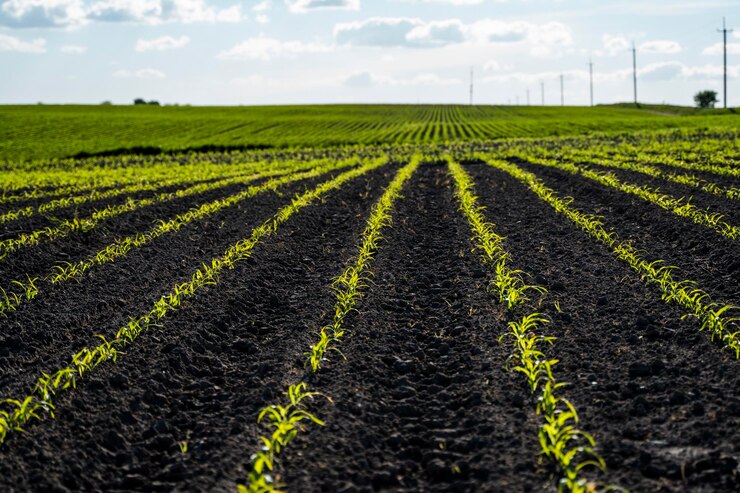
As South Africa enters the 2025-26 summer crop season, early reports from the Agricultural Conditions Assessment Committee indicate favourable rainfall and temperature patterns, offering potential for strong yields. Experts, however, caution that favourable weather alone does not guarantee success. Senior agriculturalist Kobus van Zyl stresses that farmers must focus on the factors they can control, with timing accounting for nearly 80% of those decisions.
“Planting season may be ending in some regions and just beginning in others, but the real work has only just started,” says Van Zyl. “Producers have little control over the weather, so it is essential to manage the factors they can influence effectively.”
Van Zyl has outlined a post-planting checklist to help farmers secure their yields. He emphasizes sustainability and safety, noting that responsible nutrient management, soil conservation, and safe handling of agrochemicals are critical. “Sustainability ensures the next generation has equal or better opportunities to farm successfully. It includes safe disposal of containers, maintaining compliance with environmental regulations, and managing inputs responsibly,” he explains.
Assessing crop emergence and stand establishment is another priority. Farmers should monitor fields for even emergence, identify crust formation, and address early growth issues. Crusted soil can prevent seedlings from breaking through, negatively affecting final stand counts. Corrective measures such as light rotary cultivation may be needed, and early detection allows for timely replanting when necessary. Healthy seeds with strong germination and proper storage conditions are essential for early crop vigour, giving crops an advantage over weeds.
Monitoring local weather conditions remains crucial despite generally favourable rainfall. Excessive rain can limit field access and stunt root growth, while dry spells or high winds can cause erosion and crop damage. Accurate local forecasts guide fertiliser applications, pest control, and irrigation scheduling, helping farmers avoid unnecessary risks.
Routine field scouting supports early problem detection. Farmers should track plant vigour, pest and disease symptoms, and field variability. Satellite imagery can highlight underperforming areas, enabling targeted intervention. Weed, pest, and disease control should follow promptly to protect young crops and maintain yield potential.
Equipment maintenance and calibration are essential before applying fertilisers or chemicals. Incorrect application can damage young crops and waste inputs. Nutrient timing is equally critical, with top dressings and supplements applied at the correct growth stages. For irrigated crops, fertigation ensures efficient uptake, while dryland producers should synchronise applications with rainfall.
Water management is another key factor. Over-irrigation can cause nutrient leaching and root stress, while under-irrigation reduces yield potential. Routine soil moisture assessments ensure crops receive adequate water without waste. Soil health monitoring supports root development and microbial activity, with practices aimed at preserving organic matter and avoiding soil degradation.
Finally, financial tracking and input management are vital. Van Zyl advises aligning input use with field potential to optimise returns. Resources should be redirected from low-performing areas to high-potential fields, ensuring both economic and soil sustainability. Grain SA notes that assessing crop profitability before planting, with guidance from input suppliers, helps farmers make informed choices about which crops to grow.
By following this checklist, South African farmers can leverage favourable conditions while controlling critical management factors, improving the likelihood of a productive and profitable 2025-26 summer cropping season.
Join 'Farmers Mag' WhatsApp Channel
Get the latest Farming news and tips delivered straight to your WhatsApp
CLICK HERE TO JOIN




