

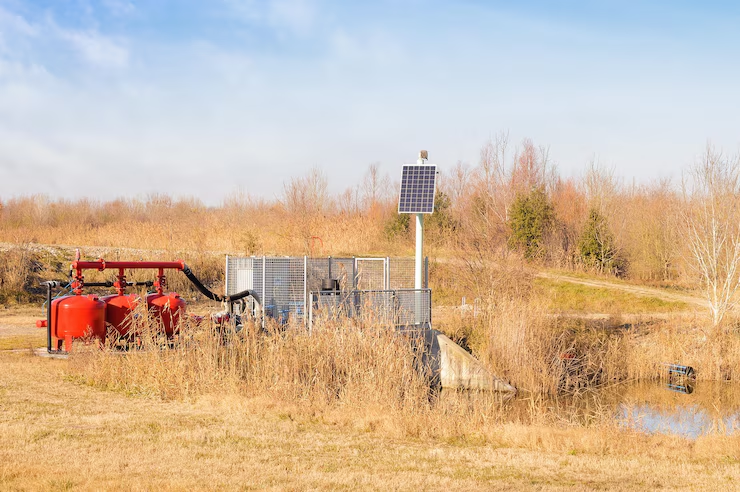
Load shedding has become a major challenge for farmers who rely on consistent electricity to run their operations. Unplanned power cuts interrupt irrigation, affect temperature control in poultry houses, and cause spoilage in storage facilities. Every hour without power can result in lost income and wasted production. To stay productive, farmers must invest in dependable backup power systems. The two most practical solutions are generators and inverters. Both provide electricity during outages, but they differ in how they operate, their costs, and their long-term benefits. Understanding these differences helps you choose the right option for your farm’s specific energy needs.
1. Assess Your Power Needs
Start by calculating your farm’s average daily energy consumption. Identify critical operations that cannot stop during outages. For instance, poultry farms rely on ventilation systems, while dairy farms depend on milking machines and refrigeration units. Knowing your wattage requirements helps you select the right capacity for your backup solution.
2. Generators: Reliable but Costly to Maintain
Generators provide direct power from fuel combustion. They come in diesel, petrol, and hybrid types.
Advantages:
- High Power Output: Suitable for large farms running heavy machinery or multiple irrigation pumps.
- Instant Backup: Automatically starts within seconds of an outage when connected to an automatic transfer switch.
- Long Runtime: Can run continuously as long as fuel is available.
Disadvantages:
- High Operating Costs: Fuel prices fluctuate, and maintenance requires regular servicing.
- Noise and Emissions: Generators are loud and contribute to carbon emissions, making them less eco-friendly.
- Shorter Lifespan: Engines wear out faster with frequent use.
Best for: Large-scale or commercial farms that need uninterrupted power for industrial equipment.
3. Inverters: Silent and Sustainable but Limited in Power
Inverters convert stored battery power into electricity. They work best when paired with solar panels or grid charging during low-demand hours.
Advantages:
- Clean Energy: Ideal for farms adopting renewable energy systems.
- Low Maintenance: Fewer moving parts mean reduced servicing costs.
- Silent Operation: Suitable for residential farm setups or livestock areas sensitive to noise.
- Automatic Switching: Power transition during outages is smooth and immediate.
Disadvantages:
- Limited Power Capacity: Not suitable for high-load machines or multiple pumps.
- High Initial Cost: Batteries and solar panels increase setup expenses.
- Shorter Backup Time: Batteries discharge faster during heavy use.
Best for: Small to medium-sized farms focusing on lighting, security systems, and light machinery.
4. Hybrid Systems: A Balanced Solution
Many modern farms combine both systems. Generators serve as a backup for high-load operations, while inverters handle daily energy needs. This setup reduces fuel use and ensures power continuity. Installing solar panels with an inverter also cuts long-term electricity costs and improves energy independence.
5. Key Factors When Choosing a Backup System
- Power Requirements: Match system size to essential loads.
- Fuel Availability: Choose generator types that match accessible fuel sources.
- Budget: Weigh upfront costs against operating expenses.
- Maintenance Capacity: Consider whether you can maintain engines or manage battery systems.
- Noise Sensitivity: Choose quieter systems near livestock or homes.
Protecting your farm from load shedding starts with a clear understanding of your power priorities. Generators offer strength and reliability for heavy operations, while inverters deliver quiet, efficient energy for smaller systems. Combining both in a hybrid setup can provide a balanced, cost-effective solution. Every farm has unique energy demands, so match your system to your workload and available resources. Reliable backup power not only prevents losses but also ensures continuous production, better resource management, and long-term sustainability for your farm.
Join 'Farmers Mag' WhatsApp Channel
Get the latest Farming news and tips delivered straight to your WhatsApp
CLICK HERE TO JOIN




