South Africa’s foot-and-mouth disease (FMD) challenge has highlighted the importance of strong veterinary services, reliable livestock identification and practical support for farmers. At the same time, rural livestock communities need sustained investment to improve animal health, strengthen production and build more profitable farming businesses. The Livestock Community Upliftment Project is addressing these priorities through a R67 million, three-year partnership between the FirstRand Empowerment Foundation, Kagiso Trust and Red Meat Industry Services (RMIS). The initiative brings together private funding, industry resources and government veterinary services to respond to immediate animal health needs while supporting long-term rural development. Its first results include the employment of 20 young Animal Health Technician graduates, more than 250,000 cattle vaccinations against FMD, over 260,000 livestock traceability tags distributed and the start of a three-year development programme in rural communities in the Eastern Cape.
The project was initially established to support the growth of rural livestock communities, but the partners recognised the need to contribute to South Africa’s response to the FMD crisis. The disease has placed pressure on farmers, rural communities, veterinary services and the wider red meat value chain. Controlling its spread requires coordinated vaccination efforts, access to veterinary expertise and reliable information about livestock. These needs can be difficult to address in communities where farmers face limited access to animal health services and transport. The project responds by combining immediate disease-control support with interventions designed to strengthen livestock production over time. This dual approach recognises that protecting animals today and improving farming livelihoods for the future are closely connected.
One of the project’s key achievements has been the employment of 20 recently graduated Animal Health Technicians, most of whom were unemployed before joining the programme. The technicians have been equipped with vehicles, protective gear and medical supplies to help them carry out their work in the field. They operate under the guidance of State Veterinary Services and provide additional capacity in support of the mass FMD vaccination campaign. Four technicians are deployed in Gauteng, eight in the Free State and eight in North West. This arrangement places trained personnel closer to farming communities and supports the delivery of animal health services where additional capacity is needed. It also creates practical employment opportunities for young graduates entering the animal health profession.
In the first six months of their deployment, the technicians vaccinated more than 230,000 cattle against FMD across more than 720 communities. The wider project reports that more than 250,000 cattle vaccinations have now been administered, reflecting further progress in the campaign. Their work has also extended beyond FMD vaccination, with technicians supporting government rabies campaigns and other animal health initiatives. This additional contribution demonstrates how trained personnel can strengthen broader veterinary efforts when they work alongside government services. For farmers, accessible vaccination support is important because disease outbreaks can threaten livestock health and disrupt farming activities. For the technicians, the programme offers valuable field experience, exposure to veterinary professionals and an opportunity to develop their careers.
RMIS CEO Dewald Olivier said the partnership works because each organisation contributes different resources and capabilities. Private funding creates opportunities for action, industry helps mobilise people and resources, while State Veterinary Services provide veterinary oversight and determine where additional capacity is required. This division of responsibilities allows the project to support government-led animal health work while drawing on the strengths of its private and industry partners. It also highlights the importance of coordination when responding to a disease that affects farmers across different provinces and communities. Effective FMD control depends on more than the availability of vaccines. It requires trained personnel, appropriate oversight, access to livestock and cooperation between farmers and the institutions responsible for animal health.
The project also recognises that vaccination records and livestock identification are essential parts of effective disease management. Farmers need reliable ways to identify their animals and demonstrate their vaccination status when dealing with buyers and other stakeholders. More than 260,000 industry traceability tags have already been distributed through the initiative, with a target of one million tags. Participating communities are registered on the RMIS Traceability Platform, while vaccinations carried out by the project’s Animal Health Technicians are digitally recorded through the free RMIS app. This allows farmers to access vaccination information and retain records that can support engagement with livestock buyers. It also helps connect rural livestock producers to wider traceability systems within the red meat value chain.
Traceability can provide benefits that extend beyond the immediate FMD response. Accurate animal identification and digital records help improve the visibility of livestock and provide useful information about their health history. These records can support farmers when demonstrating vaccination status and engaging with formal markets. They also contribute to the wider industry’s ability to monitor livestock movements and strengthen animal health management. For rural farmers, participation in traceability systems can help address some of the information gaps that limit their involvement in formal livestock markets. The project’s distribution of tags and registration of communities therefore form an important part of its longer-term development approach.
The second major part of the Livestock Community Upliftment Project focuses on building stronger rural livestock enterprises over three years. Participating communities will receive ongoing training, mentorship and practical animal husbandry support. The programme also includes genetic improvement interventions intended to improve herd quality and productivity. These activities are designed to help farmers strengthen their livestock management practices and improve the performance of their farming operations. Rather than providing a single intervention and ending its involvement, the project aims to work with communities over an extended period. This recognises that improvements in livestock production require time, practical learning and continued support.
The first communities to begin this development journey are in Nyaniso in the Eastern Cape. The area includes a cluster of five communities representing 203 farmers and more than 2,200 cattle. During the first three months, training and mentorship activities began, while 30 bulls were delivered for genetic improvement ahead of the breeding season. The introduction of these bulls forms part of the project’s effort to strengthen the quality and productivity of participating herds. However, access to improved breeding animals is linked to a wider process of farmer development. Communities must demonstrate their commitment to learning and growth through the training process before receiving bulls for genetic improvement.
This approach connects genetic improvement with better animal husbandry and livestock management. Improved genetics can contribute to stronger herd performance, but the benefits depend on how animals are managed and supported. Farmers also need knowledge of animal health, breeding practices and general herd management to make effective use of improved breeding stock. The project’s combination of training, mentorship and animal health support is intended to address these connected needs. Over time, the partners expect improved genetics and production practices to raise herd quality and productivity, creating greater value for farmers. The programme’s three-year structure provides an opportunity to build knowledge and strengthen farming practices as communities progress through the development process.
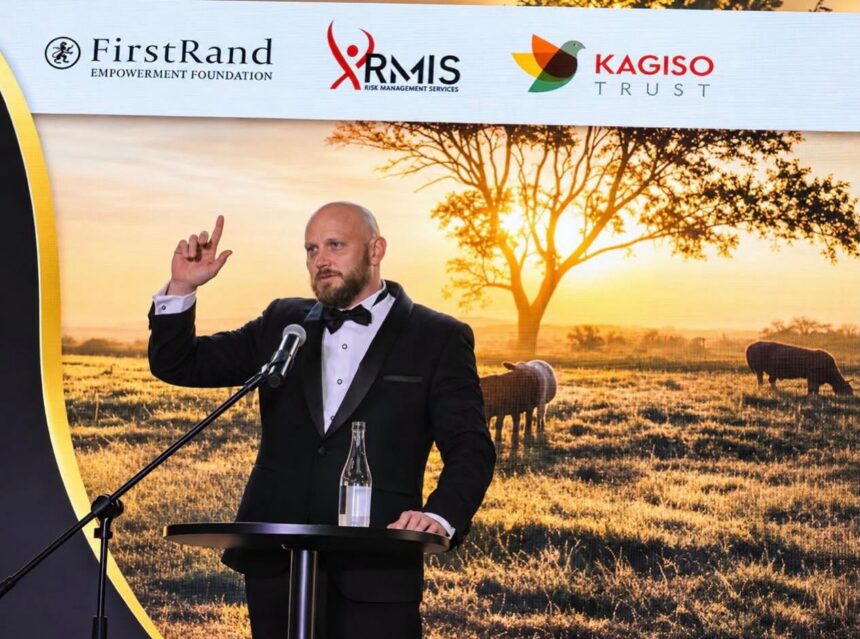
The partnership’s progress was celebrated at the Impact Dinner, which brought together government representatives, partner organisations, industry stakeholders and members of the media. RMIS CEO Dewald Olivier opened the event and reflected on the importance of collaboration within South Africa’s red meat industry. RMIS COO Dr Phillip Oosthuizen presented the project’s progress, milestones and expected outcomes. FirstRand Foundations CEO Kone Gugushe and Kagiso Trust CEO Dr Mankodi Moitse also shared their perspectives on the partnership and its broader development impact. Their contributions highlighted the role of cooperation in connecting funding, skills and opportunities with the needs of rural communities.
Dr Moitse emphasised that partnerships can create lasting opportunities when they connect people with the resources and skills needed to shape their own futures. His comments reflected the project’s wider purpose of supporting human capacity alongside livestock development. The employment of young Animal Health Technician graduates creates opportunities for practical experience and career growth, while the community programme supports farmers through training and mentorship. These activities show how investment in agriculture can address both production challenges and broader development needs. By supporting young professionals and rural livestock producers at the same time, the initiative links employment, animal health and community participation within one programme.
The Livestock Community Upliftment Project demonstrates how private funding, industry capacity and government veterinary services can work together to address immediate and long-term challenges in agriculture. Its early achievements include the deployment of 20 young technicians, extensive cattle vaccination, the distribution of traceability tags and the launch of a structured development programme in Nyaniso. The next stage will involve continuing the animal health work, expanding traceability participation and supporting rural communities through training, mentorship and genetic improvement. The project’s success will depend on sustained cooperation and the ability to turn these interventions into lasting improvements for farmers. By combining FMD response measures with practical livestock development, the R67 million partnership is working to strengthen rural farming communities and support a more inclusive South African red meat industry.
Join 'Farmers Mag' WhatsApp Channel
Get the latest Farming news and tips delivered straight to your WhatsApp
CLICK HERE TO JOIN