South African farmers face growing challenges, from land ownership and access to water rights to changing weather patterns and rising production risks. Yet, despite these pressures, farmers across the country continue to demonstrate determination, innovation and commitment to strengthening the agricultural sector. These realities were at the centre of the Phahama Grain Phakama (PGP) Ukukhula Conference and Day of Celebration, held at NAMPO Park on 8 October 2026. The event brought together farmers, agricultural leaders, government representatives and industry partners to discuss the future of South African agriculture while recognising producers whose hard work has delivered outstanding results. Combining important discussions on agricultural development with a celebration of farmer achievements, the conference highlighted the importance of supporting producers at every stage of their farming journeys.
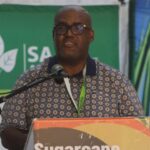
The keynote address was delivered by newly appointed Minister of Agriculture Willie Aucamp, whose participation coincided with his first 100 days in office. He emphasised the central role agriculture plays in South Africa’s economy and its contribution to food security, employment, rural development and regional trade. Agriculture supports much more than the production of food for household consumption. It also supplies essential raw materials for animal feed, agro-processing and manufacturing while creating economic opportunities across rural and urban communities. Aucamp stressed the importance of farmers to the country’s food system, stating, “Without the farmer, we will not have food on our tables.” His message reinforced the need to recognise farmers as essential contributors to economic growth and national development.
South Africa’s maize industry received particular attention during the Minister’s address. Aucamp highlighted that the country’s annual maize production generally fluctuates between 10 million and 16 million tonnes, depending on prevailing climatic conditions. This production plays a vital role in meeting domestic demand while supporting exports to regional markets. Maize is an important staple food in South Africa and a key ingredient in animal feed production. Its availability also influences the wider agricultural economy, including livestock production and food manufacturing. Aucamp acknowledged the significant contribution of commercial grain producers, recognising their role in maintaining agricultural output and supporting the country’s economic activity.
Land ownership emerged as one of the most important issues discussed at the conference. Aucamp drew attention to the challenges facing farmers who cultivate government-owned land under lease arrangements without having secure ownership of the properties they farm. Referring to his recent discussions with African Farmers’ Association of South Africa (AFASA) president AJ Mthembu, the Minister raised an important question about agricultural investment. How can farmers be expected to invest in infrastructure, equipment and long-term production improvements when they do not own the land on which they operate? Secure land tenure can give farmers greater confidence to make long-term decisions, improve their operations and develop sustainable agricultural businesses. Without sufficient security, producers may hesitate to commit significant capital to improvements that could take years to generate returns.
In response to this challenge, Aucamp and AFASA developed a proposal to identify 100 farmers in each province who currently lease government-owned agricultural land. The initiative would assess the viability of their farming operations and explore opportunities to strengthen their land tenure arrangements. Under the proposal, the Minister of Land Reform would assist in facilitating the transfer of the land into the names of qualifying farmers. This approach could provide greater ownership security and create opportunities for long-term agricultural investment. However, the proposal would require the necessary assessments and government processes before any transfers could take place. If implemented successfully, the initiative could contribute to farmer development, strengthen agricultural enterprises and support broader efforts to expand participation in commercial agriculture.
Land ownership was not the only structural challenge discussed during the conference. Access to water rights remains an important concern for farmers who need reliable water supplies to maintain production and manage seasonal risks. Water availability directly influences planting decisions, crop development and the ability of agricultural businesses to remain productive during dry periods. Delegates also considered the growing impact of adverse climatic conditions on farming operations. Unpredictable rainfall, droughts and extreme weather events can affect yields, increase production costs and place pressure on farm finances. Discussions around the El Niño phenomenon provided an opportunity for farmers to improve their understanding of climate-related risks and consider strategies for managing uncertainty in agricultural production.
Risk management formed another important part of the conference programme. Farmers operate in an environment where weather conditions, input prices, market movements and other factors can influence the financial performance of their businesses. Understanding these risks and preparing for potential disruptions can help producers protect their investments and improve long-term sustainability. During the afternoon, parallel breakaway sessions provided practical insights into agricultural insurance and fertilisation strategies. Agricultural insurance can help farmers manage certain financial losses arising from covered production risks, while effective fertilisation strategies support soil fertility and crop performance. These discussions gave delegates an opportunity to explore practical approaches that could strengthen their farming operations. The sessions also encouraged knowledge-sharing between producers facing different agricultural conditions and operating at different stages of development.
Beyond the formal discussions, the PGP Ukukhula Conference provided an important platform for networking and collaboration. Farmers had opportunities to exchange experiences, learn from one another and engage directly with agricultural stakeholders. Such interactions are valuable because producers often face similar challenges but have different experiences and approaches to solving them. Sharing practical knowledge can help farmers identify opportunities to improve productivity, manage risks and make better-informed decisions. The conference also demonstrated the importance of cooperation between government, agricultural organisations, financial institutions and private-sector partners. Effective partnerships can help address some of the barriers that prevent emerging farmers from developing sustainable and competitive agricultural enterprises.
The Day of Celebration brought a special focus to farmers whose achievements demonstrate what dedication and perseverance can accomplish. The annual awards recognised outstanding producers across different levels of agricultural development, from subsistence farming to emerging commercial enterprises. Each category highlighted a different stage of the agricultural journey and acknowledged the effort required to establish and maintain a productive farming operation. The awards also recognised the importance of mentorship, education, institutional support and access to agricultural knowledge. For many emerging farmers, recognition provides encouragement to continue developing their businesses despite financial, technical and environmental challenges. The 2026 winners and finalists represented the diversity and potential of South African grain production.
Manqoba Nkosi from Donkerhoek in Mpumalanga was named the 2026 Subsistence Farmer of the Year. Nkosi farms on communal land in the area where he was born, producing maize and raising cattle. He completed his N6 studies in Farm Management and has been a Grain SA member since 2016. His farming journey has included significant challenges, particularly after strong winds flattened his maize crop earlier in the year. Rather than abandoning the crop, Nkosi and his wife harvested it by hand and ultimately achieved a yield of five tonnes per hectare. Their achievement demonstrated remarkable determination and the importance of persistence when agricultural production faces unexpected setbacks. His story also highlighted the contribution of family support and practical farming knowledge to the success of small-scale agricultural enterprises. The other finalists in this category were Raymond Nhlabathi from Mpuluzi in Mpumalanga and Hombile Nombebe from Qumbu in the Eastern Cape.
Lubabalo Jordan from Mthatha in the Eastern Cape received the Smallholder Farmer of the Year award. His journey into agriculture followed a career as an electrical engineer in Cape Town and Ireland before he returned to farming. Jordan now cultivates maize on 13 hectares of communal land and also keeps livestock. His transition into agriculture reflects the opportunities available to individuals who choose to apply their skills and experience to farming. He acknowledged Grain SA’s important role in encouraging and supporting his development as a producer. Beyond his own farming activities, Jordan serves as chairperson of his local study group, helping fellow farmers share information and learn from one another. His involvement demonstrates how farmer leadership and collective learning can contribute to stronger agricultural communities. Mfaniseni Mnculwane from eMangweni in KwaZulu-Natal and Simon Motau from Sehlakwane in Limpopo were the runners-up in this category.
Kopano Lentswetshipi from Mooifontein in North West was named Potential Commercial Farmer of the Year. He cultivates maize and sunflower on 200 hectares of communal land, demonstrating the potential for communal land to support larger agricultural operations. His interest in farming developed through the knowledge and practical skills passed down by his father. Lentswetshipi also recognised Grain SA’s contribution to his farming development and benefits from mentorship through the Phahama Grain Phakama programme. In addition to crop production, he keeps livestock, which he primarily markets through auctions and a nearby abattoir. His farming activities illustrate the value of combining crop production and livestock enterprises to develop a broader agricultural business. Jeffrey Hlele from Ixopo in KwaZulu-Natal and Vincent Ntuli from Springbokpan in North West were named as the category’s runners-up.
Masiu Farming Enterprise from Senekal in the Free State received the 2026 New Era Commercial Farmer of the Year award. Led by Vincent Masiu, the family farming business continues to build on the agricultural foundation established by his father, OJ. Masiu combines formal agricultural education with practical farming experience, holding an honours degree in Agricultural Management. During the current season, the enterprise planted 480 hectares of maize and 70 hectares of sunflower, demonstrating its growing production capacity. Masiu credited Grain SA with playing a significant role in his personal and professional development, describing the organisation as the most influential contributor to his farming journey. He also expressed his enthusiasm for agriculture during his acceptance address, making it clear that farming is both his profession and his passion. His achievement highlights the value of combining intergenerational farming knowledge, education and institutional support to build sustainable commercial agricultural enterprises. Masinga Farming from Swartberg in KwaZulu-Natal and Obakeng Mogogane from Mooifontein in North West were the other finalists.
The recognition of Masiu Farming Enterprise included a particularly significant prize. Vincent Masiu received a brand-new John Deere 5075E tractor as part of his award. Agricultural machinery plays an important role in improving operational efficiency, particularly for commercial producers managing large areas of land. Access to suitable equipment can help farmers complete essential activities such as land preparation and other production tasks more efficiently. For a growing farming enterprise, additional machinery can also support future expansion and improve the ability to manage seasonal operations. The tractor represented a valuable recognition of Masiu’s achievements and provided practical support for the continued development of the family business.
The conference also recognised producers who had achieved significant production milestones through the High-Tonnage Club. This recognition programme celebrated farmers who reached substantial grain production targets, highlighting their productivity and contribution to the agricultural sector. The 500-tonne achievers were Lebohang Khitleli, Masenga Farming, Mdibani Masilela, Nkwe Metswamere and Vincent Ntuli. The producers recognised in the 1 000-tonne category were Tau Itsebeletse, Kevinot Farming, Ngobile Matlaba and Zoliwe Nombewu. Victor Mafoko and William Raphoto received recognition for reaching 1 500 tonnes. Masiu Farming Enterprise and Mpho Munyai achieved the 2 000-tonne milestone, while Zacharia Legasy and Obakeng Mogogane were recognised for reaching 3 500 tonnes. These achievements demonstrated the contribution of productive farming enterprises across the Eastern Cape, Free State and North West.
The awards also reflected the importance of recognising farmers at different stages of development. Subsistence producers, smallholder farmers and emerging commercial enterprises often operate under different financial and production conditions. However, each plays a role in strengthening food production, supporting rural livelihoods and developing agricultural capacity. Recognition across these categories helps highlight the progress farmers can make when they have access to knowledge, mentorship and appropriate support. It also gives successful producers an opportunity to share their experiences with others who may be working towards similar goals. By celebrating achievements across the agricultural spectrum, PGP reinforces the importance of inclusive farmer development.
The 2026 event also marked an important leadership transition for Phahama Grain Phakama with the introduction of Khomotso Mashiloane as the organisation’s newly appointed chief executive officer. His appointment represents a new chapter for the organisation and its ongoing farmer development work. Mashiloane thanked the PGP board members for their confidence in him and the trust they had placed in his leadership. He described the appointment as a privilege and expressed his commitment to serving the organisation and leading its team. His professional background includes experience in both the public and private sectors, with agriculture and farmer development remaining consistent themes throughout his career. This experience provides a foundation for his new responsibilities at PGP.
In outlining his approach to the role, Mashiloane emphasised the importance of understanding farmers’ needs before strengthening existing programmes and initiatives. He described his approach in three words: “learn, understand, and strengthen.” This philosophy recognises that effective farmer development requires an understanding of the different circumstances facing producers. Farmers need support that responds to their actual production challenges, business objectives and stages of development. Strengthening existing programmes also requires ongoing engagement, practical knowledge and cooperation with industry stakeholders. Mashiloane’s appointment therefore comes at an important time as the agricultural sector continues to seek effective ways to support emerging producers and strengthen commercial farming opportunities.
Partnerships remained another important feature of the conference. PGP acknowledged the contributions of organisations that support its farmer development initiatives and help strengthen agricultural enterprises. These partners included Absa, Bayer, Kagiso Trust, Kgodiso Development Fund, Khula, Land Bank, Land Bank Insurance, Maize Trust, Oil and Protein Seeds Development Trust, Pannar Seed, SA Winter Cereal Industry Agency, Santam, South African Cultivar and Technology Agency and Standard Bank of South Africa. Their involvement reflects the importance of collaboration between agricultural organisations, financial institutions, development partners and private-sector businesses. Farmer development often requires more than technical training, as producers also need access to finance, insurance, agricultural inputs, market opportunities and business support. Partnerships can help bring these different forms of assistance together and create stronger conditions for agricultural growth.
The presence of Minister Willie Aucamp, AFASA president AJ Mthembu, PGP chairperson Jeremia Mathebula and Grain SA chief executive officer Dr Tobias Doyer further highlighted the importance of cooperation within the agricultural sector. Their participation reflected the shared interest in addressing challenges that affect farmers across different production systems and provinces. The event also welcomed delegates from across South Africa, creating opportunities for discussions between producers with different backgrounds and experiences. Traditional attire added colour and cultural significance to the celebrations, reinforcing the importance of recognising the people and communities behind the country’s agricultural production. The participation of farmers from different regions demonstrated the national reach of the PGP initiative and the value of bringing agricultural communities together.
The Phahama Grain Phakama Ukukhula Conference and Day of Celebration offered an important reminder that the future of South African agriculture depends on both addressing structural challenges and recognising the people who produce the country’s food. Discussions about land ownership, water rights, climate risks, agricultural insurance and fertilisation highlighted the practical issues that require continued attention. At the same time, the achievements of Manqoba Nkosi, Lubabalo Jordan, Kopano Lentswetshipi and Vincent Masiu demonstrated the determination and potential of farmers operating at different levels of development. The appointment of Khomotso Mashiloane also introduced new leadership at a time when effective farmer support remains essential. Through its focus on knowledge-sharing, partnerships, mentorship and recognition, PGP continues to provide an important platform for agricultural development. The 2026 Ukukhula Conference celebrated more than individual farming achievements. It recognised the contribution of farmers to food security, economic growth and rural livelihoods while reinforcing the need to create an agricultural environment in which producers can invest, grow and build sustainable businesses for generations to come.
Join 'Farmers Mag' WhatsApp Channel
Get the latest Farming news and tips delivered straight to your WhatsApp
CLICK HERE TO JOIN