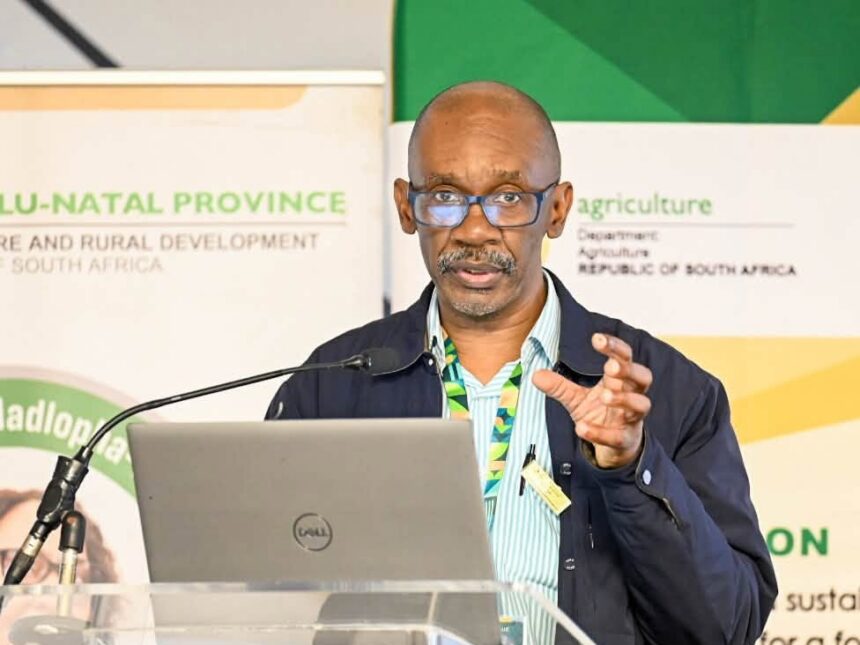
Climate change and its growing impact on agricultural production are receiving attention in KwaZulu-Natal as government, farmers, researchers and agricultural stakeholders come together to explore practical solutions for building a more resilient farming sector. The KwaZulu-Natal Department of Agriculture and Rural Development, led by MEC Thembeni kaMadlopha-Mthethwa, in collaboration with the National Department of Agriculture, commenced a two-day Provincial Dialogue on Climate-Smart Agriculture on 23 November 2026. The engagement is taking place in Empangeni, within the King Cetshwayo District, and provides a platform for discussing the challenges climate change presents to agricultural production. Participants are sharing knowledge, examining the effects of changing environmental conditions and identifying sustainable approaches that can help farmers adapt. The dialogue continues on 24 November 2026, with further discussions aimed at strengthening agricultural resilience and protecting the future of food production in the province.
The provincial dialogue comes at an important time for agriculture, as farmers increasingly need to consider climate-related risks when planning their production activities. Agriculture depends heavily on natural resources, particularly land, water and suitable weather conditions. Changes in rainfall patterns, rising temperatures, prolonged dry periods and extreme weather events can affect crop yields, livestock health and farming operations. These challenges can also increase production costs and place pressure on farmers’ incomes. Climate adaptation has therefore become an important consideration for agricultural planning, investment and long-term sustainability.
The engagement brings together farmers, researchers and key stakeholders from across the agricultural sector to exchange experiences and discuss possible responses to climate-related challenges. This collaboration is important because climate change affects different agricultural regions and farming systems in different ways. Crop farmers, livestock producers and smallholder farmers may experience different risks depending on their location, production methods and access to resources. Bringing these groups together allows participants to share practical knowledge and consider solutions that reflect local farming conditions. Research institutions and agricultural professionals can also contribute technical information to support better decision-making. Combining scientific knowledge with farmers’ experiences can help develop adaptation strategies that are relevant to conditions on the ground.
Climate-smart agriculture is an approach that seeks to address three closely related objectives. These include improving agricultural productivity and incomes, strengthening the ability of farming systems to adapt to climate change and reducing or removing greenhouse gas emissions where possible. The approach recognises that farmers must continue producing food while managing environmental risks and protecting the natural resources on which agriculture depends. It does not prescribe one farming method for every situation. Instead, climate-smart practices should be selected according to local climate conditions, soil characteristics, available water and the needs of individual farming operations. This makes knowledge-sharing and practical training important components of successful climate adaptation.
Water management is expected to remain an important consideration in discussions about climate resilience. Water availability directly affects crop production, livestock farming and the ability of farmers to maintain consistent agricultural operations. Irregular rainfall and extended dry periods can create difficulties for producers who depend on seasonal rainfall. Efficient irrigation, rainwater harvesting and improved soil moisture management can help farmers make better use of available water resources. Practices such as mulching and maintaining soil organic matter can also help reduce moisture losses. However, farmers need access to appropriate infrastructure, technical advice and reliable water information to determine which solutions are suitable for their operations.
Soil conservation is another important part of building climate-resilient agricultural systems. Healthy soils support crop growth, retain water and provide essential nutrients for plants. Poor soil management can increase erosion, reduce soil fertility and weaken the productive capacity of agricultural land. Conservation agriculture practices, including reduced tillage, crop rotation and maintaining soil cover, can help address some of these challenges. Their effectiveness depends on local conditions and proper implementation. Farmers need practical guidance to assess which techniques will work best for their crops, equipment and production systems.
Climate change also affects livestock production, making adaptation important for animal health and farm management. High temperatures can place heat stress on livestock and affect animal welfare and productivity. Drought conditions can reduce grazing availability and increase the cost of animal feed. Reliable access to drinking water, appropriate shade, effective grazing management and suitable feeding strategies can help reduce some of these risks. Livestock producers may also need to consider stocking rates in relation to available grazing resources. Veterinary support and good animal health management remain important in maintaining productive livestock systems under changing environmental conditions.
The participation of researchers in the Empangeni dialogue is particularly relevant to the development of evidence-based agricultural solutions. Agricultural research can help identify crop varieties suited to changing climatic conditions, improve water-use efficiency and develop better approaches to soil and livestock management. Researchers can also contribute information about climate trends, agricultural risks and technologies that may support adaptation. However, research findings must be translated into practical information that farmers can understand and apply. Strong cooperation between research institutions, agricultural extension services and farming communities can help close this gap. Such partnerships can improve the adoption of suitable climate-smart agricultural practices.
Smallholder and emerging farmers also need to be considered in climate adaptation planning. These producers may have limited access to irrigation infrastructure, finance, machinery, improved inputs and technical support. Climate-related production losses can place significant pressure on households that depend on farming for food and income. Providing accessible agricultural advice, practical training and appropriate support can help these farmers manage production risks. Climate-smart agriculture programmes should recognise the differences between small-scale and commercial farming operations. Support must reflect the resources available to farmers and the specific challenges they face.
The involvement of the KwaZulu-Natal Department of Agriculture and Rural Development and the National Department of Agriculture highlights the importance of cooperation between provincial and national government. Climate change is a broad development challenge that requires coordinated planning across different levels of government and the agricultural sector. Provincial engagement allows stakeholders to raise concerns specific to their regions while contributing to national agricultural priorities. It also provides an opportunity to identify areas where policy, research, infrastructure and farmer support need stronger alignment. Effective coordination will be important in ensuring that discussions lead to practical interventions rather than remaining at the level of policy recommendations.
KwaZulu-Natal’s agricultural sector includes diverse production systems, ranging from crop farming and livestock production to horticulture and other agricultural enterprises. These activities face different climate-related pressures and require adaptation measures suited to their production conditions. Farmers in areas experiencing water shortages may prioritise irrigation efficiency and water conservation, while producers in erosion-prone areas may need to focus on soil protection. Livestock farmers may place greater emphasis on grazing management, animal health and access to water. This diversity makes provincial consultation valuable because it allows stakeholders to consider the different needs of agricultural communities. Locally appropriate solutions can contribute to stronger production systems across the province.
The dialogue continues on 24 November 2026, giving participants an opportunity to build on the discussions held during the opening day. Stakeholders are expected to explore strategies for advancing climate-smart agricultural practices and strengthening the sector’s ability to withstand climate-related challenges. The continuation of the engagement provides space for further knowledge exchange and consideration of practical interventions. The value of the dialogue will ultimately depend on how the ideas and recommendations are translated into support for farmers. This includes access to relevant training, agricultural technologies, infrastructure and technical services.
For farmers, the message from the Empangeni engagement is clear. Preparing for climate change requires careful management of natural resources and informed decisions at farm level. Improving soil health, conserving water, diversifying production and using appropriate technologies can help reduce exposure to certain climate risks. Farmers also need reliable climate information and access to professional advice when making production decisions. Government departments, researchers and agricultural organisations have an important role in supporting these efforts. Stronger partnerships can help ensure that climate-smart agriculture becomes part of practical farming operations.
The two-day Provincial Dialogue on Climate-Smart Agriculture in Empangeni places KwaZulu-Natal’s agricultural resilience firmly on the agenda. Led by MEC Thembeni kaMadlopha-Mthethwa’s department in collaboration with the National Department of Agriculture, the engagement provides an important platform for farmers, researchers and stakeholders to address the challenges facing agricultural production. Its focus on knowledge-sharing, sustainable farming practices and practical adaptation reflects the need to prepare the sector for changing environmental conditions. Long-term progress will require continued cooperation, effective implementation and support that reaches farmers across different production systems. Strengthening climate resilience is essential for protecting agricultural livelihoods, maintaining food production and securing a sustainable future for KwaZulu-Natal’s agricultural sector.
Join 'Farmers Mag' WhatsApp Channel
Get the latest Farming news and tips delivered straight to your WhatsApp
CLICK HERE TO JOIN