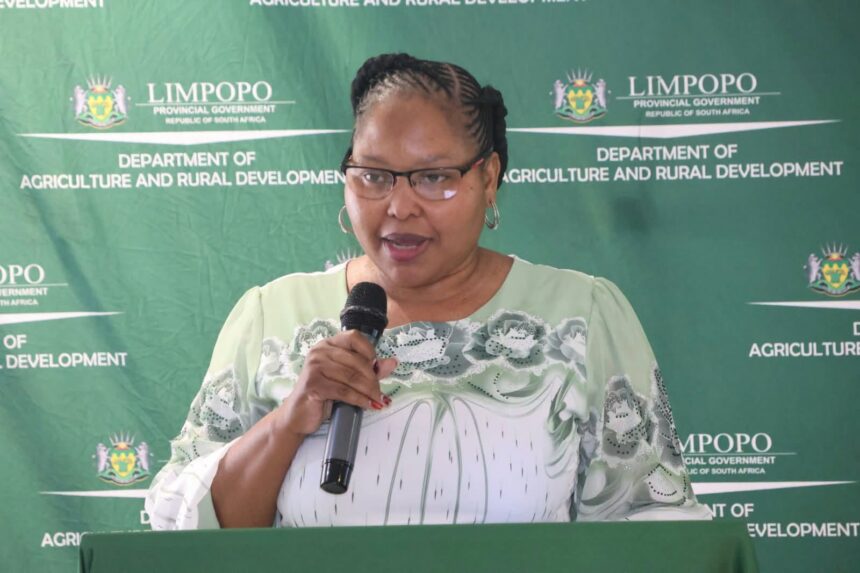
The Limpopo Department of Agriculture and Rural Development (LDARD) has called on stakeholders in the hemp and cannabis industries to accelerate implementation and turn policy commitments into practical economic opportunities. The department’s Head of Department, Mpho Mashamba, emphasised the need for stronger collaboration, investment and focused action to develop the province’s emerging hemp and cannabis sectors. Speaking during a provincial stakeholder engagement at the Royal Hotel in Polokwane, Mashamba highlighted the importance of moving beyond policy discussions towards practical programmes that benefit farmers, businesses and local communities. She also stressed the need to strengthen scientific research, improve regulatory processes and develop suitable production systems that can support a competitive local industry. The engagement forms part of broader efforts to position hemp and cannabis as potential contributors to agricultural development, agro-processing, industrialisation and job creation in Limpopo.
Hemp and cannabis have been identified as sunrise industries in the Limpopo Development Plan for 2025–2030, reflecting their potential to contribute to economic diversification and new agricultural opportunities. Industrial hemp has applications across several sectors, including textiles, construction materials, food products and other industrial uses, depending on the variety and applicable regulatory requirements. The wider cannabis industry also presents opportunities in areas such as agricultural production, research, processing and product development, subject to the relevant legal framework. Developing these industries requires more than identifying their economic potential. It requires clear regulations, reliable scientific information, suitable production systems, infrastructure and access to investment.
During the provincial stakeholder engagement, Mashamba highlighted Botswana’s industrial hemp development as an important example for Limpopo to study. She pointed to the country’s licensing framework, scientific research and development of locally adapted varieties as areas that could provide useful lessons. Benchmarking against other countries can help identify practical approaches to industry development while allowing policymakers to consider local agricultural conditions and economic priorities. However, successful implementation requires adapting relevant lessons to South Africa’s regulatory environment, climate, farming systems and market requirements. Developing varieties suited to local conditions is particularly important because agricultural performance can differ depending on soil, rainfall, temperature and other environmental factors.
One of the major challenges identified by Mashamba is the absence of a finalised National Commercialisation Strategy for the hemp and cannabis industries. Without a clear commercialisation framework, stakeholders may struggle to understand how policy objectives will translate into practical business opportunities. A comprehensive strategy can help clarify the responsibilities of different institutions, identify priority areas for investment and establish a coordinated approach to developing the industry. It can also provide greater certainty for farmers, entrepreneurs, researchers and potential investors who need to make informed decisions before committing financial resources. Finalising the strategy is therefore an important step towards creating a more structured and commercially viable hemp and cannabis sector in South Africa.
Despite the outstanding policy challenges, LDARD has confirmed that it has allocated funding for hemp development in its 2025/26 and 2026/27 financial years. This budget commitment signals the department’s intention to support the development of the sector through planned interventions. Funding is important because emerging agricultural industries require investment in research, production capacity, technical expertise and business development. Farmers and entrepreneurs also need access to reliable information about cultivation requirements, regulatory compliance and potential markets. The department’s financial commitment provides a basis for advancing these activities, although the long-term impact will depend on how effectively the available resources are implemented.
An important part of the department’s planned intervention involves the use of departmental economists to conduct feasibility studies and assist permit holders in developing bankable business plans. Feasibility studies can help determine whether proposed agricultural and commercial projects are financially, technically and operationally viable. They can also identify potential production costs, infrastructure requirements, market opportunities and business risks. Bankable business plans are particularly important for entrepreneurs seeking funding from financial institutions, investors and other funding organisations. By providing this support, LDARD aims to help permit holders move from regulatory approval towards practical business development and investment readiness.
Access to funding remains a significant consideration for farmers and entrepreneurs interested in entering emerging agricultural industries. Even when individuals have the necessary permits, establishing a viable farming or processing operation can require substantial financial resources. Costs may include land preparation, irrigation, agricultural equipment, production inputs, storage facilities and processing infrastructure. Businesses must also consider transport, packaging, marketing and compliance with relevant regulations. Developing realistic business plans supported by feasibility studies can help potential investors assess these requirements and make better-informed financial decisions.
Mashamba also called for stronger research partnerships between government institutions, universities and the Agricultural Research Council. Scientific research will play an important role in establishing a reliable foundation for hemp development in Limpopo. Research institutions can contribute expertise in crop varieties, cultivation methods, soil conditions, pest management and production performance. Such partnerships can also help identify varieties that are appropriate for local growing conditions and support the development of improved agricultural practices. Stronger cooperation between researchers and farmers can ensure that scientific findings address practical production challenges rather than remaining limited to academic studies.
The development of locally adapted hemp varieties is particularly relevant to building a sustainable agricultural industry. Farmers need access to suitable planting material that performs reliably under the environmental conditions in which they operate. Research can help establish which varieties are appropriate for different production areas and intended industrial applications. Reliable information about planting, crop management and harvesting can also help farmers improve production efficiency and reduce avoidable losses. Over time, stronger research capacity could support the development of locally relevant knowledge, improve agricultural competitiveness and reduce dependence on unsuitable production approaches.
A central message from Mashamba’s engagement was that farmers must prioritise production as the foundation for developing the wider hemp and cannabis value chains. While agro-processing and industrial investment offer important economic opportunities, these activities depend on a reliable supply of quality agricultural raw materials. Without consistent production, processing facilities may struggle to secure sufficient inputs and maintain commercially viable operations. Farmers therefore have an important role in establishing the production base needed to support industrial growth. Strengthening primary agriculture can create opportunities for businesses involved in processing, manufacturing, packaging, distribution and marketing.
Agro-processing could become an important part of Limpopo’s efforts to develop a more diversified agricultural economy. Processing agricultural products locally can create additional economic activity beyond the initial production stage. It can also encourage investment in infrastructure, technology and specialised business services. For the hemp industry, the development of suitable processing capacity will depend on the availability of reliable raw materials, appropriate technology and clearly defined markets. A coordinated approach involving farmers, researchers, government departments and private sector investors will be necessary to identify viable opportunities and develop sustainable commercial operations.
The potential contribution of the hemp and cannabis industries to job creation is another important consideration. Agricultural production can create employment through land preparation, planting, crop maintenance and harvesting. Further opportunities may emerge in research, processing, manufacturing, transport and other supporting services as the value chain develops. However, these benefits will depend on the establishment of viable businesses and consistent demand for the products being produced. Developing the sector responsibly will therefore require careful planning, market research and compliance with applicable legislation. Economic opportunities should be supported by realistic commercial models rather than expectations based solely on the industry’s potential.
Regulatory clarity will also remain essential for the growth of the hemp and cannabis industries in South Africa. Farmers and businesses need to understand the legal requirements governing cultivation, licensing, processing and the intended use of their products. Hemp and cannabis activities must not be treated as automatically interchangeable because different products and activities may be subject to different legal controls. Clear communication about permits and compliance requirements can help reduce uncertainty and prevent businesses from investing in activities that do not meet regulatory standards. A coordinated national approach would also help provincial development initiatives operate within a consistent legal and commercial framework.
The provincial stakeholder engagement in Polokwane highlighted the importance of connecting policy development with practical implementation. Limpopo has identified hemp and cannabis as industries with potential economic value, while LDARD has committed budget resources and outlined plans for feasibility studies and business development support. The proposed research partnerships could further strengthen the technical foundation needed for local production. However, progress will depend on cooperation between government, research institutions, farmers and private sector stakeholders. Continued engagement will be important to identify obstacles, clarify responsibilities and ensure that development plans translate into measurable agricultural and economic activity.
Mpho Mashamba’s call for faster implementation places production, research, commercial planning and stakeholder collaboration at the centre of Limpopo’s hemp and cannabis development ambitions. The allocation of departmental funding for 2025/26 and 2026/27, together with planned feasibility studies and assistance with bankable business plans, provides an important starting point for supporting permit holders. At the same time, finalising the National Commercialisation Strategy and strengthening research partnerships will be essential for creating a more predictable environment for farmers and investors. Building a successful industry will require a reliable agricultural production base, appropriate regulations, viable markets and investment in local processing capacity. Through coordinated action and practical implementation, Limpopo has an opportunity to develop its hemp and cannabis sectors into productive industries that support agricultural transformation, agro-processing, industrialisation and sustainable job creation.
Join 'Farmers Mag' WhatsApp Channel
Get the latest Farming news and tips delivered straight to your WhatsApp
CLICK HERE TO JOIN