The Limpopo Department of Agriculture and Rural Development (LDARD) has intensified its Foot-and-Mouth Disease (FMD) booster vaccination campaign as part of ongoing efforts to protect livestock, strengthen animal health and safeguard the province’s agricultural economy. The campaign forms part of a broader provincial and national response to contain the highly contagious disease, protect the red meat value chain and restore confidence in agricultural markets. With livestock farming supporting thousands of farmers, businesses and rural livelihoods, effective disease control remains a priority for the agricultural sector. The department is therefore expanding vaccination efforts across Limpopo while encouraging farmers to participate in both initial and booster vaccination programmes. Through these interventions, LDARD aims to strengthen herd immunity, reduce the risk of further outbreaks and support the recovery of livestock production and market access.
Foot-and-Mouth Disease is a highly contagious viral disease that affects cloven-hoofed animals, including cattle, sheep, goats, pigs and buffalo. Infected animals may develop fever, blisters in the mouth and around the feet, excessive salivation, reduced appetite and lameness. These symptoms can affect animal welfare, reduce production performance and create significant management challenges for livestock farmers. Although FMD does not generally present a serious public health risk to humans, its economic consequences can be severe. Outbreaks can result in livestock movement restrictions, disrupted trade, increased production costs and reduced access to important markets.
Vaccination remains one of the central measures in South Africa’s strategy to manage Foot-and-Mouth Disease. LDARD has intensified the administration of booster vaccines to animals that received their first vaccination more than six months ago. The booster is administered six months after the initial vaccination to strengthen and sustain immunity against the disease. Maintaining appropriate vaccination coverage is important because protection must be supported through continued disease management and veterinary interventions. The department’s focus on booster vaccinations reflects the importance of maintaining protection rather than relying only on the initial vaccination of livestock.
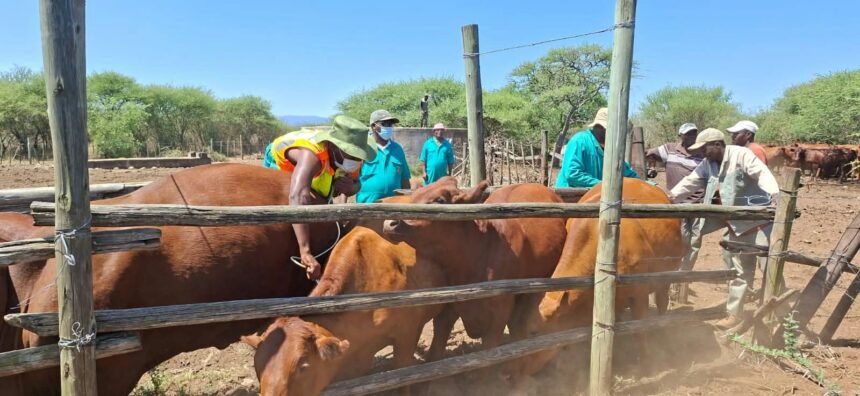
The latest phase of the booster vaccination campaign in Vhembe West began at Bristow Bonsmara Farm in Makhado Local Municipality. During the visit, the departmental veterinary team vaccinated approximately 600 Bonsmara cattle. The team subsequently continued its work at Buysplaas Farm, owned by Beja Beef at Waterpoort farms, where another 710 cattle received booster vaccinations. These activities demonstrate the department’s continued engagement with commercial livestock farmers as part of its wider provincial disease control programme. Vaccinating cattle across different farming operations is important for reducing the risk of infection and strengthening protection within the livestock sector.
Mr Gavin Bristow welcomed the department’s intervention and expressed appreciation for its commitment to fighting Foot-and-Mouth Disease. He highlighted the wider economic consequences of the disease and the importance of government assistance in ensuring that farmers can access vaccines. Bristow said, “Foot-and-Mouth Disease threatens the country’s GDP, red meat export prospects and ultimately the economy. The farmers alone cannot access the vaccines without the Department’s assistance.” His comments underline the importance of cooperation between government and the farming community in addressing a disease that affects more than individual agricultural businesses. Access to vaccines, veterinary expertise and coordinated disease management measures remains essential for protecting livestock and maintaining confidence across the red meat industry.
The Makhado vaccination activities form part of a province-wide campaign that has now reached all five districts of Limpopo. According to the department, more than one million vaccine doses have been administered across the province. Approximately 75% of the cattle population has received its first vaccination, while booster doses are now being rolled out to eligible animals. This progress represents an important stage in the department’s efforts to increase vaccination coverage and strengthen livestock protection. Continued vaccination activities will be necessary to reach the remaining animals and maintain immunity among those that have already received their initial doses.
LDARD has set a target of achieving at least 80% vaccination coverage among susceptible livestock in Limpopo by December 2026. This represents approximately 1.2 million animals, equivalent to 80% of the province’s domestic cloven-hoofed livestock population. Reaching this target is intended to strengthen herd immunity, improve outbreak containment and support better biosecurity throughout the agricultural value chain. Achieving widespread coverage requires effective planning, adequate vaccine supplies and cooperation from farmers across different production systems. It also requires veterinary teams to reach commercial farms, communal farming areas, agricultural holdings and other livestock enterprises.
Progress has also been recorded in Capricorn District, where vaccination efforts have reached more than 90% of livestock. These activities have involved communal farmers, Communal Property Associations (CPAs), commercial farmers and other agricultural enterprises. The involvement of different farming groups is important because livestock production takes place across a variety of farming systems and communities. Effective disease control requires all susceptible animals to receive appropriate attention, regardless of whether they belong to large commercial operations or smaller communal herds. Broad participation helps strengthen the overall provincial response and reduces the risk of unprotected livestock contributing to the spread of infection.
Although cattle vaccination remains a major focus, the campaign also includes other cloven-hoofed animals susceptible to Foot-and-Mouth Disease. These include pigs, goats and sheep, which must also be considered in disease surveillance and control planning. Farmers should understand that FMD management is not limited to cattle alone. Different livestock species can be affected, making it important to maintain appropriate health monitoring and biosecurity measures across mixed farming operations. Including these animals in vaccination and surveillance programmes helps strengthen the wider approach to managing the disease.
Particular attention is also being given to areas bordering the Kruger National Park, where the presence of African buffalo carrying the FMD virus creates additional disease management challenges. These areas continue to receive intensified surveillance and more frequent vaccination because of the potential risk associated with contact between wildlife and domestic livestock. African buffalo can carry the virus without necessarily showing the same clinical signs observed in domestic cattle. This makes ongoing monitoring and careful management of livestock in surrounding areas particularly important. Farmers operating near wildlife areas must therefore remain alert and follow veterinary guidance on vaccination, animal movement and biosecurity.
Biosecurity remains an essential part of preventing the introduction and spread of Foot-and-Mouth Disease. Farmers are encouraged to monitor their animals regularly and report suspected clinical signs to the relevant veterinary authorities immediately. Symptoms such as excessive salivation, mouth lesions, foot blisters and unexplained lameness should never be ignored. Early reporting allows veterinary officials to investigate suspected cases and take appropriate steps to limit further transmission. Farmers should also manage access to their livestock facilities, clean and disinfect equipment where appropriate and avoid unnecessary contact between animals from different herds.
Responsible livestock movement is equally important in controlling FMD. Moving infected or potentially exposed animals can spread the virus to previously unaffected farms and communities. Farmers, livestock traders, transport operators and auction facilities must therefore comply with applicable movement controls and permit requirements. Traceability and accurate livestock records can assist veterinary authorities in identifying animal movements and responding more effectively when outbreaks occur. Following these measures helps protect individual farming businesses while supporting wider provincial and national disease control efforts.
The economic importance of the booster vaccination campaign extends throughout the red meat value chain. Livestock farming supports activities such as animal breeding, feed production, veterinary services, transport, auctions, abattoir operations, meat processing and retail distribution. When FMD outbreaks disrupt livestock movement and trade, the effects can extend well beyond the farm gate. Farmers may experience delays in selling animals, additional operational costs and reduced income opportunities. Businesses that depend on a reliable supply of livestock can also face uncertainty, making effective disease management essential for maintaining economic activity and protecting employment.
Restoring market confidence is another important objective of South Africa’s ongoing FMD response. Domestic and international markets require confidence that livestock production systems have appropriate animal health controls and disease management procedures in place. Vaccination coverage, surveillance, traceability and compliance with veterinary regulations all contribute to demonstrating responsible disease management. However, vaccination alone does not automatically restore export access or remove all trade restrictions. Market access also depends on applicable animal health standards, disease status requirements and the conditions imposed by trading partners.
For livestock farmers in Limpopo, the booster vaccination programme offers an important opportunity to strengthen herd protection and support the long-term sustainability of their businesses. Farmers should ensure that animals receive their first and booster vaccinations according to veterinary guidance. They should also maintain accurate vaccination records and cooperate with departmental veterinary teams during scheduled interventions. Consistent participation can help improve vaccination coverage and reduce gaps in protection across farming communities. The success of the campaign will ultimately depend on continued cooperation between government institutions and livestock producers.
The department’s continued vaccination efforts also highlight the importance of accessible veterinary services in rural and commercial farming areas. Government veterinary teams play an important role in supporting farmers who may struggle to access vaccines and specialised animal health services independently. Their involvement helps coordinate vaccination activities, provide technical guidance and strengthen disease surveillance. Continued investment in veterinary capacity, vaccine distribution and animal health infrastructure will be important for sustaining progress. Strong partnerships between farmers, government and other agricultural stakeholders remain essential for protecting the livestock industry against future disease threats.
Limpopo’s intensified Foot-and-Mouth Disease booster vaccination campaign represents an important step towards strengthening animal health and protecting the province’s agricultural economy. With more than one million vaccine doses administered, approximately 75% of cattle having received their first vaccination and booster activities underway, the province is making progress towards its December 2026 target of 80% coverage among susceptible livestock. The vaccination of approximately 600 cattle at Bristow Bonsmara Farm and 710 cattle at Buysplaas Farm further demonstrates the department’s ongoing engagement with livestock producers. However, achieving lasting disease control will require more than vaccination alone. Continued surveillance, livestock traceability, responsible animal movement and strict biosecurity practices must remain central to the response. Through sustained cooperation and effective disease management, LDARD aims to protect farmers’ livelihoods, strengthen the red meat value chain and support the recovery of confidence in South Africa’s livestock industry.
Join 'Farmers Mag' WhatsApp Channel
Get the latest Farming news and tips delivered straight to your WhatsApp
CLICK HERE TO JOIN