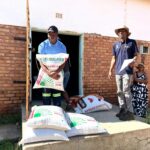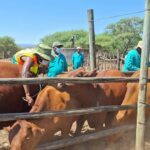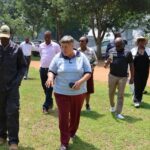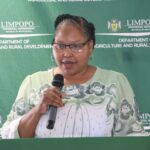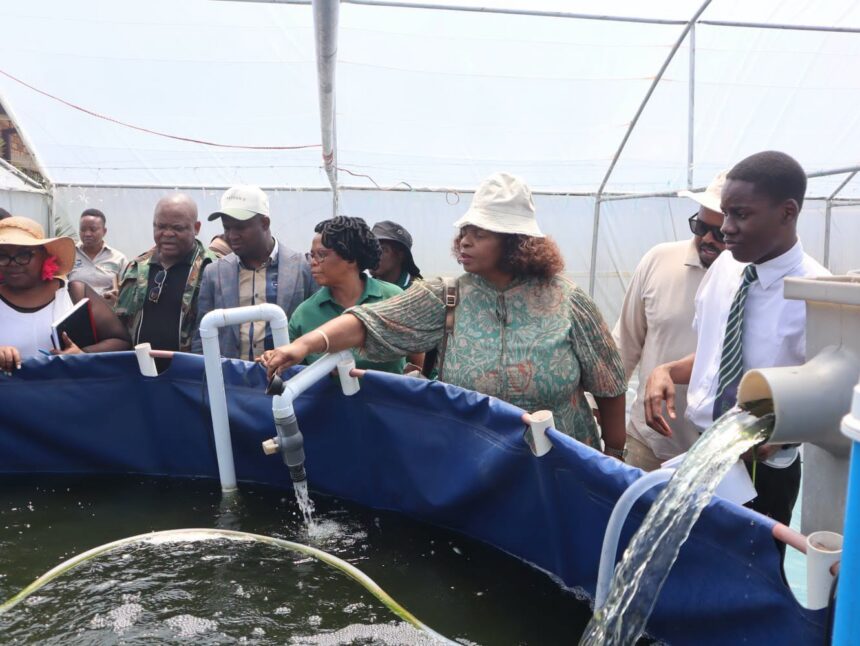
Sustainable agriculture and aquaculture are creating new opportunities for rural entrepreneurs to strengthen food security, generate income and develop environmentally responsible businesses. In Bethal, under the Govan Mbeki Local Municipality in Mpumalanga, Aqua Green and Projects is demonstrating how fish farming and organic vegetable production can work together to create a productive, resource-efficient agricultural enterprise. Founded and led by Joana Ngele, alongside Siyabonga Ngele, the enterprise focuses on sustainable freshwater tilapia farming combined with vegetable cultivation. Through an innovative backyard aquaculture system, the project reuses nutrient-rich water from fish ponds to support vegetable production, reducing water waste and limiting the need for additional chemical inputs. Its approach has attracted the attention of the Provincial Legislature’s Portfolio Committee on Agriculture, which recently visited the project as part of its oversight activities at a Department of Agriculture, Rural Development, Land and Environmental Affairs (DARDLEA)-supported initiative.
Aqua Green and Projects operates from a backyard aquaculture tunnel infrastructure and vegetable garden, demonstrating how agricultural production can be integrated even where farming space and resources are limited. The enterprise specialises in freshwater tilapia, a fish species widely farmed in aquaculture because of its suitability for controlled production systems. By combining fish farming with vegetable cultivation, the project creates a circular production model in which resources from one agricultural activity support another. This approach helps reduce waste while making more effective use of available water and nutrients. It also provides an example of how small-scale agricultural enterprises can explore sustainable production methods without relying entirely on conventional farming practices.
One of the project’s most important features is its integrated aquaculture and vegetable production system. Water from the fish ponds contains nutrients produced through fish waste and other organic matter within the aquaculture environment. Instead of treating this water as waste, Aqua Green and Projects reuses it to support vegetable cultivation. These nutrients can contribute to plant growth and reduce the need for some additional fertiliser inputs, depending on water quality and crop requirements. The system reflects the principles of resource recycling and efficient agricultural production, helping the enterprise move towards its zero-waste approach.
Integrated fish and vegetable farming can offer several environmental and economic advantages when properly managed. Water is an essential resource in both aquaculture and crop production, particularly in areas where shortages affect agricultural activities. Reusing suitable pond water can help reduce the demand for fresh irrigation water while making productive use of nutrients already available within the farming system. The approach can also reduce waste disposal requirements and support more responsible resource management. However, maintaining water quality, monitoring nutrient levels and ensuring that the water is suitable for different crops remain important for the success of an integrated system.
The freshwater tilapia farming component provides an opportunity for Aqua Green and Projects to contribute to local fish production and diversify agricultural activities in Bethal. Aquaculture can create opportunities for food production in areas where conventional farming faces limitations relating to land availability or other production challenges. Fish farming also requires knowledge of water quality, feeding, stocking density, fish health and harvesting practices. Developing these skills is important for maintaining healthy fish stocks and ensuring consistent production. By combining practical experience with sustainable production methods, the enterprise is building knowledge that can benefit other aspiring farmers.
Beyond its production activities, Aqua Green and Projects has developed an important role as an agricultural learning and training centre. The Provincial Legislature’s Portfolio Committee on Agriculture applauded Joana Ngele and the enterprise for providing training opportunities in fish farming and sustainable agriculture, particularly for young people in Bethal. This contribution creates opportunities for youth to gain practical knowledge about alternative agricultural enterprises and explore farming as a potential source of income. Training in aquaculture can introduce young people to production techniques, fish management and the business requirements of running a fish farming operation. Exposure to integrated agriculture can also help participants understand how different farming activities can complement one another.
Youth participation in agriculture remains important for building a more inclusive and productive agricultural sector. Many young people need access to practical training, suitable land, production resources and business development opportunities before they can establish sustainable farming enterprises. Community-based agricultural initiatives can help bridge some of these gaps by providing opportunities to learn through direct participation and practical demonstrations. Aqua Green and Projects offers an example of how an emerging agricultural enterprise can contribute to skills development while continuing its own production activities. Strengthening this training role could help encourage more young people to consider aquaculture, vegetable production and other agricultural business opportunities.
The visit by the Provincial Legislature’s Portfolio Committee on Agriculture formed part of its oversight responsibilities relating to agricultural development projects supported by DARDLEA. Such oversight visits provide an opportunity for committee members to assess project activities, understand operational challenges and engage directly with beneficiaries. They also allow farmers and agricultural entrepreneurs to explain what support they need to improve production and expand their businesses. In the case of Aqua Green and Projects, the engagement brought attention to the enterprise’s contribution to sustainable agriculture, aquaculture training and local food production. It also highlighted the practical obstacles that need to be addressed to unlock the project’s full potential.
Despite its progress, Aqua Green and Projects faces a major challenge relating to water shortages in the area where it currently operates. Reliable water access is essential for maintaining fish ponds, supporting vegetable production and sustaining the integrated farming system. Unlike some conventional farming activities, aquaculture depends heavily on maintaining suitable water conditions to protect fish health and support consistent production. Water shortages can therefore affect both components of the enterprise at the same time. Addressing this challenge is important for improving operational stability and allowing the project to increase its production capacity.
The enterprise has identified the need for a Water Bowser and a refrigeration container as important requirements for its continued development. A Water Bowser is a tank-fitted trailer used to transport and store water in locations where permanent water pipes or taps cannot provide access. Such equipment could help the project manage water supply challenges by allowing water to be transported and stored when necessary. However, the water would still need to meet the quality requirements of the fish farming system and be managed appropriately. Access to a suitable water storage and transport solution could help reduce some of the operational difficulties associated with unreliable water availability.
A refrigeration container would also provide important support for the enterprise’s fish production activities. Fresh fish is a perishable agricultural product that requires appropriate handling and temperature management after harvesting. Without suitable cold storage, farmers may face difficulties maintaining product quality while arranging transportation and sales. Refrigeration can help extend the period during which harvested fish can be safely stored under appropriate conditions. It can also improve the enterprise’s ability to manage harvesting schedules, handle larger quantities and explore more organised marketing opportunities.
Access to suitable land is another important factor in the future growth of Aqua Green and Projects. The enterprise recently received access to a 1.7-hectare piece of land through a 10-year rental contract. This provides an opportunity to move beyond its existing backyard production setup and explore increased agricultural production. Additional space could support the expansion of aquaculture infrastructure, vegetable gardens and related farming activities, subject to the availability of water, infrastructure and other essential resources. However, rental obligations can place financial pressure on emerging agricultural enterprises, particularly during the early stages of expansion.
During the oversight engagement, the Portfolio Committee called on DARDLEA to engage the Department of Land Reform and Rural Development regarding the possibility of securing a lease on state land for the project. The proposal aims to help Aqua Green and Projects expand its operations and maximise production without the additional pressure associated with rental costs. Access to suitable state land could provide greater opportunities for long-term agricultural investment if the necessary arrangements and approvals are secured. It could also help the enterprise plan its infrastructure development and production activities with greater certainty. However, the proposed land arrangement remains a matter for engagement between the relevant departments and should not be regarded as an already approved lease.
Land access and water availability are closely connected when planning the expansion of an aquaculture enterprise. A larger production area can create opportunities for increased fish farming and vegetable cultivation, but expansion also requires sufficient water, appropriate infrastructure and reliable operating resources. Farmers must consider the costs of constructing fish ponds, installing water systems, managing electricity requirements and maintaining suitable production conditions. The availability of refrigeration and transport facilities is equally important when planning to increase output and reach wider markets. Coordinated government support can help address these needs and improve the project’s prospects for sustainable growth.
Aqua Green and Projects also demonstrates the potential of circular agriculture to contribute to environmental sustainability and local economic development. Traditional farming systems can sometimes treat by-products from one activity as waste, even when they may have value in another production process. Integrated aquaculture and vegetable farming offers an alternative by creating connections between different agricultural activities. Fish pond water can support crop production when its quality and nutrient content are suitable, while vegetable farming provides an additional source of agricultural output. This approach encourages efficient resource use and demonstrates how small-scale enterprises can develop practical solutions to environmental and production challenges.
The project’s development also highlights the importance of providing emerging agricultural businesses with support that goes beyond initial funding or access to land. Entrepreneurs need technical guidance, appropriate infrastructure, reliable water supplies, equipment and opportunities to develop their markets. Training and business development assistance can help them manage production risks and improve the financial sustainability of their operations. Government departments and other agricultural stakeholders can contribute by identifying specific challenges and coordinating interventions that respond to the needs of individual enterprises. For Aqua Green and Projects, addressing water shortages, refrigeration requirements and long-term land access could make an important difference to its ability to expand.
The work being undertaken by Joana Ngele and Siyabonga Ngele demonstrates how innovation, practical knowledge and sustainable farming methods can create opportunities within local communities. Aqua Green and Projects combines freshwater tilapia farming with organic vegetable production while promoting resource recycling and agricultural skills development. Its role as a learning centre also creates opportunities for young people in Bethal to gain exposure to aquaculture and sustainable agriculture. The recognition received during the Provincial Legislature’s Portfolio Committee on Agriculture oversight visit highlights the value of initiatives that combine production with community development. With appropriate support, improved water access, suitable infrastructure and secure land arrangements, the enterprise could strengthen its contribution to local food production and agricultural development.
Aqua Green and Projects represents an emerging approach to sustainable agriculture in Mpumalanga, showing how aquaculture and vegetable farming can complement one another while creating opportunities for training and rural enterprise development. Its integrated production model demonstrates the value of reusing resources, reducing waste and making better use of available agricultural inputs. However, water shortages, the need for a refrigeration container and limited access to suitable infrastructure remain important challenges that require attention. The proposed engagement between DARDLEA and the Department of Land Reform and Rural Development could also help explore more secure land arrangements for future expansion. Supporting enterprises such as Aqua Green and Projects is important for promoting youth participation, strengthening local food production and building a more inclusive and environmentally responsible agricultural sector in South Africa.
Join 'Farmers Mag' WhatsApp Channel
Get the latest Farming news and tips delivered straight to your WhatsApp
CLICK HERE TO JOIN