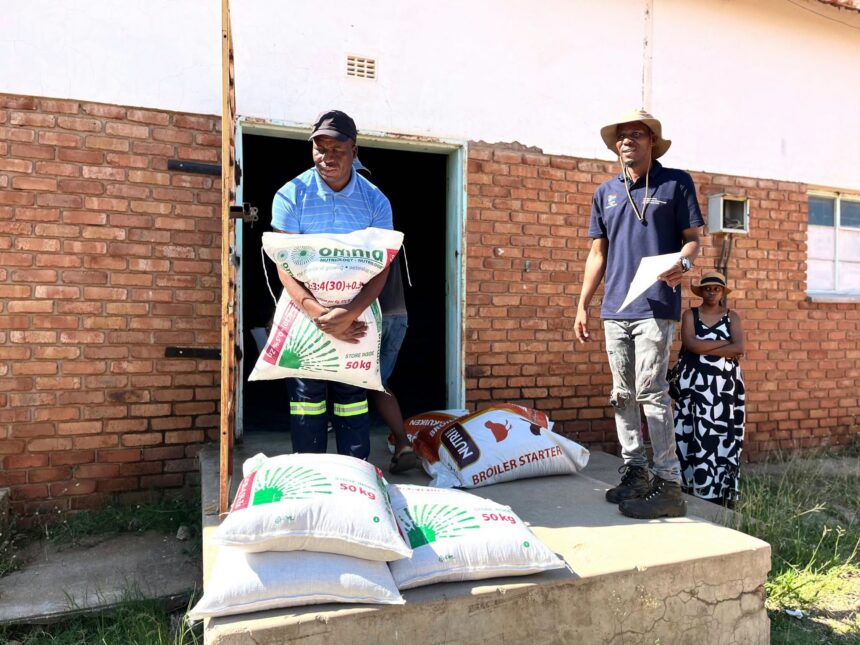
The Limpopo Department of Agriculture and Rural Development (LDARD) continues to support smallholder farmers through its Farmer Support Programme, helping agricultural enterprises access essential resources needed for production. In a recent intervention in Lebowakgomo, nine farming projects from the Capricorn District received broiler feed and fertilisers to strengthen their poultry and vegetable production activities. The support aims to reduce the financial pressure on farmers while improving productivity and creating opportunities to increase farm revenue. Access to reliable agricultural inputs is important for smallholder farmers who often face high production costs and limited resources. By providing practical assistance, the department is working to help farming enterprises maintain operations, improve output and build more sustainable businesses.
The beneficiaries include poultry and vegetable farming enterprises that contribute to agricultural activity in their communities. Poultry farmers received broiler feed to support the growth and development of their birds, while vegetable producers received fertilisers to support crop production. These inputs address some of the basic requirements of running a productive farming operation. Feed is a major cost in broiler production, while fertiliser plays an important role in supplying nutrients needed for healthy crop development. Providing these resources can help farmers direct more of their available funds towards other operational needs, such as labour, equipment, water and farm maintenance.
The nine supported projects are Mazana Poultry, Supserdev, Leruo Agribusiness, Green Legislation, Offseason, Upbond, Moroaswi Agri Farm, We Can Woman Development and NTB Farms. Their inclusion in the Farmer Support Programme reflects the department’s focus on assisting smallholder agricultural enterprises in the Capricorn District. Each project operates within the agricultural sector and has production needs that require access to suitable inputs. Support for different types of farming activities also helps maintain a diverse agricultural base within local communities. Strengthening these enterprises can contribute to food production, business development and rural economic activity.
MEC for Agriculture and Rural Development, Mr Basikopo Makamu, has consistently emphasised that government assistance must lead to actual production on farms. This approach places practical results at the centre of agricultural support. Farmers need resources that allow them to plant crops, raise livestock and maintain productive operations. Support programmes therefore need to respond to the challenges producers face in their daily work. The delivery of broiler feed and fertilisers gives the beneficiaries inputs they can use directly in their production activities.
The intervention is intended to reduce production costs, improve productivity and increase farmers’ revenue. These objectives are closely connected because lower input costs can help farmers manage their finances, while better production can create opportunities to generate more income. For poultry farmers, access to broiler feed can help reduce the immediate cost of raising birds. For vegetable farmers, fertiliser can support crop growth when applied according to soil conditions and crop requirements. However, the long-term benefits also depend on effective farm management, appropriate production methods and access to buyers. Farmers need to use the support carefully to achieve the best possible results from their available resources.
Smallholder poultry farming provides opportunities for rural entrepreneurs to participate in food production and local business activity. Broiler production requires farmers to manage feeding, housing, water, hygiene and animal health throughout the production cycle. Feed is one of the main operating expenses, making access to this input important for producers working with limited capital. Reliable feeding practices help farmers manage bird development and prepare their products for the market. Support with broiler feed can therefore ease one part of the financial burden facing poultry enterprises. Farmers must still maintain proper management practices to protect their birds and sustain production.
Vegetable farming also depends on access to suitable production inputs and careful crop management. Fertilisers provide nutrients that support plant development, but farmers need to understand the condition of their soil and the needs of each crop before applying them. Soil testing can help producers make informed decisions about fertiliser selection and application rates. Good vegetable production also requires appropriate seed varieties, water management, pest and disease control and timely harvesting. When farmers combine these practices with access to essential inputs, they can improve their chances of producing healthy crops. Stronger vegetable production can contribute to local food availability and create opportunities for farmers to supply markets.
The Farmer Support Programme is also important because smallholder farmers often operate under financial and resource constraints. The cost of feed, fertilisers, seed, equipment and other inputs can make it difficult for producers to maintain or expand their businesses. Limited working capital may force farmers to reduce production or delay important farming activities. Support with essential inputs can help address some of these challenges and give farmers an opportunity to continue operating. It can also help producers build experience, strengthen their business activities and work towards greater independence. Continued access to appropriate support, training and markets remains important for the long-term development of smallholder agriculture.
Agricultural support can have benefits that extend beyond the individual farms receiving assistance. Productive poultry and vegetable enterprises contribute to local food supply and create demand for services linked to farming. These businesses may also provide employment opportunities as production grows and operations require additional labour. Increased farm activity can support household income and contribute to economic circulation within rural communities. This is particularly important in areas where farming provides opportunities for people to earn a living close to home. By supporting agricultural enterprises, the department is also contributing to broader rural development objectives.
Job creation and poverty alleviation are among the wider goals associated with the intervention. Farming can provide work in activities such as planting, harvesting, feeding, cleaning, packaging and transporting agricultural products. As enterprises develop, they may be able to increase production and create further opportunities for workers and service providers. Improved farm income can also help households meet their daily needs and invest in their businesses. These outcomes depend on the ability of farmers to maintain production and sell their products at viable prices. Practical support is therefore one part of a wider process of building sustainable rural livelihoods.
For the beneficiaries, the delivery of production inputs also brings responsibility to manage resources effectively and maintain productive operations. Farmers need to plan how they use feed and fertiliser, monitor production and keep records of their expenses and outputs. Good record-keeping helps producers understand the costs of their activities and identify areas where they can improve efficiency. It also provides useful information when they apply for further support or seek opportunities to work with buyers and other agricultural partners. Strong business management can help smallholder farmers move from basic production towards more organised and commercially sustainable enterprises.
MEC Makamu underlined the department’s approach with the statement: “We don’t just talk farming, we deliver it. We want to see every household having something in agriculture. Farming must never stop, despite the challenges.” His remarks highlight the importance of keeping agricultural activity going even when farmers face financial, environmental and operational difficulties. Encouraging more households to participate in agriculture can support food production and create additional income opportunities. However, participation needs to be supported by access to knowledge, suitable resources and viable markets. Practical assistance can help households and farming groups take steps towards productive agricultural activities.
The support provided to the nine Capricorn District projects demonstrates how targeted agricultural inputs can address immediate production needs among smallholder farmers. Broiler feed and fertilisers offer direct assistance to poultry and vegetable enterprises, helping them manage important costs and continue their activities. The intervention also supports wider objectives linked to food production, job creation, poverty alleviation and improved rural livelihoods. For the benefits to last, farmers will need to combine the assistance with sound production methods, effective business management and reliable market access. Through the Farmer Support Programme, LDARD is continuing to promote practical support that connects agricultural development with production on the ground. Strengthening smallholder farming enterprises remains an important part of building sustainable agriculture and expanding economic opportunities across Limpopo.
Join 'Farmers Mag' WhatsApp Channel
Get the latest Farming news and tips delivered straight to your WhatsApp
CLICK HERE TO JOIN