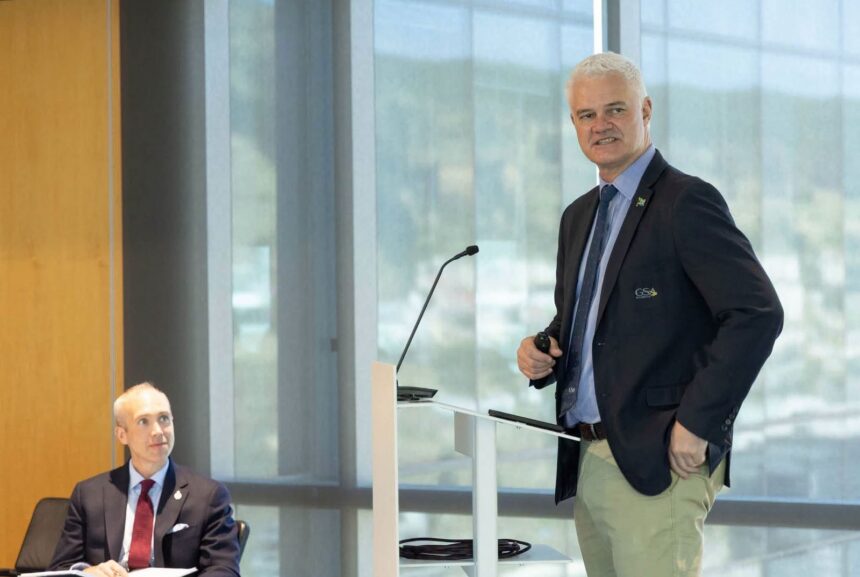
The global agricultural sector is undergoing significant changes, driven by technological innovation, evolving market demands, climate challenges and the need for more sustainable food production. These developments are influencing how farmers produce food, how agricultural businesses operate and how organisations support the industry. Agricultural societies, exhibitions and trade shows also need to adapt to remain relevant and continue creating value for producers and other stakeholders. These important issues were at the centre of a presentation by Grain SA Chief Executive Officer Tobias Doyer at the Royal Agricultural Society of the Commonwealth conference in Cape Town. His participation provided an opportunity to consider how agricultural organisations can respond to a changing global environment while continuing to support farmers and contribute to the future of agriculture.
Doyer participated as a speaker at the conference, where he presented a topic titled “The Changing Face of Global Agriculture: What Does It Mean for Agricultural Societies, Shows and Fairs?” His presentation focused on the transformation taking place across global agriculture and the implications for organisations that bring the agricultural community together. Agricultural societies, shows and exhibitions have traditionally played an important role in connecting farmers, showcasing equipment and technology, sharing knowledge and creating opportunities for business development. However, changing industry conditions mean these platforms must continually assess how they serve their audiences. Their ability to respond to new expectations will influence how effectively they contribute to agricultural development in the years ahead.
One of the most significant developments shaping modern agriculture is the growing role of technology in farming operations. Digital tools, precision agriculture, improved machinery and data-driven decision-making are changing how producers manage their businesses. Farmers increasingly need access to reliable information that can help them improve productivity, manage production costs and make informed decisions about their resources. Agricultural exhibitions provide an important space where producers can explore new technologies, compare solutions and engage directly with businesses offering agricultural products and services. By making innovation more accessible, these events can help bridge the gap between technological development and practical application on farms.
Climate variability and environmental sustainability are also influencing the future of global agriculture. Farmers must manage changing weather patterns, water availability, soil health and other environmental pressures while maintaining reliable production. These challenges require practical knowledge, responsible resource management and access to appropriate farming technologies. Agricultural organisations can contribute by creating opportunities for discussion, education and collaboration around sustainable production methods. Shows and exhibitions can also demonstrate solutions that help farmers understand how new approaches may apply to their specific production environments.
Agricultural markets are changing as well, placing greater importance on efficiency, competitiveness and access to opportunities. Producers operate within complex supply chains influenced by international trade, consumer expectations, input prices and market conditions. Agricultural societies and industry exhibitions can help farmers understand these developments by connecting them with market participants, service providers and relevant industry experts. These platforms also create opportunities for networking, commercial engagement and the exchange of information. For agricultural organisations, remaining relevant means understanding the practical challenges producers face and ensuring that their activities respond to those needs.
The role of agricultural shows and fairs extends far beyond displaying farming equipment and products. These events bring together producers, agricultural businesses, researchers, government representatives and other stakeholders who contribute to the wider food production system. They create opportunities to share experience, introduce new ideas and strengthen relationships across the agricultural value chain. For younger and emerging farmers, exhibitions can provide valuable exposure to technologies, production methods and potential business partners. For established producers, they offer opportunities to stay informed about developments that could improve their operations. As the agricultural landscape evolves, these platforms must continue to provide meaningful experiences that support both current and future generations of farmers.
Grain SA understands the importance of creating opportunities that connect grain producers with knowledge, innovation and industry developments. As an organisation committed to the development and support of grain farmers, Grain SA plays an important role in promoting a strong, sustainable and inclusive agricultural sector. Its work involves supporting producers through information sharing, engagement and initiatives that contribute to the long-term development of the grain industry. Collaboration with other agricultural stakeholders remains important because the challenges facing farmers often require coordinated solutions. By encouraging cooperation and knowledge exchange, the organisation helps create an environment in which producers can access opportunities and strengthen their businesses.
NAMPO is an important example of how agricultural exhibitions can contribute to this objective. The event provides a platform for farmers and agricultural stakeholders to engage with new technologies, machinery, products and services while sharing knowledge and building professional relationships. It also creates opportunities for agricultural businesses to showcase their offerings and connect with producers from different farming regions. For many participants, NAMPO is an opportunity to gain practical insights into developments that could influence their farming operations. Its continued relevance depends on its ability to reflect the changing needs of the agricultural sector and provide value to the people who participate in it.
The future of agricultural exhibitions will depend on their ability to combine established traditions with new approaches to engagement and innovation. While machinery displays and product demonstrations remain important, modern audiences also need access to relevant information, practical learning opportunities and meaningful industry discussions. Agricultural events can strengthen their contribution by focusing on the issues that matter most to producers, including profitability, technology adoption, sustainability, market access and skills development. They can also create stronger connections between established agricultural businesses and emerging participants in the sector. This approach can help ensure that agricultural societies, shows and fairs remain valuable spaces for learning, collaboration and business development.
Doyer’s participation in the Royal Agricultural Society of the Commonwealth conference also highlights the importance of international engagement within the agricultural sector. Agriculture operates across national borders, with producers and organisations facing many interconnected challenges. Opportunities to exchange ideas with international agricultural stakeholders can broaden perspectives and encourage new approaches to industry development. Such engagement also allows organisations to share experiences from their own agricultural environments and contribute to wider conversations about the future of food production. For South African agriculture, maintaining connections with international agricultural networks can support knowledge sharing and strengthen the industry’s participation in global discussions.
As global agriculture continues to change, organisations that support farmers must remain responsive, innovative and committed to practical outcomes. Agricultural societies, exhibitions and fairs have an opportunity to strengthen their role by connecting people, sharing knowledge and introducing solutions that address real production and business challenges. Grain SA’s involvement in international agricultural discussions reflects its commitment to supporting grain producers and contributing to the development of the wider sector. Through collaboration, innovation and platforms such as NAMPO, the organisation continues to help connect farmers with opportunities that can support their growth. The future of agriculture will depend not only on the ability of farmers to adapt but also on the strength of the organisations and partnerships that support them.
Join 'Farmers Mag' WhatsApp Channel
Get the latest Farming news and tips delivered straight to your WhatsApp
CLICK HERE TO JOIN