Empowering grain farmers with practical knowledge, access to markets and reliable agricultural support is essential for strengthening food security and building a sustainable agricultural sector in South Africa. In Bronkhorstspruit, local producers, industry experts and government representatives came together at the Grain Study Group Programme to share information, explore growth opportunities and discuss challenges affecting grain production. Held at the Bronkhorstspruit Sports Centre, the programme provided a platform for farmers to engage with agricultural stakeholders and learn about resources that could support their farming operations. The event highlighted the importance of cooperation between government departments, private companies and agricultural organisations in helping farmers improve productivity and develop resilient businesses. Through knowledge sharing and practical guidance, the initiative reinforced the role of farmer development in promoting economic inclusion, rural development and long-term food security.
The Grain Study Group Programme focused on giving farmers access to information that could help them make informed decisions about their agricultural activities. Grain production involves a range of considerations, including input costs, production practices, market conditions and the availability of financial and technical support. Farmers who understand these factors are better positioned to identify risks, manage resources and plan for changing conditions. Study group meetings create opportunities for producers to discuss their experiences, learn from industry specialists and explore solutions to common challenges. In Bronkhorstspruit, the gathering brought these objectives together by connecting local farmers with organisations that provide agricultural knowledge, business development support and information about operational assistance.
The programme was facilitated by Mr. Kwena Bopape and opened with a welcome address from Ms. Kholofelo Kekana. Mr. TT Mabuza then provided an overview of the day’s purpose, setting the direction for discussions and presentations. These opening contributions established the importance of collaboration and active participation throughout the programme. By bringing farmers and stakeholders into one setting, the event created an opportunity to exchange ideas and strengthen professional relationships within the agricultural community. This approach supports the development of an informed farming sector in which producers can engage directly with organisations that understand the practical and economic realities of agriculture.
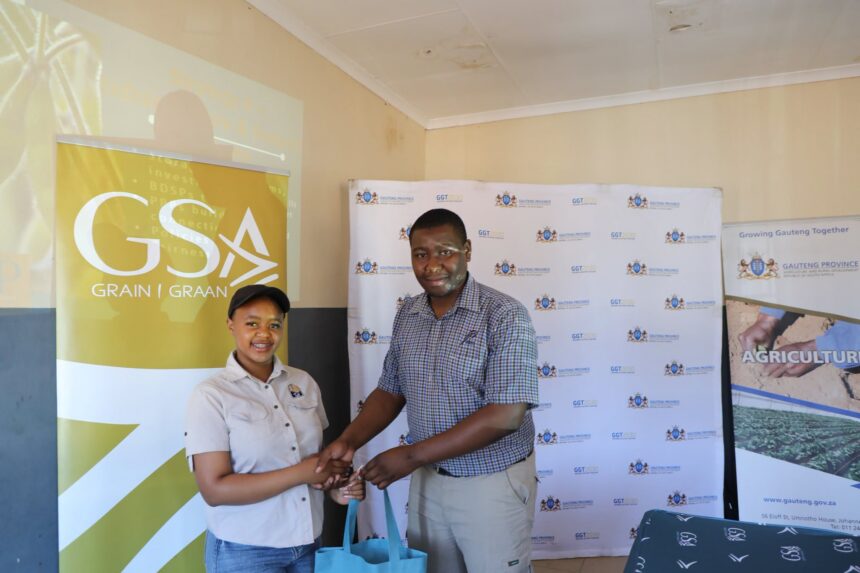
Grain SA played an important role in the programme through a presentation delivered by Mr. Mlibo Qotoyi. The organisation shared information about developments in the grain sector and highlighted best practices relevant to grain production. Access to current industry knowledge can help farmers assess their production methods, understand emerging challenges and consider ways to improve their operations. Practical discussions about grain farming are particularly valuable because producers must make decisions that affect the use of land, seed, fertiliser, fuel and other essential inputs. Grain SA also introduced an interactive element by awarding surprise gifts and packages to farmers who correctly answered questions during its session, encouraging participation and making the knowledge-sharing process more engaging.
The contribution from Grain SA also demonstrated the value of creating opportunities for farmers to test their understanding and engage directly with agricultural specialists. Interactive sessions can encourage producers to ask questions, share experiences and clarify issues that affect their daily work. Such exchanges help turn technical information into knowledge that farmers can consider when making practical decisions on their farms. For emerging producers, engagement with established agricultural organisations can also help them become more familiar with industry practices and available support structures. Continued access to relevant information remains an important part of strengthening grain production and supporting the long-term development of farming businesses in Bronkhorstspruit and surrounding communities.
Market access and enterprise development were also key themes during the programme. Mr. Mulalo Muthaphuli represented Khula Enterprise and outlined opportunities related to market access and growth support for emerging agricultural enterprises. Producing a successful crop is only one part of building a sustainable farming business, as farmers also need suitable opportunities to sell their produce and generate income. Access to markets can influence how producers plan their operations, manage costs and identify potential buyers for their agricultural products. For emerging farmers, understanding the business side of agriculture is especially important when building relationships, assessing commercial opportunities and planning future expansion. The information shared by Khula Enterprise highlighted the importance of connecting agricultural production with business development and market participation.
Support for emerging agricultural enterprises can contribute to broader economic inclusion by helping more producers participate in agricultural value chains. Farmers may need guidance on identifying suitable markets, understanding commercial requirements and developing the capacity to operate as sustainable businesses. When producers can access relevant support, they have a better opportunity to assess the challenges involved in expanding their operations and reaching new customers. Stronger agricultural enterprises can also contribute to employment, local economic activity and the development of rural communities. The discussions at the Bronkhorstspruit Grain Study Group Programme placed these business considerations alongside production knowledge, recognising that successful farming depends on both sound agricultural practices and effective enterprise management.
Another important contribution came from Suncor Minerals & Energy, represented by Mr. Loyiso Gatyeni. His presentation covered the Farmer Diesel Support mechanism, which aims to ease operational input costs for working farms. Diesel is an important operating input for many agricultural activities, including land preparation, planting, harvesting and transporting farm produce. Changes in fuel expenses can affect the overall cost of production and place pressure on farmers who already need to manage several competing financial demands. Information about available diesel support mechanisms can help producers understand potential assistance and consider how fuel costs affect their operational planning. The presentation brought attention to the need for practical measures that address the expenses associated with running agricultural businesses.
Managing farm input costs is a significant consideration for grain producers because profitability depends on the relationship between production expenses and the income earned from selling crops. Farmers must make decisions about fuel, machinery, fertiliser, seed and other resources while accounting for seasonal conditions and market uncertainty. Understanding available support opportunities can help producers investigate whether they qualify for assistance and plan their expenditure more carefully. However, farmers should confirm the eligibility requirements, application procedures and terms of any support mechanism directly with the responsible provider before relying on it in their budgets. By including the Farmer Diesel Support mechanism in the programme, the organisers gave participants an opportunity to learn about an area of operational support that may be relevant to their farming activities.
The programme concluded with remarks from Mr. Zuzumuzi Buthelezi on behalf of the Gauteng Department of Agriculture and Rural Development, commonly known as GDARD. His closing contribution outlined the way forward and reaffirmed the department’s commitment to sustainable agriculture, economic inclusion and rural development across the province. Government support remains important in connecting farmers with information, services and development opportunities that can strengthen agricultural production. Collaboration with industry organisations and private-sector participants can extend the range of expertise available to producers and help address different aspects of farming. The closing remarks reinforced the importance of maintaining relationships between farmers and agricultural stakeholders beyond individual events.
The involvement of government and private-sector organisations demonstrated how partnerships can support agricultural development in practical ways. Grain SA contributed industry knowledge, Khula Enterprise addressed market access and enterprise growth, while Suncor Minerals & Energy provided information about the Farmer Diesel Support mechanism. GDARD’s participation reinforced the role of public institutions in supporting sustainable agricultural production and rural development. Each contribution addressed a different aspect of farming, from technical knowledge and business opportunities to operational costs and institutional support. By bringing these perspectives together, the Grain Study Group Programme created a shared space for discussing the conditions needed to strengthen farming businesses and improve the resilience of the agricultural sector.
Knowledge-sharing initiatives are particularly valuable when farmers can use the information gained to inform decisions on their own operations. A study group can encourage producers to compare experiences, identify recurring problems and learn about approaches that may suit their circumstances. It can also help farmers build relationships with organisations that provide agricultural information or business support. While a single programme cannot resolve every challenge faced by grain producers, regular engagement can help improve access to knowledge and create opportunities for continued collaboration. For Bronkhorstspruit’s farming community, such initiatives offer a way to strengthen connections between producers and the wider agricultural support network.
The Grain Study Group Programme in Bronkhorstspruit highlighted the importance of empowering grain farmers through practical information, market development opportunities and access to relevant support mechanisms. The contributions from Grain SA, Khula Enterprise, Suncor Minerals & Energy and GDARD addressed important considerations affecting agricultural production and business sustainability. The event also showed how interactive learning and direct engagement can encourage farmers to participate actively in discussions about their sector. Continued collaboration between government, agricultural organisations, private companies and local producers will remain important in supporting productive farms and resilient rural economies. By investing in farmer knowledge, strengthening institutional relationships and improving awareness of available opportunities, stakeholders can help build a more inclusive and sustainable agricultural sector that contributes to South Africa’s food security and long-term economic development.
Join 'Farmers Mag' WhatsApp Channel
Get the latest Farming news and tips delivered straight to your WhatsApp
CLICK HERE TO JOIN