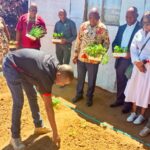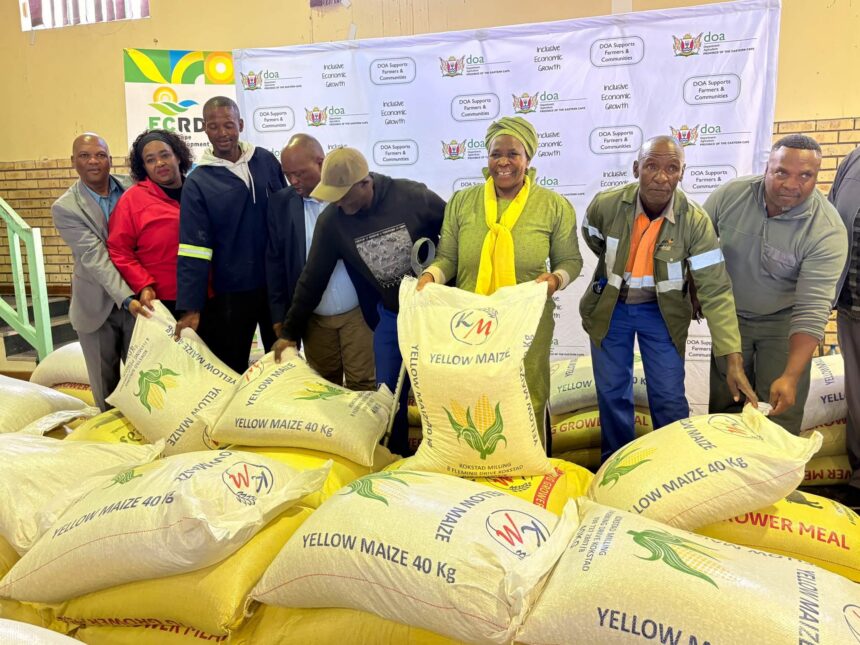
Agriculture has an important role to play in creating opportunities for young people, improving household food security and building stronger communities. Eastern Cape MEC for Agriculture Nonceba Kontsiwe has called on young people to take agriculture seriously and become active participants in strengthening the province’s food systems. Her appeal highlights the need for greater youth involvement in farming, food production and the development of sustainable agricultural livelihoods. The call was reinforced by the handover of household agricultural inputs to the community of kwaNonjoli, an initiative intended to help residents grow their own food. By encouraging communities to participate in agriculture at household level, the initiative promotes self-reliance and recognises farming as an important part of everyday life.
During her message to young people, Kontsiwe urged them to “hold the fort” and play an active role in strengthening food security. Her words underline the importance of ensuring that agriculture remains a priority for current and future generations. Young people bring energy, new ideas and the potential to explore different approaches to farming and food production. Their participation can help communities respond to challenges such as limited household food supplies and the need for sustainable livelihoods. Encouraging youth to view agriculture as a serious opportunity can also help change perceptions that farming has limited prospects, while highlighting its value as a sector that supports families, businesses and the wider economy.
The handover of household agricultural inputs to the community of kwaNonjoli provides a practical example of how agricultural support can encourage people to produce food for their own households. Access to suitable inputs can help residents begin or improve small-scale food production, depending on their available land, resources and growing conditions. Household food production can give families greater involvement in how some of their food is grown and managed. It may also help households reduce their dependence on purchasing every item of fresh produce, although the benefits will depend on what they are able to grow and harvest. By supporting community members with agricultural inputs, the initiative encourages people to recognise the value of using available spaces and resources to contribute to their household food needs.
Household food security is an important part of community wellbeing because it concerns whether people have reliable access to sufficient, safe and nutritious food. Growing vegetables and other suitable crops at home can contribute to household food supplies and improve access to fresh produce when gardens are managed successfully. For families facing financial pressure, even a modest garden may provide a useful additional source of food. The benefits extend beyond harvesting, as household gardening can also help people develop practical agricultural knowledge and become more familiar with planting, caring for crops and managing available resources. Support initiatives that encourage food production can therefore contribute to both immediate household needs and longer-term awareness of the importance of agriculture.
Kontsiwe’s appeal to young people is particularly relevant because agriculture offers a range of possible pathways beyond traditional crop and livestock farming. Young people can explore opportunities in food production, agricultural services, processing, distribution and other activities connected to the agricultural value chain. These opportunities require different levels of training, investment and experience, but they demonstrate that agriculture involves much more than working in a field. Young people who develop agricultural skills may be better equipped to identify opportunities within their communities and respond to local food production needs. Greater youth participation can also support the introduction of new ideas and approaches, provided that young farmers have access to appropriate knowledge, resources and opportunities.
For young people to participate meaningfully in agriculture, encouragement must be supported by practical opportunities to learn and gain experience. Agricultural education, mentorship, access to land, suitable inputs and information about farming methods can help aspiring farmers understand what is required to establish and maintain productive operations. Starting at household level may provide a manageable way for some young people to develop basic skills before considering larger projects. Learning how to prepare growing areas, use water responsibly, care for crops and manage pests can build confidence and provide a foundation for further agricultural activity. With suitable support and continued learning, small-scale food production can become a starting point for exploring broader agricultural opportunities.
The kwaNonjoli initiative also highlights the connection between household agriculture and the wider goal of strengthening food security. Food security is influenced by several factors, including food availability, affordability and access to nutritious choices. Household food production cannot address every challenge associated with hunger and food insecurity, but it can contribute to local efforts to improve access to food. Community participation is important because residents understand their circumstances and can identify practical ways to make use of available resources. When household initiatives are combined with agricultural knowledge and ongoing support, they can help communities build stronger food production habits and increase awareness of the role agriculture plays in everyday life.
The message that “Agriculture is a way of Life” captures the broader importance of farming beyond commercial production. Agriculture supports the food people eat, provides livelihoods and connects communities to the land and natural resources on which production depends. It also requires responsibility, patience and a willingness to learn, particularly as farmers respond to changing weather conditions, resource constraints and other production challenges. Introducing young people to agriculture can help develop these values while showing them that food production is both a practical skill and a potential source of opportunity. Encouraging families and communities to participate in growing food can strengthen appreciation for the work involved in producing what people eat every day.
MEC Nonceba Kontsiwe’s call for young people to take agriculture seriously, together with the handover of household agricultural inputs to kwaNonjoli residents, places youth participation and household food security at the centre of agricultural development. The initiative encourages communities to take practical steps towards growing their own food while recognising the contribution agriculture can make to household wellbeing. For young people, the message is an invitation to see farming as a meaningful activity with opportunities to learn, contribute and build livelihoods. Continued access to knowledge, resources and appropriate support will be important in turning this encouragement into lasting participation. By investing in household food production and inspiring the next generation to become involved in agriculture, communities can help strengthen food security and support a more sustainable agricultural future.
Join 'Farmers Mag' WhatsApp Channel
Get the latest Farming news and tips delivered straight to your WhatsApp
CLICK HERE TO JOIN