
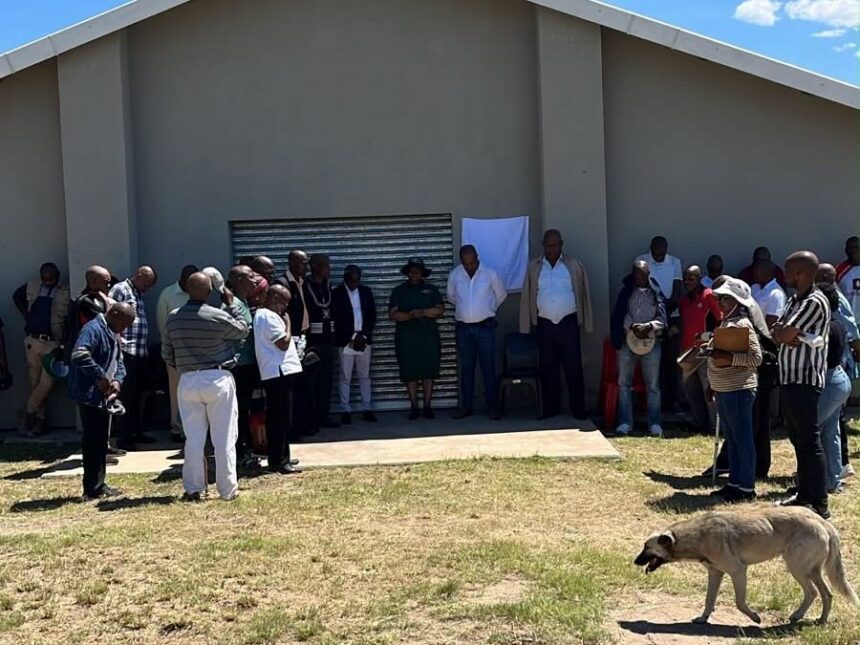
The official launch of the Kwebulana Shearing Shed in Cofimvaba marks an important step towards strengthening wool production, improving livestock health and increasing income opportunities for local farmers in the Eastern Cape. Eastern Cape MEC for Agriculture Nonceba Kontsiwe attended the launch, where she was warmly welcomed by jubilant community leaders and local farmers. The investment includes essential shearing equipment and a dipping tank designed to support better wool handling and improved animal health. By providing farmers with access to these facilities, the initiative aims to improve the quality of wool produced in the area and help local producers participate more effectively in the agricultural value chain. The launch also highlights the role of agricultural infrastructure in promoting rural economic growth, particularly in communities where farming provides an important source of income and livelihood.
The Kwebulana Shearing Shed is intended to give local wool producers access to facilities that can improve their farming practices and the quality of their products. Wool production requires careful handling, from shearing sheep to sorting, storing and preparing the wool for sale. The quality of wool can influence its market value, making suitable equipment and good shearing practices important for farmers seeking better returns. A dedicated shearing facility can provide a more organised environment for these activities and help producers follow appropriate standards when handling their wool. For farmers in Cofimvaba and surrounding communities, the investment creates an opportunity to strengthen production practices and improve the commercial potential of their livestock enterprises.
The provision of essential shearing equipment is a key part of the investment because the tools used during shearing can affect both the efficiency of the process and the condition of the wool. Proper equipment, combined with appropriate skills and handling methods, can help reduce contamination and unnecessary damage to the fleece. Better preparation and sorting can also help ensure that wool is presented in a condition that meets buyers’ expectations. When farmers consistently produce wool of suitable quality, they may be better positioned to compete in the market and secure improved returns, although prices will continue to depend on broader market conditions and the characteristics of the wool. The shearing shed therefore provides a useful foundation for improving product quality, while continued training and good management practices remain essential to achieving lasting results.
The inclusion of a dipping tank highlights the importance of livestock health in sustainable wool production. Sheep that are affected by parasites can experience discomfort, reduced productivity and other health problems that may affect the performance of a flock. Appropriate dipping and parasite-control measures, carried out in line with veterinary guidance and the correct use of approved products, can help protect animals against external parasites. Maintaining healthy sheep is important not only for animal welfare but also for the long-term productivity of wool-producing farms. Access to suitable facilities can make livestock management more practical for farmers, provided that the equipment is maintained properly and used as part of a broader animal health programme.
Improving wool quality and protecting livestock health can help strengthen the financial position of farmers who depend on sheep farming for their livelihoods. Wool sales can provide an important source of income, but the returns farmers receive are influenced by production costs, wool quality, market demand and access to buyers. By improving the conditions under which shearing takes place, the Kwebulana Shearing Shed may help local producers work more efficiently and prepare their wool for sale more effectively. Better livestock management can also support the long-term productivity of flocks, helping farmers maintain their production capacity. The overall benefit will depend on how regularly farmers use the facility, whether they can access appropriate support services and how effectively the improved practices translate into market opportunities.
The launch reflects the Eastern Cape Department of Agriculture’s broader commitment to positioning agriculture as a driver of rural economic growth and development. Agricultural infrastructure can help rural producers overcome practical barriers that limit production, product quality and market participation. Facilities such as shearing sheds can also encourage farmers to work together, share access to equipment and improve the organisation of their farming activities. When combined with agricultural advice, veterinary support and market information, these investments can contribute to stronger and more sustainable farming businesses. Supporting local producers in this way can help agriculture create economic opportunities beyond the farm itself, including work linked to transport, livestock services and the handling and sale of agricultural products.
Meaningful participation in the agricultural value chain is particularly important for farmers who need reliable ways to turn their production into income. Producing wool is only one stage of the process, as farmers must also ensure that their products are prepared, graded, marketed and sold through suitable channels. Access to improved facilities can help producers strengthen the quality of their output, but the benefits are greater when farmers also understand buyer requirements and market conditions. Cooperation among farmers, agricultural officials and other industry participants can help identify opportunities to improve production and strengthen connections with wool buyers. By linking infrastructure investment with skills development and market access, agricultural programmes can help rural farmers become more competitive and build more resilient livelihoods.
Community participation at the Kwebulana Shearing Shed launch also highlights the importance of local involvement in agricultural development. Farmers and community leaders understand the challenges that affect production in their area, including access to equipment, animal health services and opportunities to sell agricultural products. Their involvement can help ensure that new facilities respond to real needs and are used in ways that provide practical benefits. The long-term value of the shearing shed will depend on responsible management, regular maintenance and fair access for the farmers it is intended to serve. Continued engagement between the department and the farming community can help address operational challenges and ensure that the investment contributes to lasting improvements in local wool production.
The timing of the launch is especially significant because it coincides with World Food Day, observed globally on 16 October. World Food Day draws attention to the importance of agriculture, food security and the livelihoods of people who produce food and other agricultural products. Although wool is not a food product, sheep farming contributes to rural economic activity and can help households earn income to meet their needs. Supporting livestock farmers therefore forms part of a wider approach to strengthening rural livelihoods and building communities that are better equipped to manage economic pressures. The occasion provides an opportunity to recognise that sustainable agricultural development involves investing in the people, facilities and services that enable rural communities to remain productive.
World Food Day also reinforces the need for agricultural development that creates lasting benefits rather than focusing only on short-term interventions. Rural communities need access to suitable infrastructure, reliable technical support and opportunities to participate in markets if agriculture is to contribute meaningfully to local development. The Kwebulana Shearing Shed represents a practical investment in the tools and facilities that can help local farmers improve wool production and livestock management. To maximise its impact, the facility will need to be supported by good operating practices, animal health guidance and continued efforts to connect farmers with buyers. These measures can help ensure that the investment supports not only improved shearing conditions but also stronger agricultural businesses and more secure livelihoods.
The official launch of the Kwebulana Shearing Shed in Cofimvaba marks a positive development for wool farmers in the Eastern Cape and reflects the role of agricultural infrastructure in rural economic growth. Through the provision of shearing equipment and a dipping tank, the initiative aims to improve wool quality, support healthier livestock and create opportunities for farmers to increase their income. Its broader value lies in helping local producers strengthen their farming practices and participate more effectively in the agricultural value chain. As the province observes World Food Day, the launch serves as a reminder that sustainable agricultural development depends on practical support for farmers and the communities they sustain. With responsible management, continued technical assistance and stronger market connections, the Kwebulana Shearing Shed can become an important resource for improving local wool production and supporting rural livelihoods.
Join 'Farmers Mag' WhatsApp Channel
Get the latest Farming news and tips delivered straight to your WhatsApp
CLICK HERE TO JOIN