
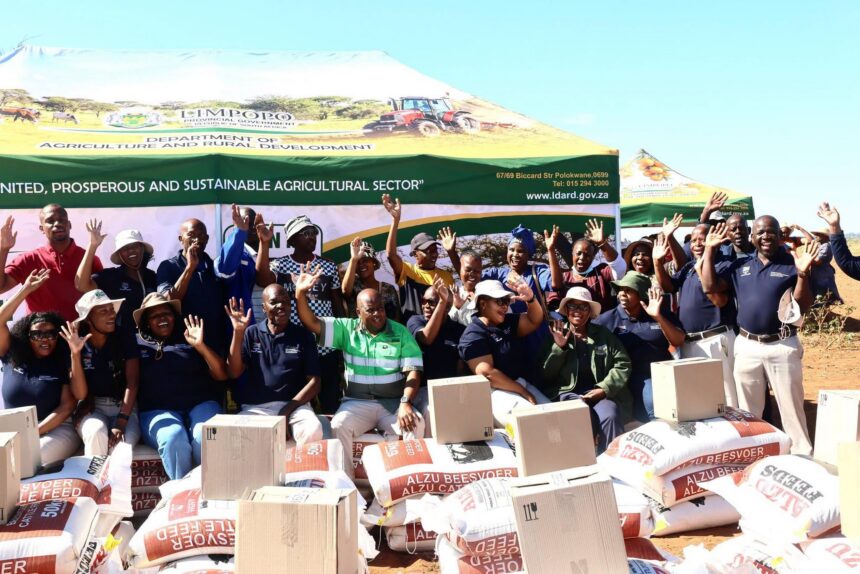
The Limpopo provincial government has continued its efforts to strengthen food security and support rural farmers through the distribution of livestock feed to 145 beneficiaries under a farmer support programme. The latest handover was led by MEC for Agriculture and Rural Development Basikopo Rodgers Makamu, following last week’s launch of farming input vouchers by Limpopo Premier Dr Phophi Ramathuba at Zebediela Citrus Estate. The initiative forms part of a partnership with Women Development Banking Trust and the Mme Zanele Mbeki Foundation to help local farmers access essential agricultural inputs. These include livestock feed and medication intended to support agricultural production, protect farming livelihoods and strengthen small agricultural businesses. The programme reflects the provincial government’s commitment to expanding agricultural participation, improving household food security and creating opportunities for rural communities to build more sustainable livelihoods.
The distribution of livestock feed is an important part of efforts to help farmers maintain their animals and sustain their agricultural activities. Livestock farming provides food and income for many rural households, but farmers can face challenges when essential inputs become difficult to afford. Feed is particularly important for maintaining animal health and condition, especially when natural grazing and other feed resources are limited. Access to appropriate livestock medication can also help farmers manage animal health risks and protect their production activities. By providing support to deserving beneficiaries, the programme aims to ease some of these pressures and help farmers continue contributing to local food production.
The farmer support initiative brings together the Limpopo provincial government, Women Development Banking Trust and the Mme Zanele Mbeki Foundation in a partnership focused on improving access to agricultural resources. Cooperation between government and development partners can help direct support towards farmers who need assistance to maintain or expand their operations. The programme seeks to help beneficiaries obtain essential inputs that may otherwise place pressure on limited household and business budgets. For rural farmers, this type of assistance can provide an opportunity to protect existing agricultural activities while working towards more stable production. The initiative also highlights the role that partnerships can play in supporting agricultural development and strengthening local economic participation.
During the livestock feed handover, MEC Makamu reminded community members that the resources were provided to support agricultural production and were not intended for resale. His message stressed the importance of using the assistance for its intended purpose so that the programme can deliver meaningful benefits to the households receiving support. Agricultural inputs are designed to help farmers maintain their animals, improve their production capacity and strengthen their livelihoods. Selling the supplied resources instead of using them for farming could undermine these objectives and reduce the intended benefit to the household. Makamu’s warning therefore placed responsibility on beneficiaries to manage the support properly and use it to advance their agricultural activities.
“We want to see every household having something in agriculture,” MEC Makamu emphasised. His statement reflects the government’s ambition to encourage wider participation in farming and make agriculture a practical part of household life. Agricultural activities can range from keeping livestock and growing vegetables to producing other crops suited to local conditions and available resources. For households with limited land or financial resources, suitable support can help them begin or sustain small-scale production. Greater participation in agriculture can also help families improve access to food while creating opportunities to earn income from surplus produce or livestock products. The emphasis on household farming highlights the importance of making agricultural opportunities accessible to rural communities.
Food security remains a central concern for households that depend on farming for part of their food supply and income. When farmers can access the inputs they need, they are better positioned to maintain production and protect their agricultural assets. Livestock feed can help farmers care for their animals, while appropriate medication supports animal health management when used correctly. These resources can contribute to more stable farming operations, although their impact depends on how effectively beneficiaries use them and whether they can access other necessary inputs. By supporting local producers, the Limpopo initiative aims to strengthen the role of household and small-scale agriculture in the province’s wider food system.
The programme also has potential benefits for rural economic development because agricultural production supports activity beyond individual farms. Farmers who maintain productive livestock operations may supply local markets with agricultural products and contribute to demand for goods and services linked to farming. Stronger household production can also help families manage some food expenses and pursue opportunities to generate additional income. However, sustainable progress requires continued attention to animal health, access to markets, farming knowledge and the cost of essential inputs. Combining immediate assistance with responsible farm management can help beneficiaries make better use of the resources available to them and work towards more resilient agricultural businesses.
The latest livestock feed distribution follows the farming input voucher launch led by Premier Dr Phophi Ramathuba at Zebediela Citrus Estate the previous week. Together, these activities demonstrate the programme’s focus on helping farmers access resources that support agricultural production and rural livelihoods. The livestock feed handover provided assistance to 145 beneficiaries, while the remaining 155 households were scheduled to receive their share of support the following day. This planned distribution would extend the programme’s reach to more households and provide further assistance to communities participating in the initiative. The rollout also highlights the importance of coordinating agricultural support so that resources reach the intended beneficiaries and contribute to the programme’s food security objectives.
For the beneficiaries, the value of the initiative will depend on turning the support received into productive agricultural activity. Farmers can strengthen this process by using livestock feed responsibly, following appropriate animal care practices and seeking guidance when managing animal health concerns. Households involved in different forms of agriculture can also explore ways to improve production planning and make effective use of their available land, labour and other resources. Continued cooperation between farmers, government and development partners can help identify challenges and improve the delivery of future support. Such efforts can contribute to building agricultural enterprises that are better equipped to sustain livelihoods and respond to changing local conditions.
The Limpopo government’s distribution of livestock feed to 145 beneficiaries marks another step in its efforts to promote household agriculture, support rural farmers and improve food security. Through its partnership with Women Development Banking Trust and the Mme Zanele Mbeki Foundation, the programme seeks to help farmers access essential inputs while strengthening their capacity to maintain productive agricultural activities. MEC Basikopo Rodgers Makamu’s message that the resources must be used for farming reinforces the importance of accountability and responsible use of public and partner-supported assistance. With the remaining 155 households scheduled to receive support the following day, the initiative aims to reach more families and encourage wider participation in agriculture. Sustained support, responsible farming practices and stronger local agricultural activity will remain important to building resilient rural livelihoods and a more sustainable agricultural future for Limpopo.
Join 'Farmers Mag' WhatsApp Channel
Get the latest Farming news and tips delivered straight to your WhatsApp
CLICK HERE TO JOIN