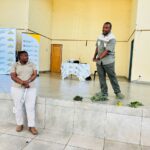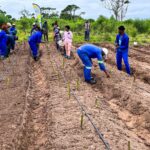

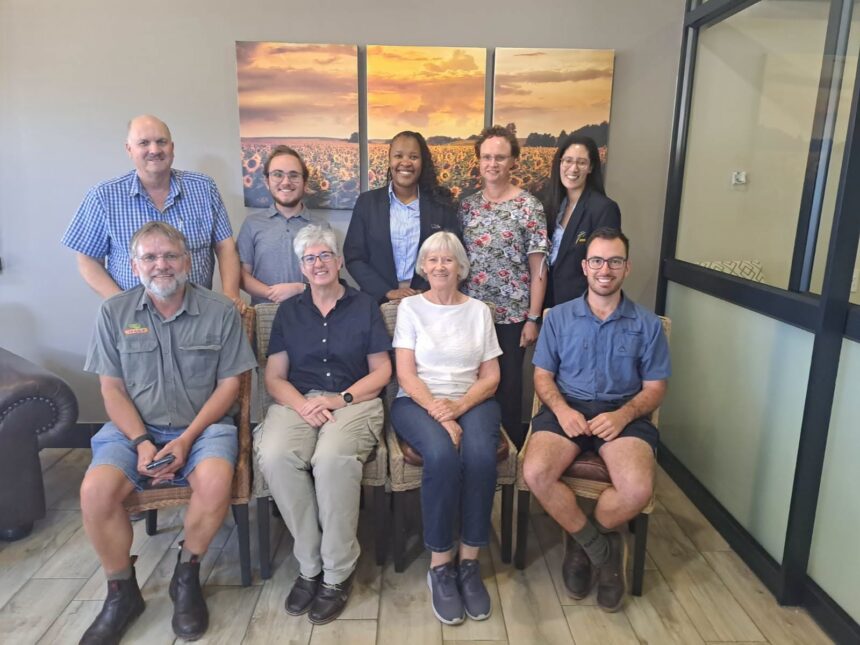
A long-term crop rotation trial in Petrus Steyn is preparing to enter its 11th year in 2026, providing an important opportunity to strengthen knowledge of sustainable farming practices and long-term agricultural productivity in the Eastern Free State. A workshop held in Petrus Steyn brought agricultural stakeholders together to discuss the future of the trial, review previous findings and consider how the research can continue to benefit farmers. Anne-Marie van der Merwe from Potatoes SA led the workshop, outlining the purpose and objectives of the initiative. Professor Martin Steyn from the University of Pretoria provided background on the trial and summarised previous results to help guide discussions about its future direction. The meeting created an opportunity to share knowledge, explore crop rotation programmes suited to the region and support farming practices that protect soil health while maintaining productive agricultural systems.
Crop rotation involves growing different crops on the same land in a planned sequence over several growing seasons. Farmers use this practice to manage soil fertility, reduce the build-up of certain pests and diseases and improve the long-term performance of their fields. Different crops have different nutrient requirements and root systems, which can influence soil structure and the availability of nutrients for later crops. A carefully planned rotation can also help farmers manage weeds and spread production risks across different commodities. However, the benefits depend on factors such as soil type, rainfall, crop selection, planting schedules and farm management practices, making local research valuable when developing recommendations for specific agricultural regions.
The Petrus Steyn crop rotation trial provides a long-term framework for examining how different cropping approaches perform under local farming conditions. As the trial approaches its 11th year in 2026, the experience gathered over previous seasons can help researchers and agricultural stakeholders identify patterns that may not become clear in short-term experiments. Weather conditions, seasonal rainfall and other environmental factors can affect crop performance from one year to the next. Long-term trials allow these variations to be considered when assessing the effects of different crop sequences and management decisions. Although the specific results of the trial were not detailed in the workshop announcement, the review of previous findings provided an important foundation for discussing its continued value.
Anne-Marie van der Merwe from Potatoes SA led the workshop and explained the trial’s purpose and objectives. Her contribution helped establish a framework for discussions about how the research could continue to support agricultural decision-making. Potatoes SA’s involvement is relevant to the wider conversation about crop rotation because potato production can place specific demands on soil management, nutrient planning and pest and disease control. Including potatoes in a suitable rotation may help farmers manage some of these challenges, although the appropriate sequence depends on local conditions and the other crops involved. Clear objectives and cooperation among agricultural stakeholders can help ensure that long-term research remains relevant to the practical needs of farmers.
Professor Martin Steyn from the University of Pretoria contributed valuable background on the trial and presented a summary of previous results. Reviewing earlier findings helps participants understand what has already been learned and identify questions that may require further investigation. It also allows researchers and farmers to discuss whether existing approaches remain suitable or whether adjustments could improve the usefulness of the trial. Agricultural research becomes more valuable when findings are considered alongside practical experience and the conditions farmers face in the field. The workshop therefore provided an opportunity to connect research knowledge with the needs of agricultural production in the Eastern Free State.
The Eastern Free State has agricultural conditions that make region-specific crop rotation planning important. Farmers must consider local rainfall patterns, soil characteristics, seasonal temperatures and the crops that can perform reliably in their production systems. A rotation programme that works well in one region may not deliver the same results in another because climate, soil and farm management practices can differ. Local trials can help generate evidence that is more relevant to the decisions farmers make when planning their planting seasons. By exploring crop rotation programmes designed for the Eastern Free State, the workshop aimed to strengthen the connection between agricultural research and practical farming needs.
Sustainable farming practices were another important focus of the workshop. Maintaining soil health is essential for long-term agricultural production because soil provides the nutrients, water storage and growing conditions crops need to develop. Repeatedly growing the same crop can increase pressure from certain pests and diseases and may contribute to nutrient imbalances if management practices do not address the crop’s requirements. Crop rotation can help manage these risks by changing the crops grown in a field and adjusting nutrient demands over time. When combined with suitable fertilisation, responsible water management and appropriate soil conservation practices, crop rotation can form part of a broader strategy for maintaining productive farmland.
Long-term agricultural trials can also help farmers make more informed decisions about production costs and farm profitability. Different crops require different inputs, machinery, labour and management approaches, which can influence the financial performance of a rotation programme. Comparing crop sequences over several seasons can help researchers examine the relationship between production methods, yields and the resources required to achieve them. Farmers can then use relevant findings alongside their own costs, market conditions and operational needs when planning future production. The workshop’s focus on reviewing past results and considering the future of the trial supports the continued development of practical knowledge for agricultural decision-making.
The discussions in Petrus Steyn also highlighted the value of collaboration between agricultural organisations, universities and farming communities. Organisations such as Potatoes SA can contribute industry knowledge, while university researchers can help assess trial findings and explain their implications. Farmers bring practical experience of local conditions, equipment, labour demands and the challenges of implementing recommended practices. Bringing these perspectives together can help shape research questions that address real production concerns and improve the usefulness of future findings. Continued cooperation will be important as stakeholders consider how the crop rotation trial can contribute to sustainable farming in the Eastern Free State.
As the long-term crop rotation trial moves towards its 11th year in 2026, the Petrus Steyn workshop marks an opportunity to build on previous research and strengthen its value for farmers. The contributions of Anne-Marie van der Merwe from Potatoes SA and Professor Martin Steyn from the University of Pretoria helped inform discussions about the trial’s purpose, earlier results and future direction. By focusing on regional crop rotation programmes, soil health and long-term productivity, the workshop reinforced the importance of evidence-based agricultural practices. Continued research and knowledge sharing can help farmers evaluate their options and adapt their production systems to local conditions. The ongoing trial offers a platform for improving understanding of crop rotation and supporting more sustainable, productive farming across the Eastern Free State.
Join 'Farmers Mag' WhatsApp Channel
Get the latest Farming news and tips delivered straight to your WhatsApp
CLICK HERE TO JOIN