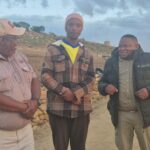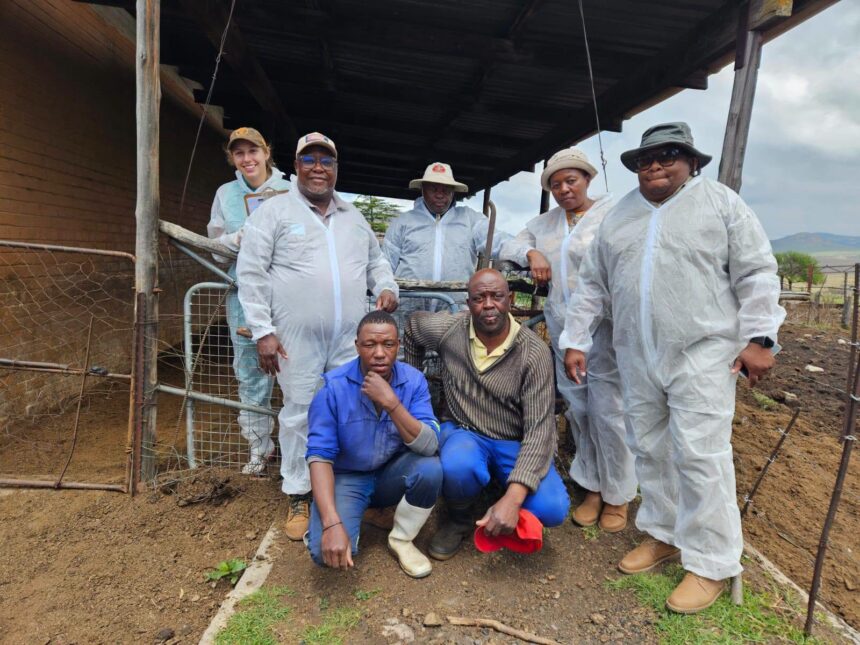
The Free State Department of Agriculture, Rural Development and Environmental Affairs is strengthening efforts to control Foot-and-Mouth Disease through vaccination in livestock farming communities across Thabo Mofutsanyana District. Yesterday, HOD Mr Tshepo Mabilo, accompanied by Acting Chief Financial Officer Mr Manale Tsoai and District Director Mr Mxolisi Tawana, witnessed the vaccination of cattle belonging to Mr Xaba at the Humewood commonage in the Qwaqwa State Vet Area. The vaccination formed part of the provincial EXCO Meets the People programme in Thabo Mofutsanyana District. The initiative brings government officials closer to communities while providing an opportunity to observe agricultural challenges and the services being delivered on the ground. The vaccination activity also demonstrated the importance of direct veterinary support in protecting livestock and maintaining the health of cattle herds.
The vaccination took place at the Humewood commonage, located at the foothills of the Ukhahlamba, or Drakensberg, Mountain in Qwaqwa. Commonages are important livestock areas for farmers who use shared grazing land to keep their animals. Maintaining the health of cattle in these areas is particularly important because livestock may be managed within communal production systems where animal health measures need to be coordinated effectively. Foot-and-Mouth Disease is a serious livestock disease that can affect cattle and other susceptible cloven-hoofed animals. Regular disease control measures such as vaccination form an important part of efforts to protect animal health and limit the potential impact of outbreaks.
The vaccination was conducted by Mr Phalatsi, an Animal Health Technician, and Dr Georgina Agar, a Community Services Veterinarian. Their involvement ensured that the vaccination was carried out by trained animal health professionals working directly with the livestock owners and their animals. Animal Health Technicians play an important role in supporting livestock disease control activities and implementing veterinary programmes in farming communities. Community Services Veterinarians also provide professional veterinary support and contribute to disease prevention and animal health services. Their work at the Humewood commonage reflects the practical role that veterinary teams play in protecting livestock at community level.
By yesterday, a total of 278 cattle had been vaccinated at the commonage. This figure reflects a substantial number of animals reached during the vaccination activity and shows the scale of the work required to support livestock health in communal farming areas. The vaccination team did not stop after completing the work at the commonage and proceeded to vaccinate additional animals in other areas. Continuing the vaccination programme across different locations allows veterinary teams to reach more livestock owners and expand disease control efforts. The movement of the team between areas also highlights the ongoing nature of animal health work in rural communities.
Foot-and-Mouth Disease control is important because the disease can have serious consequences for livestock production and agricultural trade. Protecting cattle from infectious diseases helps farmers maintain healthier herds and reduces risks associated with animal health emergencies. Disease control also requires cooperation between farmers, animal health professionals and government authorities. Farmers have an important role in making their animals available for vaccination and following veterinary guidance. Government veterinary services, in turn, provide technical support and implement disease control programmes designed to protect livestock and support the agricultural sector.
The EXCO Meets the People programme provides an opportunity for government leadership to see agricultural activities and challenges directly within communities. The presence of HOD Tshepo Mabilo, Acting CFO Manale Tsoai and District Director Mxolisi Tawana at the Humewood commonage placed livestock health within the wider programme of community engagement. Their visit allowed senior officials to witness the vaccination process and see the work being undertaken by veterinary personnel. Direct engagement with agricultural communities can also help officials better understand the practical conditions faced by livestock farmers. This type of interaction is important when government programmes need to respond to conditions on the ground.
For livestock owners in Qwaqwa, effective animal health services are essential to protecting their cattle and supporting continued farming activities. Cattle are an important agricultural resource for many rural households, making disease prevention a key part of responsible livestock management. A healthy herd can provide farmers with greater stability while supporting activities such as breeding and livestock production. Disease outbreaks can create major challenges for farmers, which makes prevention and early intervention important. Vaccination is therefore one of the tools available to veterinary authorities and farmers as part of broader disease management efforts.
The vaccination of 278 cattle at the Humewood commonage also highlights the importance of reaching animals in communal farming environments. Large numbers of livestock may be kept across different locations, which can make veterinary service delivery demanding. Animal health teams need to work efficiently while ensuring that livestock owners understand the purpose and importance of vaccination. Cooperation from farmers can make vaccination campaigns more effective and help veterinary teams reach more animals. Continued communication between livestock owners and veterinary services is therefore an important part of disease control.
The work also demonstrates that animal health programmes depend on more than veterinary professionals alone. Government officials, animal health technicians, veterinarians and farmers all have different responsibilities in maintaining livestock health. Farmers need to cooperate with veterinary teams and follow disease control requirements, while technical teams provide the necessary professional services. Senior government officials help oversee programmes and ensure that agricultural services remain connected to community needs. When these roles work together, livestock disease control efforts can reach more farmers and animals.
The decision by the vaccination team to continue to other areas after completing the work at Humewood shows that the programme extends beyond a single commonage or livestock owner. More animals can be protected when veterinary teams continue their work across different communities. This is particularly relevant in a district such as Thabo Mofutsanyana, where livestock production forms part of rural agricultural activity. Reaching more cattle can strengthen the overall animal health response and improve awareness among livestock owners. Continued vaccination activity will remain important as veterinary services work with farmers to manage Foot-and-Mouth Disease risks.
The Humewood vaccination activity is a practical example of how government agricultural programmes can directly support livestock farmers. The participation of senior DARDEA officials through the EXCO Meets the People programme connected government leadership with frontline veterinary services. The vaccination of 278 cattle at the commonage provided direct disease prevention support to livestock owners while the veterinary team continued to other areas. The involvement of an Animal Health Technician and Community Services Veterinarian ensured that the work was carried out through the appropriate animal health structures. As vaccination activities continue across Thabo Mofutsanyana District, sustained cooperation between farmers and veterinary services will remain essential for protecting cattle, supporting rural livelihoods and strengthening livestock health in the Free State.
Join 'Farmers Mag' WhatsApp Channel
Get the latest Farming news and tips delivered straight to your WhatsApp
CLICK HERE TO JOIN