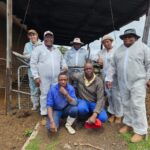
Taung Agricultural College (TAC) has opened its doors to more than 1,300 learners from 11 schools in the Dr Ruth Segomotsi Mompati District, giving young people a closer look at the education, careers and opportunities available in South Africa’s evolving agricultural sector. The Open Day brought together learners, educators, alumni, agricultural officials, professionals and local farmers for a day focused on learning, career guidance and practical exposure. The event highlighted the important role of agricultural education in preparing young people for a sector that is increasingly shaped by technology, research, engineering and innovation. For learners considering their future studies, the event demonstrated that agriculture extends far beyond traditional farming. It offers opportunities across a wide range of specialised fields that are essential to food production, natural resource management and rural development.
One of the strongest features highlighted during the Open Day was TAC’s unique position in agricultural education. The college is the only agricultural college in South Africa offering a diploma in irrigation, giving learners an opportunity to specialise in a field that plays an important role in agricultural production. Irrigation knowledge is particularly relevant in a country where farmers must manage water resources carefully while maintaining productive agricultural systems. Training in irrigation can provide students with technical knowledge that supports efficient water use and agricultural development. The specialised nature of the programme makes TAC an important destination for learners who want to build careers around irrigation and related agricultural technologies.
The Open Day provided learners with an opportunity to engage directly with representatives from the National Department of Agriculture and the North West Department of Agriculture and Rural Development. These officials shared information about opportunities available within the agricultural sector and helped learners understand the range of career paths that agriculture can offer. Direct engagement with government departments can be valuable for school learners who may have limited knowledge about agricultural qualifications and employment opportunities. It can also help students understand the support available to those who choose agriculture as a field of study. The presence of government representatives reinforced the connection between agricultural education, skills development and the future needs of the sector.
Agricultural education plays an important role in preparing young people for the technical demands of modern farming and related industries. Farmers increasingly rely on scientific knowledge, data, technology and specialised skills to improve productivity and manage resources. Colleges such as TAC can provide students with practical and theoretical foundations that prepare them for these changing requirements. Agricultural training can also help learners understand the connection between production, markets, natural resources and food security. By exposing young people to these opportunities early, events such as the TAC Open Day can encourage more learners to consider agriculture as a serious professional career.
The involvement of TAC alumni added another important dimension to the event. Former students shared their experiences and demonstrated how agricultural education can lead to careers in farming, agricultural extension and leadership. Their presence gave learners the opportunity to hear from people who had followed similar educational paths and gone on to develop careers in the sector. Alumni experiences can help make agricultural qualifications more relatable because learners can see how classroom knowledge can translate into professional opportunities. The stories also challenged the idea that agriculture offers only one career option, showing that trained agricultural professionals can work across different parts of the sector.
Speakers at the Open Day highlighted several emerging areas that are changing the agricultural industry. Artificial intelligence is becoming increasingly relevant to agriculture as technology develops new ways of analysing information, monitoring crops and supporting decision-making. Research and engineering are also important because the sector needs new technologies, equipment and production methods to meet changing demands. Veterinary science remains essential to livestock health, while food science contributes to the safety, quality and development of food products. Entomology, the study of insects, also has an important role in agriculture because insect pests and beneficial insects can significantly affect farming systems.
The event also introduced learners to verticulture, reflecting the growing diversity of agricultural production methods and technologies. Modern agriculture is expanding into areas that may not resemble conventional farming systems, creating new opportunities for young professionals with specialised skills. These developments demonstrate why agricultural education needs to keep pace with technological and scientific changes. Learners entering agriculture today may find themselves working with digital systems, advanced equipment, research data or new production models. The agricultural careers of the future will therefore require both a strong understanding of farming and the ability to work with new technologies.
Artificial intelligence in agriculture is one example of how the sector is evolving. AI can support agricultural decision-making by processing large amounts of information and identifying patterns that may assist farmers and other professionals. Its development creates potential opportunities for people with skills in agriculture, computer science, data analysis and engineering. Young people who combine agricultural knowledge with technology skills may be well positioned to contribute to the development of future farming systems. For learners attending TAC Open Day, the message was clear that agriculture is becoming increasingly connected to science and technology.
The Open Day also highlighted the importance of research in the future of agriculture. Agricultural research helps develop improved production methods, understand environmental challenges and support farmers with evidence-based knowledge. Research careers can involve areas such as crop production, livestock science, soil management, water management, food science and agricultural technology. Students with an interest in science can therefore find opportunities to apply their skills to practical challenges affecting food production and rural communities. TAC’s educational environment can help introduce learners to these possibilities while giving them a foundation for further studies and professional development.
Engineering is another field with strong links to agriculture, particularly as farms adopt more advanced machinery, irrigation systems and production technologies. Agricultural engineers can contribute to the design and management of equipment and systems used in farming. Irrigation engineering is particularly relevant to TAC because water management remains an important component of productive agriculture. Efficient irrigation can help farmers make better use of available water while supporting crop production. Learners with an interest in mathematics, science and practical problem-solving can therefore find valuable career opportunities where engineering and agriculture intersect.
The Open Day also placed attention on bursaries and financial support for learners who want to pursue agricultural studies. The cost of tertiary education can be a significant consideration for families, making access to financial assistance important for students who meet the relevant requirements. The National Department of Agriculture reaffirmed its commitment to assisting learners who meet the minimum requirements for bursaries at TAC. This support can help more young people access agricultural education and develop skills needed by the sector. Learners interested in studying agriculture should therefore pay close attention to bursary requirements, application processes and academic eligibility.
Financial support is particularly important when encouraging learners from rural communities to enter specialised agricultural fields. Talented students may have the academic ability and interest to pursue agricultural careers but still face financial barriers to tertiary education. Bursary opportunities can help reduce some of these barriers and create pathways into higher education. Access to agricultural training can also benefit communities by producing graduates who return to contribute skills in farming, extension services, research, agribusiness and other areas. Expanding access to agricultural education can therefore have benefits that extend beyond individual students.
The participation of local farmers gave learners another opportunity to connect education with real agricultural production. Farmers showcased their work and interacted with students, providing practical examples of how agriculture operates beyond the classroom. This type of interaction can help learners understand the connection between formal agricultural education and everyday farming activities. It can also show students that agriculture requires business knowledge, practical skills, innovation and persistence. Seeing local producers at work can make the sector more accessible to learners who may already have agricultural activities within their communities.
The attendance of more than 1,300 learners from 11 schools demonstrates the strong interest generated by the Open Day. Bringing such a large group of young people together created an opportunity to introduce students to agricultural careers at an important stage in their education. Learners were able to engage with TAC officials, explore exhibitions and interact with agricultural professionals and farmers. These experiences can help students make more informed decisions when selecting subjects, qualifications and career paths. They can also encourage young people to view agriculture as a sector where they can build professional careers and contribute to South Africa’s future food system.
Agricultural colleges have an important role to play in addressing the skills needs of the farming sector. Modern farms require people who understand production systems, water management, technology, animal health, soil science, business management and environmental sustainability. Agricultural training can help prepare graduates to work directly on farms or in related industries and institutions. It can also provide a pathway for young people who want to become farmers themselves. By offering specialised programmes such as irrigation, TAC contributes to developing skills that are directly relevant to agricultural production and resource management.
The message from the Open Day was also important for the perception of agriculture among young people. Agriculture is sometimes viewed narrowly as a career focused only on manual farm work, but the sector encompasses a much broader range of professions. Scientists, engineers, veterinarians, researchers, food specialists, technology professionals, extension officers and agricultural managers all contribute to the agricultural value chain. The growth of digital agriculture and other technologies is creating additional opportunities for people with diverse academic interests. Young people who choose agriculture can therefore build careers that combine farming with science, technology, business and innovation.
For learners in the Dr Ruth Segomotsi Mompati District, the TAC Open Day provided a direct connection between school education and possible agricultural careers. Students were able to ask questions, engage with professionals and see examples of agricultural work and education. These interactions can help learners understand what qualifications they may need and what opportunities could become available after graduation. They also demonstrate the importance of planning early when considering tertiary education. Learners who are interested in agriculture can use such opportunities to identify suitable fields of study and understand the academic and financial requirements involved.
TAC’s focus on irrigation is particularly significant because water remains a critical resource for agricultural production. Farmers must balance production needs with responsible water management and changing environmental conditions. Professionals trained in irrigation can contribute to the design, operation and improvement of systems that deliver water to crops efficiently. This specialised knowledge can support farmers seeking to improve productivity while managing one of the most important resources in agriculture. TAC’s irrigation diploma therefore provides learners with an opportunity to develop skills linked to a practical and technically demanding area of agricultural production.
The Open Day showed that the future of agriculture will require young people who are willing to learn, adapt and explore new areas of knowledge. From artificial intelligence and engineering to veterinary science, food science, research and entomology, agricultural careers are becoming increasingly specialised. At the same time, traditional farming remains an important foundation of the sector, creating a need for professionals who understand both practical production and modern technology. Agricultural colleges can help bridge these areas by giving students knowledge that connects theory with real-world applications. Events such as the TAC Open Day help learners see this wider picture before they make important decisions about their education and careers.
Taung Agricultural College is therefore playing a role in opening agricultural education opportunities to a new generation of South Africans. Its specialised irrigation diploma, interaction with industry and government and connection with farming communities provide learners with exposure to different parts of the agricultural sector. The participation of alumni also shows how agricultural education can develop careers that extend into farming, extension and leadership. With bursary opportunities available to qualifying students, more learners may have the chance to access specialised agricultural training. The Open Day demonstrated that agricultural education is not simply about preparing people to farm, but about preparing young professionals to contribute to an increasingly technical, innovative and knowledge-driven sector.
The strong turnout at the TAC Open Day provides an encouraging sign for the future of agricultural education and youth participation in the sector. More than 1,300 learners were given the opportunity to explore agriculture through direct engagement with educators, officials, farmers, alumni and professionals. They saw that agriculture offers careers in both established fields and emerging areas driven by science and technology. TAC continues to provide a pathway for learners who want to develop practical and specialised agricultural skills, including expertise in irrigation. As agriculture continues to evolve, the young people who walked through the college’s doors have an opportunity to become the farmers, scientists, engineers, researchers, veterinarians, food specialists and agricultural leaders who will help shape South Africa’s agricultural future.
Join 'Farmers Mag' WhatsApp Channel
Get the latest Farming news and tips delivered straight to your WhatsApp
CLICK HERE TO JOIN