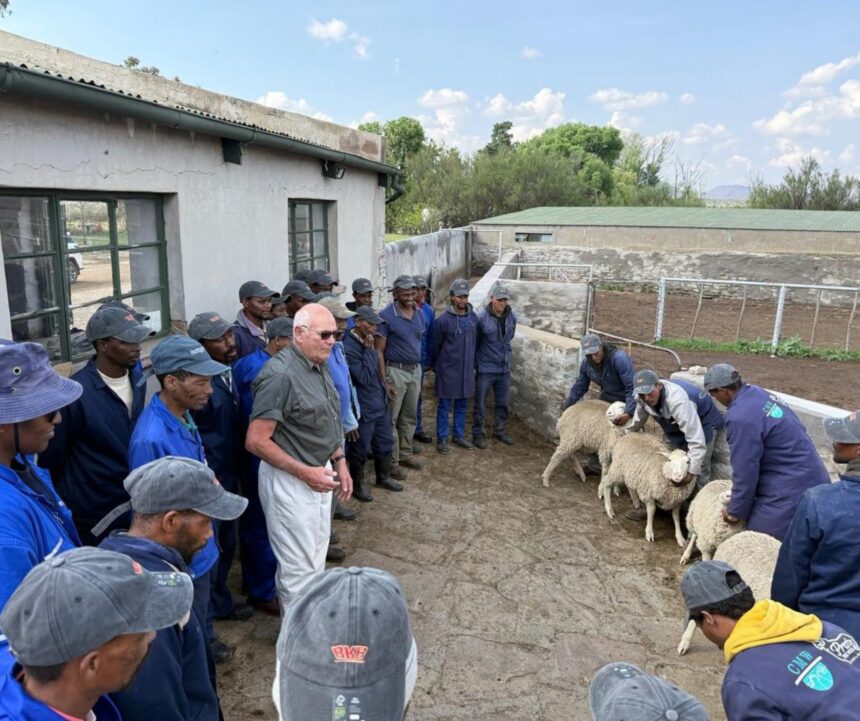
A successful day of learning, knowledge sharing and hands-on experience gave 30 livestock farming attendees an opportunity to strengthen their understanding of sheep farming at Macasserfontein near Middelburg in the Eastern Cape. Held on 22 September, the “365 Days on the Livestock Farm in One Day” course focused on practical aspects of managing a sheep enterprise. The training covered flock management, planning, animal health, sheep handling and wool classing. These areas are important parts of day-to-day livestock farming because they require farmers to make informed decisions throughout the production cycle. By combining classroom learning with practical demonstrations, the course gave participants an opportunity to connect farming knowledge with real situations on a livestock farm.
The course was designed to provide a broad view of the activities and decisions involved in running a livestock farm. Rather than focusing on one part of sheep production, the programme addressed several areas that farmers need to understand as part of effective flock management. Planning is particularly important because livestock farming involves regular tasks that must be carried out at the appropriate time. Animal health also requires attention because farmers need to monitor their sheep and understand the basic principles involved in maintaining a healthy flock. Bringing these topics together helped create a more complete learning experience for the 30 attendees who took part.
Flock management formed part of the course and provided participants with an opportunity to consider the different responsibilities involved in managing sheep. Good flock management requires farmers to pay attention to their animals, plan farm activities and make decisions based on the needs of the flock. The course also addressed planning, giving attendees a chance to explore how structured preparation fits into livestock farming. For emerging and established farmers alike, learning how different activities fit into the wider farming operation can help improve day-to-day decision-making. The practical setting at Macasserfontein added value by allowing these lessons to be discussed in an environment where sheep were present.
Animal health was another important part of the training programme. Understanding animal health is essential for farmers who are responsible for maintaining and managing a sheep flock. The course gave attendees an opportunity to learn about this area alongside other key livestock management topics. Having animal health included in a wider programme also showed how different parts of sheep farming are connected. Farmers must consider flock management, planning, handling and other responsibilities as part of the overall operation rather than treating each task as completely separate.
Sheep handling provided one of the most practical elements of the day. With sheep available on site, attendees were able to put some of their learning into practice through hands-on handling and practical demonstrations. This created an opportunity for participants to move beyond classroom discussions and experience working directly with the animals. Practical exposure can help learners better understand how knowledge applies in a real farming environment. The experience also made the course more relevant to the daily responsibilities faced by people working with sheep.
The presence of sheep at Macasserfontein allowed the training to take place in a setting that reflected actual livestock farming conditions. Participants could observe demonstrations and take part in practical sheep handling rather than relying only on theoretical explanations. This helped create a direct link between what was taught during the course and what farmers may encounter during normal flock management activities. The practical component was therefore an important part of the learning experience. It gave attendees the opportunity to build confidence through direct participation while reinforcing the information covered during the course.
Wool classing was also included among the subjects covered during the “365 Days on the Livestock Farm in One Day” course. For sheep farmers involved in wool production, understanding wool classing forms part of managing the value and presentation of wool. Including the topic alongside flock management, planning, animal health and sheep handling gave participants a wider perspective on sheep farming. It demonstrated that livestock production involves a range of activities that extend from animal care and management to the handling of products from the farm. The course therefore addressed both the livestock and production aspects of the sheep farming enterprise.
The involvement of experienced presenters added another important dimension to the day. BKB’s Giepie Calldo, Juan Venter and BG Badenhorst shared their knowledge and experience with the attendees during the course. Their contribution helped bring practical industry experience into the learning environment. Knowledge sharing is particularly valuable in agriculture because farmers often benefit from understanding how experienced people approach real farming situations. The presenters played an important role in making the course an opportunity for both learning and discussion.
The support and involvement of Zoetis and the NWGA were also recognised as part of the event. Their continued support contributed to the learning and knowledge-sharing opportunity provided to the 30 attendees. Agricultural training often depends on collaboration between people and organisations with different areas of knowledge and experience. Bringing these contributions together can create a stronger learning environment for livestock producers. The involvement of these organisations added to the collaborative nature of the day at Macasserfontein.
The course also highlighted the value of taking agricultural education beyond the classroom. Livestock farming is a practical activity, and farmers need knowledge that can be applied to animals and farm situations. Classroom-based information can provide an important foundation, but practical demonstrations give participants an opportunity to see how concepts relate to actual farming work. The combination of instruction, demonstrations and hands-on sheep handling created a more engaging learning experience. It also allowed attendees to ask questions and connect the information being discussed with the realities of working on a livestock farm.
The location near Middelburg in the Eastern Cape provided a suitable setting for this type of practical training. Holding the course at Macasserfontein meant that participants could learn in an environment where sheep farming activities could be demonstrated directly. The day brought together 30 attendees around a shared focus on livestock production and farm management. Their participation reflected the importance of creating opportunities where farmers and agricultural stakeholders can exchange knowledge. The practical nature of the event also helped turn the course into an experience that participants could relate to beyond the training session.
The “365 Days on the Livestock Farm in One Day” course brought several important elements of sheep farming together in a single learning experience. Flock management, planning, animal health, sheep handling and wool classing all formed part of the programme. The availability of sheep on site allowed attendees to apply some of what they had learned through practical demonstrations and hands-on handling. The contributions of Giepie Calldo, Juan Venter and BG Badenhorst, together with the involvement of Zoetis and the NWGA, strengthened the knowledge-sharing environment. Most importantly, the day showed the value of combining practical farming experience with structured learning to support people involved in sheep farming.
The successful event at Macasserfontein was more than a day of presentations because it gave participants the chance to learn, share knowledge and gain practical experience in a real livestock farming environment. The 30 attendees were exposed to a range of subjects that form part of sheep farm management and had an opportunity to take some of that learning directly to the animals. Practical sheep handling and demonstrations helped bridge the gap between theory and the realities of farm work. The course also reinforced the importance of collaboration between presenters, agricultural organisations and farmers in building useful learning opportunities. As livestock producers continue to develop their skills and knowledge, practical training such as this can provide an important foundation for more informed and confident sheep farming.
Join 'Farmers Mag' WhatsApp Channel
Get the latest Farming news and tips delivered straight to your WhatsApp
CLICK HERE TO JOIN