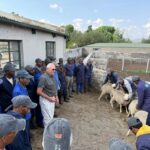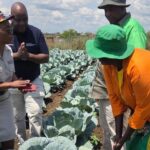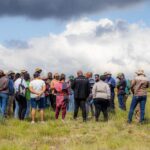
The Northern Cape Department of Agriculture, Environmental Affairs, Rural Development and Land Reform has reaffirmed the importance of practical agricultural training in strengthening farming enterprises and supporting rural livelihoods across the province. Northern Cape MEC for Agriculture, Environmental Affairs, Rural Development and Land Reform, Ms Newrene Klaaste, together with HOD Zolile Monakali and departmental officials, joined farmers and agricultural stakeholders in the Pixley ka Seme District for the final leg of the Department’s Comprehensive Agricultural Support Programme (CASP) Farmers’ Graduation Programme. The graduation marked the completion of training designed to give farmers practical knowledge across several areas of agricultural production and farm management. Addressing the graduates, MEC Klaaste congratulated them on completing their training while stressing that graduation should not be viewed as the end of the development process. She emphasised that the real value of the programme will be measured by how effectively farmers apply their new skills to improve production, strengthen their farming enterprises and support their livelihoods.
Agricultural training is an important component of farmer development because production requires both practical experience and technical knowledge. Farmers need to understand the biological, financial and operational factors that influence the performance of their enterprises. Training can help producers improve their decision-making and respond more effectively to challenges affecting crops, livestock and agricultural infrastructure. It can also give emerging farmers knowledge that supports better planning and more efficient use of available resources. Through the CASP Farmers’ Graduation Programme, the Northern Cape Department is investing in skills development as part of a broader effort to strengthen agricultural participation and rural economic activity.
The scale of the investment in agricultural training demonstrates the importance placed on developing farmer capacity. During the 2024/25 financial year, approximately R3.5 million was allocated through CASP towards agricultural training across the Northern Cape. The programmes reached 1,682 beneficiaries through non-credit-bearing training programmes and 613 beneficiaries through accredited credit-bearing programmes. These figures show that the training initiative included different forms of learning designed to reach farmers with varying development needs. Accredited and non-credit-bearing programmes can provide different pathways for skills development while contributing to the broader objective of strengthening agricultural knowledge among producers.
The training was implemented in partnership with the Northern Cape Agricultural Incubator, known as NCAI. Agricultural incubators can play an important role in supporting farmers as they develop the knowledge and capabilities needed to establish or strengthen agricultural enterprises. The partnership brought together departmental support and specialised training in areas relevant to different types of farming activities. This approach recognises that farmers require practical skills that correspond with the production systems and opportunities available to them. Collaboration between agricultural institutions and producers can also help ensure that training remains connected to the realities of farming.
The range of subjects covered by the programme reflects the diverse skills required in modern agricultural production. Poultry production, for example, requires knowledge of animal management, feeding, disease prevention, housing and production planning. Hydroponics introduces farmers to a production system that relies on controlled growing conditions and careful management of water and nutrients. Soil fertility management and crop protection are important for producers involved in crop farming because soil condition and plant health can directly influence production outcomes. By providing training across these areas, the programme gives beneficiaries an opportunity to develop knowledge that can be applied within different agricultural enterprises.
Animal breeding and health also formed part of the training programme, providing relevant knowledge for livestock farmers. Effective livestock production requires attention to animal health, breeding decisions, nutrition and general herd management. Farmers need to recognise that maintaining healthy animals is closely connected to productivity and the financial performance of a livestock enterprise. Appropriate breeding practices can also contribute to achieving specific production objectives when farmers make decisions based on the characteristics and needs of their herds. Training in these areas can strengthen farmers’ ability to manage livestock more systematically and make informed production decisions.
Agricultural infrastructure maintenance and welding were also included in the training, highlighting the importance of practical technical skills on farms. Agricultural enterprises rely on infrastructure and equipment that need regular maintenance and, in some cases, repair. Farmers who have relevant technical knowledge may be better prepared to identify maintenance requirements and address certain practical problems on their operations. Welding skills can have applications in the repair and construction of suitable farm structures and equipment, depending on the farmer’s needs and capabilities. Including these subjects in the training programme recognises that successful farming involves much more than planting crops or keeping livestock.
MEC Klaaste’s message to graduates placed strong emphasis on applying knowledge after training. Completing a course provides farmers with new information, but the long-term benefit depends on whether that knowledge is used to improve daily farming decisions and enterprise performance. Farmers can apply training by reviewing their production practices, improving resource management and adopting techniques that are appropriate for their specific operations. The transition from classroom or practical training to implementation can require additional guidance, particularly when farmers encounter challenges that were not covered in detail during the programme. Continued support can therefore help ensure that training produces practical results.
The call for continued mentorship is important because agricultural development is an ongoing process. Farmers may understand a new production method but still need guidance when applying it under their own conditions. Mentors and agricultural professionals can help producers evaluate their progress, identify problems and adjust their practices where necessary. Extension services can provide another important link between agricultural knowledge and farmers in their communities. Consistent interaction with farmers can help reinforce training and support producers as they work to improve their enterprises.
Business development guidance is equally important for farmers seeking to strengthen their operations. Agricultural production involves financial decisions that can determine whether an enterprise remains viable over time. Farmers need to understand their costs, production plans, potential income and the risks associated with their particular agricultural activities. Business development support can help producers approach farming as an enterprise that requires planning, record keeping and informed financial decisions. Combining technical agricultural knowledge with business skills can give farmers a stronger foundation for building sustainable farming enterprises.
Market linkages also form an important part of the journey from training to commercial agricultural activity. Producing a crop, livestock product or other agricultural commodity does not automatically guarantee a profitable outcome. Farmers need appropriate markets where they can sell their products under conditions that support the sustainability of their enterprises. Market access can also influence production decisions because farmers need to understand what buyers require in terms of quality, volume, timing and consistency. Connecting farmers with suitable markets can therefore help turn increased production capacity into stronger economic opportunities.
The emphasis on livelihoods also highlights the wider social importance of farmer development in the Northern Cape. Agriculture can provide income and food for farming households while contributing to economic activity in rural communities. When farmers strengthen their production and business capabilities, the benefits can extend beyond individual enterprises through demand for agricultural inputs, services, transport and other activities. However, the scale of these benefits depends on farmers having the resources and support needed to maintain productive operations. Training is therefore one part of a broader system that must include continued technical assistance, business development and market opportunities.
The CASP Farmers’ Graduation Programme also demonstrates the value of recognising farmers as active participants in agricultural development. Training programmes are most useful when farmers can connect what they learn with the conditions of their own farms and communities. The presence of farmers and agricultural stakeholders at the Pixley ka Seme District graduation provided an opportunity to recognise the work completed while reinforcing the need for continued development. The participation of MEC Klaaste, HOD Zolile Monakali and departmental officials further highlighted the Department’s engagement with agricultural stakeholders. Such interaction can help maintain a focus on the practical outcomes that agricultural support programmes are intended to achieve.
The final graduation leg in Pixley ka Seme District therefore represents more than the completion of a training programme. It marks a point at which beneficiaries can begin applying newly acquired knowledge to their production activities and farming businesses. The approximately R3.5 million invested in agricultural training during the 2024/25 financial year provided opportunities for thousands of beneficiaries across the province to develop skills through different training pathways. The subjects covered, from poultry production and hydroponics to soil fertility, animal health, infrastructure maintenance and welding, reflect the varied technical requirements of agriculture. Continued mentorship, extension services, business guidance and market linkages will be important if these skills are to translate into lasting improvements.
The Northern Cape’s investment in farmer training highlights the connection between agricultural knowledge, productive farming and rural economic development. The CASP Farmers’ Graduation Programme has provided beneficiaries with practical skills that can support different agricultural enterprises, but the next stage will depend on effective application and continued support. MEC Newrene Klaaste’s call for mentorship, extension services, business development guidance and market linkages recognises that successful farmer development requires sustained engagement beyond graduation. Farmers need opportunities to turn knowledge into production, production into viable enterprises and viable enterprises into stronger livelihoods. By continuing to connect training with practical support and market opportunities, agricultural stakeholders can help strengthen farming communities and contribute to food security and economic development across the Northern Cape.
Join 'Farmers Mag' WhatsApp Channel
Get the latest Farming news and tips delivered straight to your WhatsApp
CLICK HERE TO JOIN