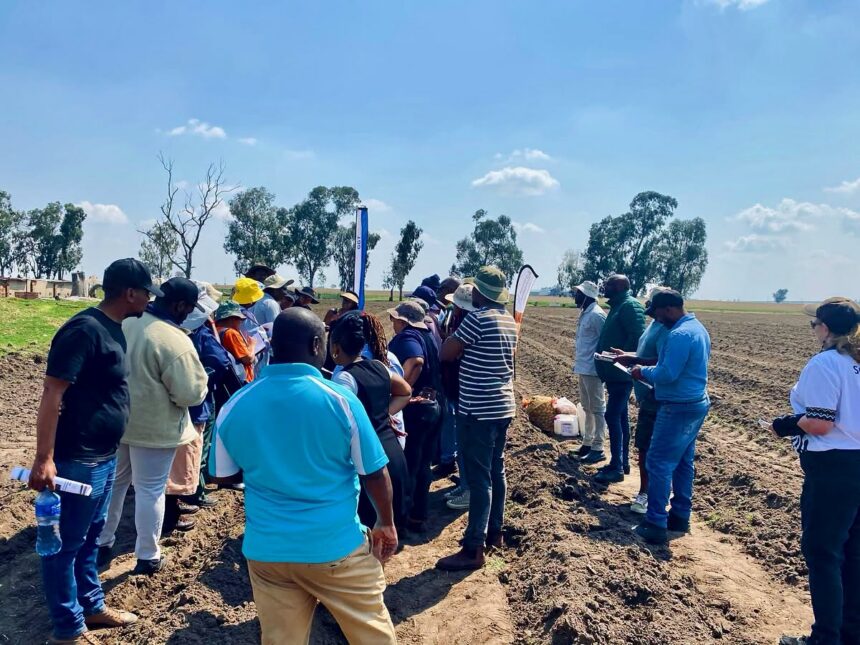
The Agricultural Research Council’s Vegetable and Ornamental Plants Institute, known as ARC-VIMP, participated in a Potato Planting Demonstration Day hosted by Mohube en Seuns Vervoer. The event provided farmers and other participants with an opportunity to learn about potato production through practical field demonstrations. Rather than focusing only on theory, the day brought participants directly into the field to observe and engage with important stages of the potato planting process. The demonstrations covered soil preparation, seed planting and good planting practices that can influence crop establishment. This type of practical agricultural training can help farmers strengthen their knowledge and apply new skills more confidently in their own farming operations.
Potato farming requires careful preparation before seed is placed in the soil. Soil preparation creates the conditions needed for potatoes to establish and develop properly during the production cycle. Farmers need to pay attention to the condition of the soil and ensure that the planting area is suitably prepared before planting begins. The demonstration provided participants with a practical view of this process, allowing them to see how preparation is carried out in the field. Seeing these steps directly can make technical information easier to understand and apply.
Seed planting was another important part of the demonstration. Potato production depends on appropriate planting practices because the crop must establish successfully after planting to support later growth. During the demonstration, participants were able to observe the planting process and gain a better understanding of how potato seed is handled and placed in the prepared soil. Practical demonstrations can help farmers connect instructions with the physical tasks involved in crop production. This is particularly useful for participants who want to improve their farming skills through direct experience.
Good planting practices are important for farmers who want to establish productive potato crops. The decisions made during planting can affect how well a crop gets started and how efficiently farmers manage the field during the production season. A demonstration allows participants to observe these practices in real conditions rather than relying entirely on written explanations or classroom discussions. Farmers can ask questions, watch the process and gain a clearer understanding of what is expected at each stage. This approach makes agricultural knowledge more practical and easier to transfer from training sessions to working farms.
The participation of ARC-VIMP added a research and technical knowledge component to the event. Agricultural research institutions play an important role in developing and sharing knowledge that can support crop production. Their involvement in field-based activities creates opportunities for farmers to engage with technical information in a practical setting. The Potato Planting Demonstration Day brought this knowledge into direct contact with people involved in agricultural production. This connection between research, training and farming can help strengthen the practical use of agricultural knowledge.
Field demonstrations are particularly valuable because farming is a practical activity. Farmers need to understand not only what should be done but also how different production tasks are carried out under field conditions. Watching a process take place can help participants understand the sequence of activities and the care required during planting. It can also give farmers an opportunity to identify areas where they may need additional knowledge or training. Practical learning therefore complements other forms of agricultural education and can strengthen farmers’ confidence in applying new techniques.
The potato planting event also created an opportunity for knowledge sharing among participants. Farmers can learn from technical experts while also exchanging their own experiences and observations. These conversations can help bring together formal agricultural knowledge and the practical experience developed by farmers over time. Sharing information can also encourage participants to think about how different practices could be applied within their own farming conditions. Agricultural events that encourage this kind of interaction can contribute to stronger learning within farming communities.
Soil preparation received attention because it forms an important part of the planting process. A properly prepared field provides the starting point for establishing a crop and allows farmers to carry out planting more effectively. Understanding soil preparation also helps farmers appreciate that successful crop production begins before planting takes place. The demonstration gave participants an opportunity to see the process rather than simply hearing about it. This practical exposure can help farmers make more informed decisions when preparing their own fields for potato production.
Potato planting also requires farmers to pay attention to good agricultural practices throughout the process. Small details can matter when establishing a crop, particularly when farmers are working to achieve consistent production. Practical training helps participants see these details in context and understand how different planting activities fit together. The demonstration therefore went beyond simply showing participants how to put seed into the ground. It provided a broader learning experience focused on preparation, planting and the practical application of good farming practices.
Events such as the Potato Planting Demonstration Day can also support skills development among emerging farmers and other agricultural participants. Access to practical knowledge can help farmers strengthen their ability to manage crop production activities. It can also encourage farmers to ask questions about practices they may not fully understand and seek further guidance where necessary. Skills gained through demonstrations can be useful when farmers return to their own fields and begin applying what they have learned. This makes hands-on training an important part of efforts to improve agricultural knowledge and production capacity.
The event hosted by Mohube en Seuns Vervoer demonstrates the value of bringing agricultural learning directly into the field. Participants were able to observe soil preparation, seed planting and good planting practices in a practical environment. The involvement of ARC-VIMP helped create an opportunity for knowledge exchange between agricultural research and farming practice. Such events can help bridge the gap between technical information and the everyday tasks farmers need to perform. By learning through observation and participation, farmers can gain practical skills that are easier to apply when they return to their own production activities.
The Potato Planting Demonstration Day also highlights the importance of continued knowledge sharing within the agricultural sector. Farmers operate in conditions where production methods, resources and practical challenges can vary, making access to relevant knowledge valuable. Demonstrations provide a direct way of sharing farming practices while allowing participants to engage with the process and learn through experience. This can complement other forms of farmer training and agricultural extension support. Continued opportunities for practical learning can help strengthen the skills needed to manage productive and sustainable farming operations.
The participation of ARC-VIMP in the event reinforces the role that agricultural research and practical farmer training can play together. Research has greater value when useful knowledge reaches farmers and can be applied in real production environments. Field demonstrations provide one way of making that connection by taking technical knowledge into practical farming situations. Participants at the event gained exposure to the potato planting process while engaging directly with the work being demonstrated. This combination of knowledge sharing and hands-on learning can support stronger agricultural skills at farm level.
The Potato Planting Demonstration Day hosted by Mohube en Seuns Vervoer was therefore an opportunity to turn agricultural knowledge into practical experience. With ARC-VIMP participating, farmers and other attendees were able to gain direct exposure to soil preparation, potato seed planting and good planting practices. The value of such demonstrations lies in their ability to connect information with the real tasks involved in farming. Practical skills can help farmers better understand production processes and apply appropriate practices in their own fields. Continued investment in field-based learning and knowledge sharing can contribute to stronger farming skills and support more productive potato production.
Join 'Farmers Mag' WhatsApp Channel
Get the latest Farming news and tips delivered straight to your WhatsApp
CLICK HERE TO JOIN