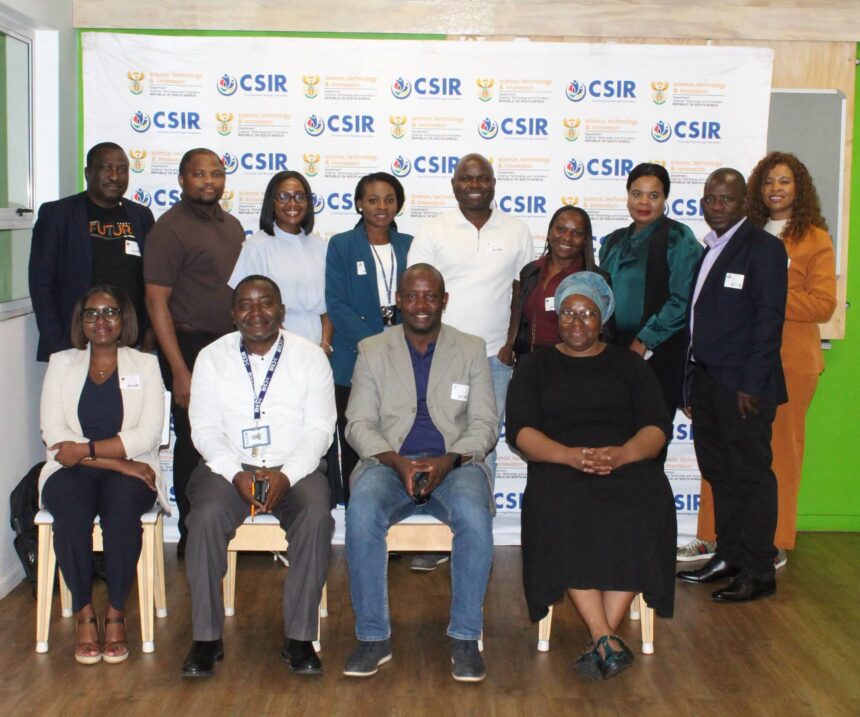
The South-South Cooperation Exchange Visit between South Africa and Zambia continued at the Council for Scientific and Industrial Research (CSIR) in Pretoria, where the Zambian delegation was introduced to the Precision Agriculture Information System (PAIS). The engagement provided an opportunity to demonstrate how digital technologies can support farmers and agricultural institutions in making more informed decisions. PAIS combines satellite data and artificial intelligence to generate information that can assist with crop monitoring, yield prediction, input optimisation and the early identification of potential pests and diseases. The demonstration highlighted the growing role of digital tools in improving the way agricultural information is collected, analysed and used. It also formed part of a broader exchange aimed at sharing practical experiences between South Africa and Zambia in digital agriculture and artificial intelligence.
Precision agriculture uses data and technology to provide more detailed information about farming conditions and crop performance. Traditional farming decisions often rely on observations made in the field, historical experience and available weather information, while digital systems can add information gathered from satellites and other data sources. PAIS brings these capabilities together to provide insights that can support decisions at different stages of crop production. Farmers and agricultural officials can use information about crop conditions to identify areas that may require closer attention. This can contribute to more targeted interventions and improve the use of agricultural resources.
Satellite data plays an important role in the PAIS platform because it can provide information about large agricultural areas without requiring every part of a field to be physically inspected. Regular satellite observations can help track changes in vegetation and crop conditions over time. When this information is processed through artificial intelligence, it can provide additional insights that may assist farmers and agricultural service providers. This can be particularly useful when agricultural institutions need to monitor conditions across large areas. The combination of satellite information and AI demonstrates how digital systems can expand the amount of information available for agricultural decision-making.
Crop monitoring was one of the key capabilities highlighted during the CSIR demonstration. Monitoring crops can help identify changes in field conditions and provide information that supports timely agricultural interventions. Early information can be particularly important when crops are exposed to conditions that could affect their development or productivity. Digital monitoring systems can provide another source of information that complements observations made by farmers and agricultural specialists. By bringing these sources of information together, agricultural stakeholders can develop a more detailed understanding of crop conditions.
The platform also provides capabilities related to yield prediction, which can support agricultural planning and decision-making. Estimates of expected yields can help farmers and agricultural institutions assess potential production levels before harvesting takes place. Such information can contribute to planning around inputs, logistics, storage and markets. Yield predictions are estimates rather than guaranteed outcomes, and their usefulness depends on the quality and availability of the underlying data. Nevertheless, the ability to use digital information to support production forecasts represents an important application of AI and data-driven agriculture.
Input optimisation is another area where precision agriculture can support more efficient farming. Farmers use inputs such as water, fertiliser and crop protection products to support production, but applying these resources effectively requires information about crop and field conditions. Digital systems can help identify variations within agricultural areas and provide information that may support more targeted use of resources. More precise decisions can help reduce unnecessary applications while ensuring that areas requiring attention are not overlooked. This can support both farm efficiency and more responsible management of agricultural resources.
The early identification of potential pests and diseases was also highlighted as part of the PAIS demonstration. Pests and diseases can affect crop health and production, making early awareness important for farmers and agricultural support services. Digital monitoring can provide indicators of potential problems that can then be investigated and assessed by relevant agricultural specialists. Early information does not replace field verification or professional diagnosis, but it can help direct attention towards areas that may require further assessment. This creates opportunities for technology to support faster and more targeted agricultural responses.
The CSIR engagement also demonstrated how artificial intelligence can contribute to agricultural service delivery. Agricultural institutions often need to provide information and support to farmers operating across large geographic areas. Digital platforms can help organise and analyse information so that agricultural officials have additional tools when advising farmers and monitoring production conditions. This can strengthen the connection between data, technical knowledge and services provided to farming communities. The application of AI in this context therefore extends beyond individual farm decisions to include broader agricultural planning and support.
The exchange visit between South Africa and Zambia provides an opportunity for both countries to share experiences in an area that is becoming increasingly important to agricultural development. Digital agriculture requires more than technology alone, as successful implementation also depends on appropriate skills, data, infrastructure and systems for delivering information to users. Sharing practical experiences can help participating institutions understand how digital tools can be developed and applied within different agricultural environments. The engagement at CSIR allowed the Zambian delegation to see an example of how South African scientific and technological capabilities are being applied to agriculture. Such exchanges can support further discussion about opportunities for cooperation in digital agriculture and AI.
The introduction of PAIS during the South-South Cooperation Exchange Visit highlights the potential of technology to support more informed and efficient agricultural decision-making. Satellite data and artificial intelligence can provide useful information for crop monitoring, yield prediction, input management and the early identification of potential agricultural risks. These capabilities can complement the knowledge and experience of farmers, agricultural officials and technical specialists. The continued exchange of knowledge between South Africa and Zambia can contribute to a better understanding of how digital agriculture tools can be applied in practical settings. The CSIR engagement therefore represents another step in the ongoing cooperation between the two countries as they explore the role of digital technologies and AI in strengthening agricultural systems.
Join 'Farmers Mag' WhatsApp Channel
Get the latest Farming news and tips delivered straight to your WhatsApp
CLICK HERE TO JOIN