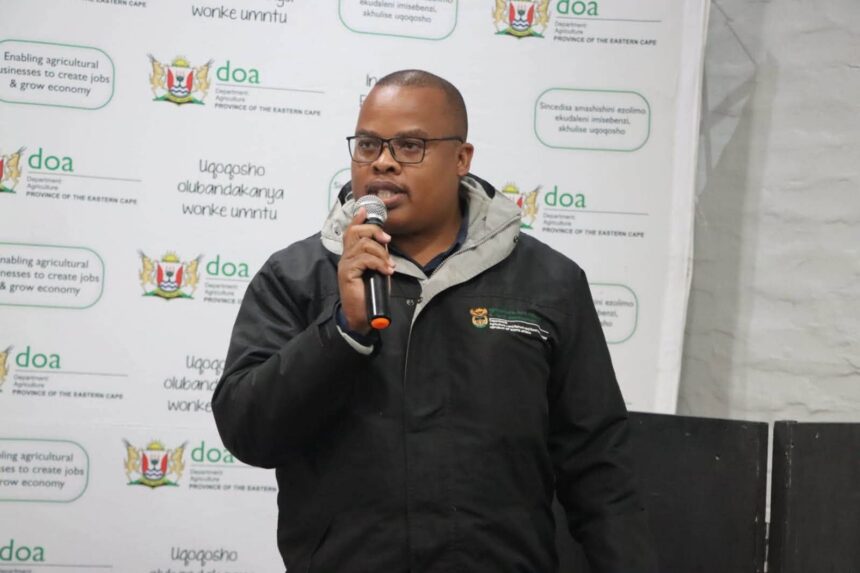
The Eastern Cape Department of Agriculture is hosting a National Agrometeorological Committee meeting at Kouga Local Municipality in the Sarah Baartman District Municipality, bringing together agricultural stakeholders to address challenges affecting farmers. The meeting is focusing on three key areas, namely post-disaster recovery and rehabilitation, migratory pests and climate change. These issues have a direct impact on farm productivity, infrastructure and the ability of farmers to maintain sustainable production. The discussions are particularly relevant to the Sarah Baartman District, where farming communities have experienced significant damage from floods. The meeting also provides an opportunity to examine how agricultural authorities and farmers can strengthen preparedness and recovery measures.
During the welcoming remarks, Dr Vuzi Rozani, director for the Sarah Baartman district, highlighted the severity of flood disasters in the area. He noted that Sarah Baartman is the district most affected by flood disasters, placing additional pressure on farmers and agricultural infrastructure. Flooding can damage fields, farm infrastructure and other resources needed for production, leaving farmers with significant recovery challenges. The effects can also continue after the water has receded, particularly when damaged infrastructure or production areas require rehabilitation. Understanding the extent of these challenges is important when planning appropriate recovery measures for affected farming communities.
The district’s importance to the citrus industry adds another dimension to the discussions. Sarah Baartman is the most exporting district in the citrus industry to other countries, making the condition of its farms important to agricultural trade and the broader citrus value chain. Citrus farmers need reliable production systems and infrastructure to maintain their operations and meet market requirements. Flood disasters can disrupt these systems and create additional challenges for producers. Protecting agricultural production in the district therefore has significance for individual farmers as well as the wider citrus industry.
Post-disaster recovery and rehabilitation are central themes of the meeting because farmers need practical support after severe weather events. Recovery starts with understanding what has been damaged and determining what needs to be repaired, replaced or restored. Farmers may also need to adjust their production activities while they recover from the effects of flooding. Rehabilitation requires longer-term planning to help affected agricultural operations return to productive conditions. The discussions at the meeting provide an opportunity for agricultural stakeholders to consider these needs and examine how recovery efforts can better support farmers.
Migratory pests are another concern being addressed during the meeting. Pest movements can create sudden risks for crops and may affect farmers across large areas when conditions allow pest populations to spread. Early monitoring and timely information are important tools for helping farmers identify potential threats and respond appropriately. Agricultural authorities and farmers need effective communication systems to ensure that emerging pest risks are recognised as early as possible. Including migratory pests on the meeting agenda highlights the need to consider biological threats alongside weather-related risks when planning for agricultural resilience.
Climate change also remains an important consideration for farmers as weather conditions can influence production and farm management decisions. Changes in rainfall, temperatures and the frequency or intensity of extreme weather events can create additional challenges for agricultural operations. Farmers need access to relevant information that can help them understand potential risks and make informed decisions about production. Agricultural authorities also need to consider climate-related risks when planning disaster preparedness and recovery programmes. The meeting provides a platform for discussing these issues in relation to the practical realities faced by farmers.
On the second day, committee members will visit farms and agricultural projects affected by floods. The field visits will allow participants to see the impact of flooding directly and gain a clearer understanding of the conditions faced by affected farmers. Visiting farms can provide information that complements discussions held during the meeting and helps stakeholders assess practical recovery requirements. The visits also create an opportunity to engage with farmers about the challenges they have experienced. This direct interaction can help connect broader agricultural planning with the specific needs of farming operations.
In Joubertina, the group will visit DSR Farming, Sterkman Broedery and Kaoank Broedery. These farms form part of the field programme focused on examining agricultural operations affected by flooding. The visits will provide an opportunity to observe the effects of the disaster and consider the requirements for recovery and rehabilitation. For farmers, such assessments can help bring attention to the practical challenges created by severe weather. The information gathered during the visits can also contribute to discussions about future disaster preparedness and agricultural support.
The programme will also include visits to Threepence Farm and Le Roux Farm in the Hankey area. Visiting farms in both Joubertina and Hankey will give the committee a broader view of the impact of flooding across different agricultural operations. Each farm may face different recovery requirements depending on its production activities and the extent of the damage experienced. Direct observation can help stakeholders better understand these differences when considering agricultural recovery measures. The visits will therefore form an important practical component of the committee meeting.
For farmers in the Sarah Baartman District, the meeting comes at a time when disaster preparedness and environmental risks remain important agricultural concerns. Flooding, migratory pests and changing climate conditions can affect production in different ways and require farmers to remain prepared. Strong communication between farmers, agricultural authorities and local structures can help improve awareness of emerging risks. Access to useful information can also support better planning before and after extreme weather events. The discussions and farm visits provide an opportunity to strengthen this connection between agricultural planning and conditions on the ground.
The National Agrometeorological Committee meeting in Kouga Local Municipality places practical farming challenges at the centre of discussions around agricultural resilience. The focus on disaster recovery, migratory pests and climate change reflects the range of risks that farmers need to manage in a changing agricultural environment. The field visits to flood-affected farms in Joubertina and Hankey will add practical insight to the discussions and highlight the recovery needs of individual farming operations. Sarah Baartman’s importance to the citrus industry also underlines the need to protect productive agricultural areas and strengthen their ability to recover from disasters. Continued cooperation between farmers, agricultural authorities and local stakeholders will remain important in supporting productive and resilient farming across the Eastern Cape.
Join 'Farmers Mag' WhatsApp Channel
Get the latest Farming news and tips delivered straight to your WhatsApp
CLICK HERE TO JOIN