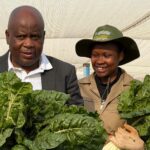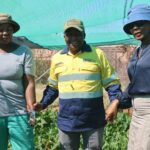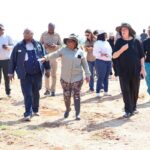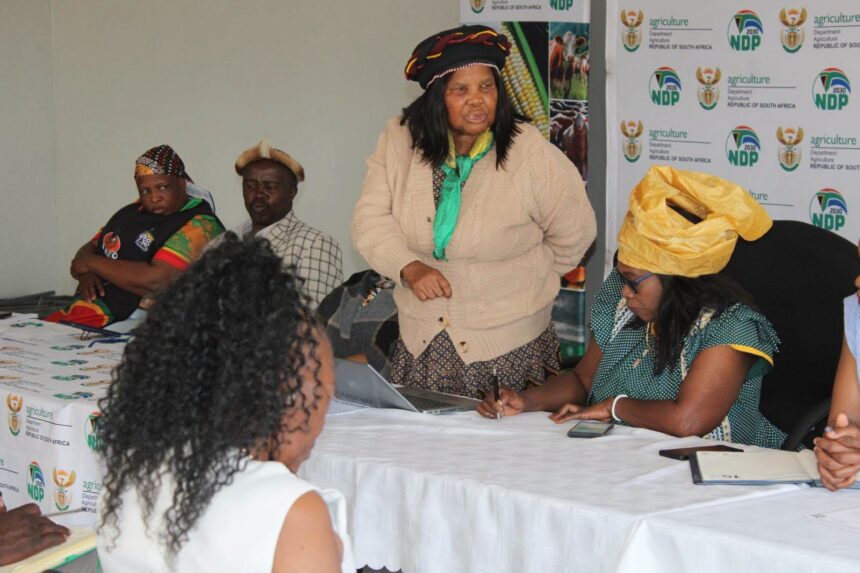
Deputy Minister Nokuzola Capa today paid a courtesy visit to Siyabuswa, where she engaged with the Mayor of Dr JS Moroka Local Municipality and the Ndzundza Mabusabesala Traditional Council on ways to strengthen household food security and advance agricultural development in the community. The engagement focused on practical measures that can help households produce more of their own food while creating wider opportunities for communities to participate in agriculture. Food security remains closely linked to access to land, water, agricultural support and reliable markets. The discussions therefore looked beyond food production alone and considered how local agricultural activity can contribute to stronger household incomes and sustainable livelihoods. The visit highlighted the importance of building productive communities that can play an active role in strengthening local food systems.
A key focus of the engagement was the need to empower households to grow their own food through food gardens. Household food gardens can provide families with access to fresh produce while helping reduce some of the pressure caused by rising food costs. The approach also creates an opportunity for households to make productive use of available spaces around their homes. Tree planting was also highlighted as part of efforts to support productive and sustainable communities. Encouraging households to participate in food production can help build practical agricultural skills and create a stronger culture of food production at community level.
The discussions also placed emphasis on creating opportunities for communities to participate meaningfully in agriculture beyond household food production. Small-scale producers can contribute to local economies when they receive the support and infrastructure needed to increase production. Organising producers can help farmers work together, improve their access to agricultural resources and strengthen their ability to supply buyers. Better coordination can also make it easier for producers to identify suitable markets for their products. This can turn agricultural production from an activity focused mainly on household consumption into a source of income and longer-term economic opportunity.
Market access remains an important part of developing sustainable agricultural livelihoods. Producing food without having reliable buyers can limit the financial benefits that farmers receive from their work. The Deputy Minister therefore emphasised the importance of organising producers and connecting them to markets where their agricultural products can be sold. Stronger links between producers and markets can help farmers understand demand, plan production and develop more sustainable enterprises. For communities such as Siyabuswa, improving these connections could help agriculture contribute more directly to household income generation and local economic development.
Water access was another important issue raised during the engagement because reliable water supplies are essential for consistent agricultural production. Farmers and households cannot maintain productive food gardens or irrigation activities without dependable access to water. A borehole has been provided for the Siyabuswa community, representing an important step towards addressing some of the water challenges affecting agricultural activity. Once the borehole has been installed, the water is expected to be tested to determine its suitability for use. This process will provide important information before the community can fully assess how the water resource can support local needs.
An assessment of the borehole and irrigation requirements is also expected to take place next month. Such an assessment can help establish the extent of the infrastructure and support needed to make agricultural production more viable in the area. Irrigation can play an important role in helping producers maintain crops when rainfall is insufficient or unpredictable. Understanding the community’s water requirements can also support better planning and help ensure that available resources are used effectively. Addressing water constraints alongside production and market challenges can create a stronger foundation for agricultural development in Siyabuswa.
The engagement between the Deputy Minister, the local municipality and the traditional council demonstrates the importance of cooperation in addressing food security and agricultural development. Government structures, traditional leadership and communities each have a role to play in creating conditions that allow local agriculture to grow. Household food gardens can strengthen access to food, while organised producers can create opportunities for income generation and participation in the wider agricultural economy. Water infrastructure can support production, while stronger market connections can help ensure that farmers benefit financially from what they produce. These elements need to work together if agricultural initiatives are to deliver lasting benefits for communities.
The Siyabuswa engagement ultimately placed household empowerment and productive community participation at the centre of efforts to strengthen food security. Growing food at home can help families improve their access to fresh produce, while organised agricultural production can open pathways to income and economic opportunities. Access to water remains essential to turning these ambitions into productive activities, making the installation and assessment of the borehole an important development for the community. Connecting producers to markets will also be necessary to ensure that increased production can translate into sustainable livelihoods. By combining household food production, water access, producer organisation and market opportunities, Siyabuswa can strengthen its local food system while creating a stronger foundation for agricultural development.
Join 'Farmers Mag' WhatsApp Channel
Get the latest Farming news and tips delivered straight to your WhatsApp
CLICK HERE TO JOIN