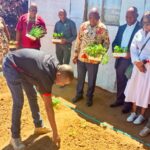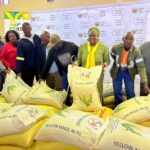
The National Department of Agriculture has launched a nationwide consultative process to shape South Africa’s National Food and Nutrition Security Plan for 2025 to 2033, beginning in Gauteng. The process is designed to bring together stakeholders from agriculture, government, industry, research institutions, civil society and other sectors to strengthen the country’s approach to food and nutrition security. The consultations will be held across all nine provinces, giving stakeholders an opportunity to contribute practical experiences, evidence and recommendations. For the agricultural sector, the process provides an important opportunity to address the conditions that influence food production, market access, agricultural investment and the resilience of food supply chains. The outcome will be a long-term framework intended to support a more resilient food system that can respond to changing conditions while improving access to sufficient and nutritious food.
Food and nutrition security depends on the strength of the entire agricultural and food value chain. Production is a critical starting point, but food must also move efficiently from farms and other production areas through processing, storage, transport and markets before it reaches consumers. Challenges in any part of this chain can affect food availability, affordability and access. The development of the National Food and Nutrition Security Plan therefore presents an opportunity to examine these interconnected issues and identify areas where stronger coordination is required. A plan that reflects the realities of food production and distribution can provide a stronger foundation for addressing food security challenges over the long term.
The nationwide consultation process is particularly important because agricultural conditions differ across South Africa’s nine provinces. Each province has different production systems, climatic conditions, water resources, infrastructure, markets and rural economies. These differences mean that national food security strategies need to take local conditions into account while maintaining clear national objectives. Provincial consultations can provide valuable information about challenges affecting production and food supply in different regions. They can also help identify successful approaches that could potentially be expanded or adapted elsewhere in the country.
Agricultural producers and other participants in the food value chain have an important opportunity to contribute to the consultation process. Their practical experience can provide insight into challenges involving agricultural inputs, production costs, infrastructure, finance, markets, storage and transport. These issues directly affect the ability of the agricultural sector to produce food consistently and supply consumers efficiently. Discussions that include people working at different stages of the food system can help policymakers develop interventions that are grounded in real operating conditions. Ensuring that these perspectives are considered can strengthen the practical relevance of the final plan.
Access to finance is another issue that can influence the resilience of agricultural production and food systems. Producers and agricultural businesses often require capital to invest in equipment, irrigation, production inputs, storage facilities, technology and other productive assets. Limited access to appropriate finance can restrict expansion and make it harder for businesses to respond to market opportunities or recover from disruptions. A comprehensive food security plan therefore needs to consider how investment can support productive capacity across the agricultural value chain. Stronger financing mechanisms can contribute to increased production and improve the ability of agricultural businesses to remain operational under difficult conditions.
Market access also plays a central role in building a sustainable food system. Producing food is only one part of the agricultural process, as producers also need reliable markets where they can sell their products at commercially viable prices. Efficient market systems can encourage increased production, investment and value addition while creating stronger links between producers, processors, retailers and consumers. Poor market access can reduce incentives to expand production and can contribute to losses when products cannot reach buyers quickly enough. The consultation process provides an opportunity to examine these challenges and consider measures that can strengthen agricultural value chains.
Infrastructure will also remain an important consideration as South Africa works towards greater food system resilience. Roads, irrigation systems, electricity, storage facilities, cold chains and other infrastructure support the movement and preservation of agricultural products. Weak infrastructure can increase production costs, contribute to post-harvest losses and make it harder for producers to reach markets. Investment in suitable infrastructure can improve efficiency while helping agricultural businesses manage disruptions more effectively. Addressing infrastructure gaps should therefore form part of broader efforts to strengthen the country’s food production and distribution systems.
Climate resilience is another important factor in long-term food security planning. Droughts, floods, extreme temperatures and changing rainfall patterns can affect agricultural production and place additional pressure on water and other resources. Building resilience requires production systems that can adapt to changing conditions while using natural resources efficiently. This can include improved water management, appropriate technologies, better production practices and access to reliable agricultural information. Incorporating climate resilience into the National Food and Nutrition Security Plan can help ensure that food production remains sustainable as environmental conditions change.
Small-scale and emerging agricultural enterprises also need consideration within the national food security framework. These producers can contribute to local food supplies and rural economies but may face challenges involving finance, infrastructure, technology, market access and technical support. Addressing these barriers can help productive enterprises expand while creating additional opportunities within rural communities. Support should focus not only on production but also on business development, value addition and connections to sustainable markets. Strengthening smaller agricultural businesses can contribute to a more diverse and resilient food system.
The consultation process will include national roundtables, provincial roadshows and a National Food and Nutrition Security Plan Indaba. These platforms are intended to create opportunities for meaningful dialogue and collaboration between stakeholders with different areas of expertise. National roundtables can focus on broader policy and strategic priorities, while provincial roadshows can bring discussions closer to local agricultural and community realities. The National Food and Nutrition Security Plan Indaba will provide another opportunity to bring together ideas and perspectives gathered through the consultation process. The effectiveness of these engagements will ultimately depend on how the feedback is considered and incorporated into the final plan.
The theme, “Inclusive co-creation of a resilient, food and nutrition-secure South Africa,” reflects the need for broad participation in developing the country’s food security strategy. Food and nutrition security cannot be achieved by one department, institution or industry alone. It requires coordination between agriculture, health, government, industry, research organisations, civil society and communities. Each sector brings knowledge and resources that can contribute to stronger food systems. Inclusive consultation can help identify shared priorities and create greater alignment around the actions needed to improve food and nutrition security.
The 2025 to 2033 period provides an opportunity to establish a long-term approach to food and nutrition security rather than relying only on short-term responses. Long-term planning can support investment in productive capacity, infrastructure, skills, technology and resilient agricultural practices. It can also provide a framework for monitoring progress and adjusting interventions when circumstances change. For the agricultural sector, consistency in policy and support can help businesses make better investment and production decisions. A clearly defined national strategy can also strengthen coordination between different programmes and institutions working towards common food security objectives.
The launch of consultations in Gauteng marks the beginning of a national process that will extend across all nine provinces. The discussions provide an opportunity to address the practical factors that determine how food is produced, processed, distributed and accessed across South Africa. By bringing together government, agricultural producers, industry, researchers, civil society and other stakeholders, the process can build a broader understanding of the challenges facing the country’s food system. The success of the National Food and Nutrition Security Plan will depend on whether the final framework reflects evidence, local realities and practical implementation requirements. As consultations continue across the country, inclusive participation and coordinated action will be essential to building a resilient food system capable of supporting sustainable agricultural production, stronger rural economies and improved food and nutrition security through to 2033.
Join 'Farmers Mag' WhatsApp Channel
Get the latest Farming news and tips delivered straight to your WhatsApp
CLICK HERE TO JOIN