

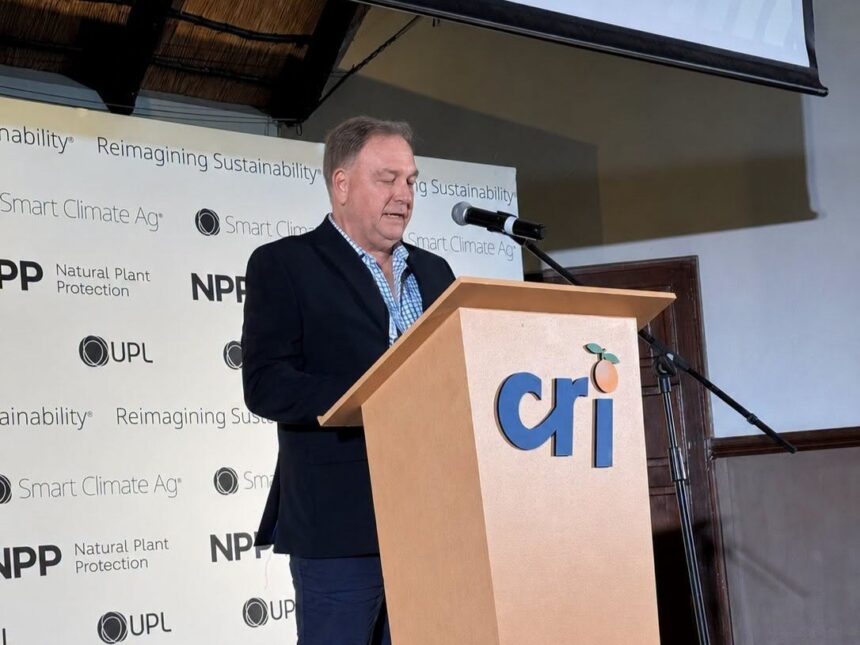
The 13th Citrus Research International (CRI) Citrus Research Symposium has brought together leading voices from South Africa’s citrus industry to explore research, innovation and practical solutions that can strengthen the sector’s future. The symposium took place from 23 to 26 August 2026 at Champagne Sports Resort in the Drakensberg, attracting a record number of delegates from across the citrus value chain. The attendees included citrus growers from across South Africa, technical and industry consultants, agricultural chemical companies, CRI researchers and academics from various universities. The strong turnout reflects the importance of research and collaboration in an industry that continues to face complex production, environmental and market challenges. By creating a space where scientific findings can be shared directly with industry professionals, CRI is helping connect research with the practical realities faced by citrus growers.
The symposium is centred on research, expertise and practical insight, with the programme providing delegates with an opportunity to learn about research conducted over the past two years. CRI researchers, students and collaborators are presenting their findings and providing feedback on projects relevant to citrus production and industry development. Sharing this work allows growers and technical specialists to consider how new knowledge could be applied in commercial orchards and agricultural operations. It also gives researchers an opportunity to receive feedback from people working directly within the industry. This exchange between science and practical experience is essential for developing agricultural solutions that are both technically sound and relevant to farmers.
The record attendance at the 2026 symposium highlights the level of interest in research-driven approaches to citrus production. Growers need access to reliable information as they make decisions about orchard management, crop protection, production efficiency and long-term sustainability. Technical consultants and agricultural chemical companies also rely on research to understand emerging challenges and develop appropriate solutions for producers. Universities contribute further expertise through academic research and the development of students who can become future agricultural specialists. Bringing these groups together creates opportunities for knowledge sharing that can benefit the broader citrus industry.
The event opened with the Bayer Golf Day, followed by the UPL Welcome Dinner, creating opportunities for delegates to connect before the research programme began. These activities form an important part of the broader symposium experience because industry development depends on relationships as well as technical knowledge. Informal engagement can help growers, researchers, consultants and industry representatives exchange ideas and identify areas where collaboration may be possible. Strong professional networks can also help research findings move more effectively from laboratories and trial environments into commercial agricultural settings. The combination of formal presentations and relationship-building activities gives the symposium a wider role within the citrus sector.
Agricultural Minister Willie Aucamp attended the UPL Welcome Dinner as the guest of honour, adding a government perspective to the gathering of industry stakeholders. His participation reflects the importance of agriculture and research in supporting the competitiveness and resilience of South Africa’s agricultural economy. Government engagement with industry and research organisations can help strengthen communication around the opportunities and challenges facing producers. It can also provide a platform for stakeholders to discuss issues that affect the broader operating environment for agriculture. The presence of the Minister at an event focused on citrus research reinforces the connection between scientific innovation, farming and national agricultural development.
Research remains central to the long-term sustainability of the citrus industry because growers operate in an environment where conditions can change rapidly. Climate variability, pest and disease pressures, production costs and evolving market expectations can all influence farm performance. Research can help producers understand these challenges and identify approaches that improve productivity while protecting natural resources. The work presented at the CRI symposium provides an opportunity for stakeholders to examine new evidence and consider how it can inform future decisions. Continued investment in agricultural research is therefore important for maintaining the competitiveness of South African citrus production.
The participation of students and university researchers is another important feature of the symposium. Academic institutions contribute new perspectives and scientific capabilities to agricultural research while helping prepare the next generation of specialists. Students involved in citrus research gain valuable exposure to growers and industry professionals who can provide practical context for their work. At the same time, the industry benefits from emerging researchers who bring new ideas and technical skills into agricultural science. Creating connections between students, established researchers and commercial producers can strengthen the pipeline of knowledge and expertise available to the citrus sector.
Technical and industry consultants also play an important role in translating research into practical recommendations for growers. Consultants often work directly with producers and understand the operational challenges involved in implementing new technologies and management practices. Their involvement in research discussions can help identify where scientific findings may have practical applications and where further investigation may be required. Agricultural chemical companies similarly depend on research and technical knowledge to develop and support products used by citrus growers. The participation of these stakeholders ensures that symposium discussions remain connected to different parts of the agricultural value chain.
The emphasis on practical insight is particularly important because research has the greatest value when it can help address real challenges faced by farmers. Growers need information that can support decisions made throughout the production cycle, from orchard establishment and crop management to harvesting and quality considerations. Research presentations can provide evidence that helps producers assess different approaches before making changes to their operations. The symposium therefore creates an important bridge between scientific investigation and commercial agriculture. This connection can help accelerate the adoption of effective practices while ensuring that innovation remains grounded in the needs of producers.
The concept of Intelligent Agriculture featured prominently in the broader message surrounding the symposium. Intelligent Agriculture involves using knowledge, technology, research and data to improve agricultural decision-making and production outcomes. For citrus growers, this can include the use of research-based crop management practices, technology-enabled monitoring and more precise approaches to resource management. Combining scientific knowledge with practical farming experience can help producers make decisions based on stronger evidence. The continued advancement of Intelligent Agriculture will depend on collaboration between farmers, researchers, technology providers and other industry stakeholders.
The symposium also provides a platform for the citrus industry to identify new opportunities for collaboration. Research organisations cannot develop solutions in isolation because agricultural challenges often require input from multiple disciplines and stakeholders. Growers can provide practical insight into problems encountered in commercial orchards, while researchers can investigate those problems through structured scientific studies. Universities can contribute specialised knowledge, while consultants and industry companies can assist with implementation and commercial application. This collaborative model can improve the relevance of research and help the industry respond more effectively to emerging challenges.
Knowledge exchange is especially valuable in an industry as diverse as citrus production, where growers operate across different regions and production conditions. Experiences from one part of the country can provide useful lessons for producers elsewhere, particularly when research helps explain why particular practices produce different outcomes. Symposium discussions allow these experiences to be shared in a structured environment where participants can ask questions and engage directly with experts. This creates opportunities for growers to learn from both scientific findings and the practical experiences of their peers. Over time, these exchanges can contribute to broader improvements in production practices and industry resilience.
The relationships developed at the CRI Citrus Research Symposium can also extend beyond the event itself. Meaningful collaboration often begins with a conversation between people who identify a shared challenge or research opportunity. Once those connections are established, researchers, growers and industry partners can work together on projects, trials and knowledge-sharing initiatives. This can strengthen the flow of information between research institutions and agricultural businesses. Building these relationships is therefore an important part of creating a citrus industry that can continue to innovate and adapt.
The record attendance at the 13th CRI Citrus Research Symposium demonstrates the value that industry stakeholders place on research and shared knowledge. The participation of growers, consultants, agricultural chemical companies, researchers and university representatives shows that the future of citrus production depends on collaboration across the entire sector. The programme provides a valuable opportunity to share research conducted over two years while allowing stakeholders to discuss how that knowledge can contribute to practical improvements. Events such as this also help strengthen professional networks and create opportunities for future partnerships. A strong research and collaboration culture can give South Africa’s citrus industry a stronger foundation for responding to future challenges.
The 13th CRI Citrus Research Symposium has reinforced the importance of research, collaboration and practical expertise in shaping the future of South Africa’s citrus industry. From the opening Bayer Golf Day and UPL Welcome Dinner to the presentations by CRI researchers, students and collaborators, the event created multiple opportunities for industry stakeholders to connect and exchange knowledge. The attendance of Agriculture Minister Willie Aucamp further highlighted the importance of agriculture, research and industry cooperation. By bringing growers and experts together around research and innovation, CRI is helping advance Intelligent Agriculture and strengthen the sector’s capacity to adapt and grow. Continued collaboration, knowledge sharing and investment in research will remain essential as South Africa’s citrus industry works towards a more productive, innovative and sustainable future.
Join 'Farmers Mag' WhatsApp Channel
Get the latest Farming news and tips delivered straight to your WhatsApp
CLICK HERE TO JOIN




