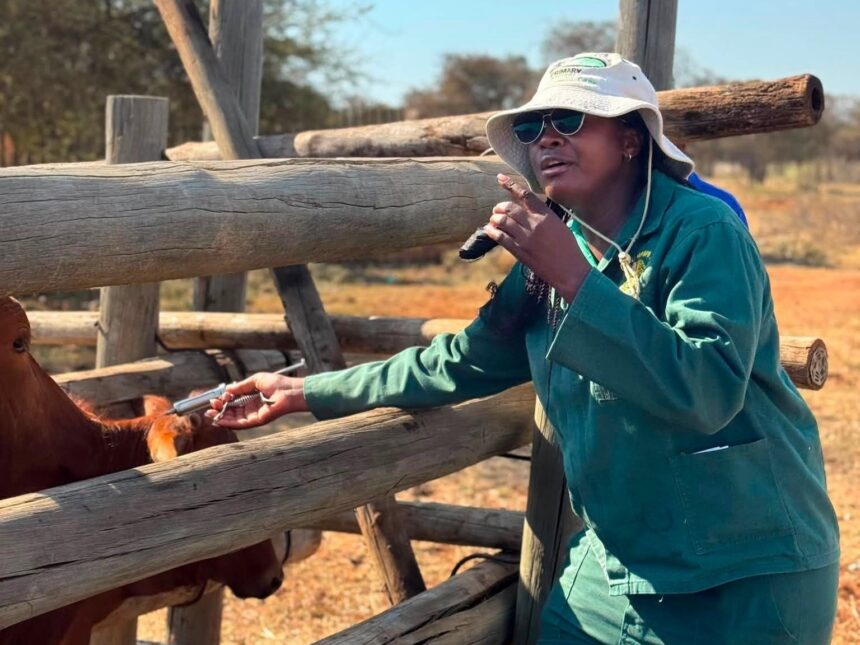
Day 2 of the District Development Model Service Delivery Week for the Limpopo Department of Agriculture and Rural Development began in the early hours of today at Ga-Kwete with a focused livestock vaccination campaign against Foot-and-Mouth Disease. The campaign is taking place in the Fetakgomo-Tubatse Local Municipality within the Sekhukhune District Municipality as part of ongoing efforts to protect livestock and strengthen rural livelihoods. Foot-and-Mouth Disease remains an important animal health concern because outbreaks can affect livestock production, farming incomes and the movement of animals. By taking veterinary services directly to farming communities, the department is helping ensure that producers have access to essential disease prevention measures. The vaccination campaign also demonstrates the practical role of the District Development Model in bringing government services closer to communities. The early start at Ga-Kwete reflects the urgency of protecting livestock and limiting the potential spread of the disease across rural farming areas.
The vaccination campaign is being carried out by departmental State Veterinarians and Animal Health Technicians who are working directly with livestock owners in the area. Their work involves administering vaccinations and supporting farmers with animal health measures designed to strengthen disease prevention. Veterinary teams play an important role in responding to livestock disease threats because they provide specialised knowledge and practical services that farmers may not be able to access independently. Their presence in rural communities also allows animal health concerns to be identified and addressed more efficiently. Farmers can benefit from direct guidance on vaccination, livestock management and the importance of following disease control measures. The Ga-Kwete campaign therefore combines immediate veterinary intervention with broader efforts to improve awareness and strengthen livestock health management.
The frontline team is being led by District Director Mr Harry Maboa, who is working alongside State Veterinarians Dr Makhamata M.F. and Dr Matsane E.M. Their involvement highlights the importance of strong coordination during a livestock vaccination campaign of this nature. Veterinary interventions require careful planning to ensure that livestock are reached effectively and that vaccination activities are carried out in accordance with appropriate animal health procedures. The leadership provided by the district team also supports communication between officials and farming communities during the campaign. By working directly on the ground, the veterinary leadership can gain a clearer understanding of the conditions faced by livestock owners in the area. Their participation forms part of a coordinated departmental effort to protect animals and support farmers in the Sekhukhune District.
Animal Health Technicians Ms Maheya Khwinana, Mrs Kgwete M.B., Mr Binta Ezile and Mr Mmotong M.T. are also playing a central role in the campaign. These officials are working alongside the veterinarians to ensure that livestock receive the necessary attention during the vaccination drive. Animal Health Technicians provide valuable practical support in livestock health programmes and contribute to disease prevention and monitoring at community level. Their presence allows the vaccination team to reach more farmers and manage the practical requirements involved in working with livestock. Effective teamwork between veterinarians and animal health technicians is essential when responding to diseases that can affect large numbers of animals. Their combined efforts at Ga-Kwete demonstrate the importance of having skilled animal health professionals available to rural farming communities.
Foot-and-Mouth Disease presents a serious challenge for livestock farmers because it can spread between susceptible animals and disrupt normal farming activities. Disease outbreaks can affect the movement and sale of livestock, creating additional economic pressure for farmers and communities that depend on animal agriculture. Vaccination forms part of the broader disease control strategy aimed at reducing the impact and spread of FMD. However, farmers also need to follow veterinary guidance and comply with relevant animal movement and biosecurity requirements. Preventing unnecessary livestock movement and limiting opportunities for contact between potentially infected and healthy animals can support wider containment efforts. The vaccination work at Ga-Kwete is therefore one part of a broader approach to protecting livestock and maintaining the stability of rural agricultural communities.
The timing and location of the vaccination campaign are also significant because rural farmers need accessible veterinary services to protect their livestock effectively. Taking the campaign directly to Ga-Kwete allows farmers in the Fetakgomo-Tubatse area to engage with animal health officials without having to rely solely on distant veterinary facilities. Direct community-based service delivery can improve participation and make it easier for farmers to obtain information about disease prevention. It also creates an opportunity for officials to communicate important requirements relating to livestock health and disease control. Farmers can raise concerns about their animals and receive guidance from qualified professionals working in the field. This approach supports the broader objective of ensuring that government services reach communities where they are most needed.
The vaccination drive also has an important economic dimension because livestock represent valuable assets for many rural households. Cattle and other livestock can provide income through sales, support household food security and form part of long-term agricultural investment. When livestock are affected by serious diseases, farmers can face losses that extend beyond the immediate health of individual animals. Protecting herds can therefore help safeguard household livelihoods and reduce the economic disruption associated with livestock disease. Disease prevention also supports the broader agricultural value chain, which includes livestock markets, transport services, veterinary businesses and other rural enterprises. The work being carried out by the department in Ga-Kwete contributes to this wider effort to protect the productive capacity of rural communities.
The campaign forms part of the wider District Development Model Service Delivery Week, which is designed to bring government services closer to communities and respond to local development priorities. Agriculture and livestock health are important components of rural development because many communities rely on farming for income, food and economic activity. By including livestock vaccination in the service delivery programme, the department is addressing a practical need that can have direct consequences for farmers. The campaign also complements other agricultural interventions delivered during the service delivery week, creating a broader approach to supporting rural communities. Coordinated service delivery can help government departments address immediate challenges while building longer-term resilience. The Ga-Kwete vaccination drive provides a clear example of how the model can translate government programmes into direct services at community level.
Farmers also have an important role to play in making livestock disease prevention programmes successful. They need to cooperate with animal health teams, make livestock available for vaccination and follow instructions issued by veterinary authorities. Prompt reporting of suspected disease can also help officials investigate potential cases and respond before problems spread further. Farmers should maintain good livestock management practices and take appropriate steps to reduce unnecessary contact between animals from different herds. Following movement regulations is particularly important during periods when disease control measures are in place. Government veterinary services can provide technical support, but effective disease prevention ultimately requires cooperation between officials, farmers and other stakeholders across the livestock sector.
The work taking place at Ga-Kwete also highlights the value of sustained veterinary support rather than relying on one-off interventions. Livestock disease management requires regular surveillance, vaccination where appropriate and continued attention to animal health conditions. Veterinary teams need to monitor developments in farming communities and respond when new risks emerge. Farmers likewise need to remain vigilant and maintain communication with animal health officials after vaccination campaigns have ended. Ongoing education can help producers understand disease risks and make better decisions about livestock movement, biosecurity and general herd management. Continued cooperation can strengthen the ability of rural communities to respond to livestock diseases and protect their agricultural assets.
Day 2 of the District Development Model Service Delivery Week has started with a strong focus on protecting livestock and supporting farmers in Ga-Kwete. The Foot-and-Mouth Disease vaccination campaign brings State Veterinarians and Animal Health Technicians directly into the Fetakgomo-Tubatse community, ensuring that essential animal health services reach local livestock owners. The leadership of District Director Harry Maboa, together with Dr Makhamata M.F., Dr Matsane E.M. and the Animal Health Technicians working on the ground, reflects a coordinated effort to safeguard livestock and rural livelihoods. While vaccination is an important part of FMD control, continued farmer cooperation, responsible livestock management, disease reporting and compliance with animal health measures will remain essential. The campaign demonstrates how direct government service delivery can address urgent agricultural challenges while strengthening the resilience of rural communities. Through sustained veterinary support and active participation from farmers, efforts such as the Ga-Kwete vaccination drive can contribute to healthier livestock, stronger farming livelihoods and more resilient agricultural communities across the Sekhukhune District.
Join 'Farmers Mag' WhatsApp Channel
Get the latest Farming news and tips delivered straight to your WhatsApp
CLICK HERE TO JOIN