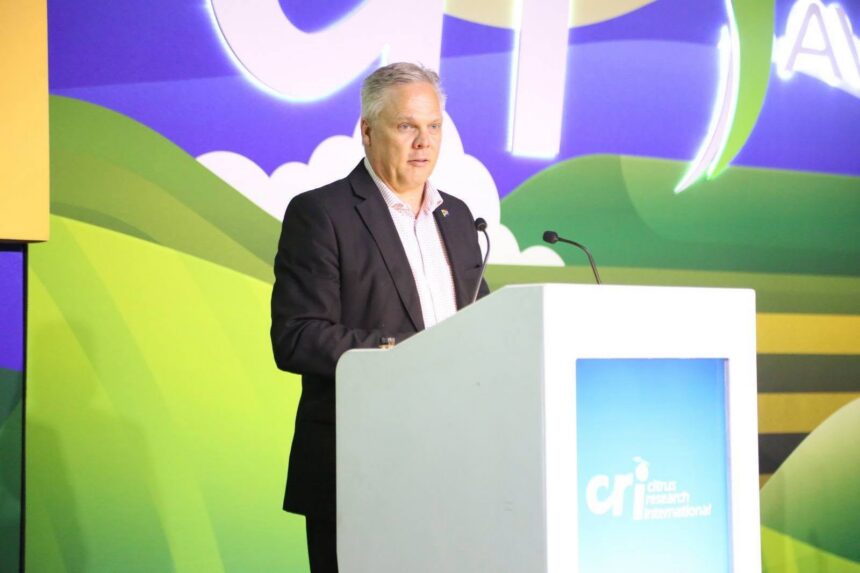
Minister Willie Aucamp officially opened the 13th Citrus Research Symposium today, bringing together producers, researchers, technical specialists and industry leaders from across Southern Africa’s citrus value chain. The symposium provides an important platform for stakeholders to examine the research and innovations shaping the future of citrus production and exports. It brings together people working at different stages of the industry, from farmers managing orchards to scientists developing new production solutions and businesses preparing fruit for international markets. This connection between science, agriculture and commerce is increasingly important as the citrus sector responds to changing production conditions and growing international competition. The opening of the symposium therefore marks an important moment for an industry that continues to make a major contribution to South Africa’s agricultural economy.
In his opening address, Minister Aucamp recognised the significant growth achieved by the citrus industry and acknowledged the contribution of producers and other stakeholders who continue to strengthen the sector. He also thanked the leadership of the Citrus Research Symposium and industry participants for their continued efforts to advance citrus production and competitiveness. The minister emphasised the importance of research, innovation, collaboration and collective action in addressing challenges facing the industry. These priorities are particularly relevant as growers seek to improve productivity while maintaining high standards for fruit quality, plant health and export readiness. A coordinated approach allows the industry to draw on scientific knowledge and practical experience when developing solutions to complex agricultural and commercial challenges.
The symposium connects stakeholders across the citrus value chain, creating opportunities for knowledge to move from research laboratories into orchards, packhouses and international markets. Producers can engage with researchers and technical experts about challenges affecting production while scientists can gain a clearer understanding of the practical needs facing farmers. This exchange can help ensure that research remains focused on solutions that have practical value for the industry. Collaboration also allows businesses involved in packing, cooling, transportation and exports to contribute to discussions about efficiency and market requirements. By connecting these different parts of the value chain, the symposium helps create a more integrated approach to citrus development.
Research into citrus production remains essential as growers work to improve productivity and respond to changing agricultural conditions. Scientists and industry specialists can investigate new approaches to crop management, plant health, water use and other aspects of orchard production. Cultivar improvement is another important area because growers need varieties that can meet consumer preferences while performing effectively under local production conditions. Research can also help identify ways to improve resilience and maintain consistent fruit quality across different growing regions. The information generated through this work can give producers better tools for making decisions and managing their operations.
Post-harvest technology and packhouse efficiency also form an important part of the discussions at the symposium. Once citrus fruit leaves the orchard, careful handling is required to maintain quality as it moves through packing, cooling, storage and transportation. Improvements in cooling systems can help manage fruit quality and support the requirements of long-distance export markets. Packaging technology can also influence how fruit is protected and presented as it moves through complex supply chains. Research and innovation in these areas can help the industry reduce losses, improve efficiency and ensure that South African citrus reaches consumers in strong condition.
Export readiness and market access are equally important to the long-term performance of the citrus industry. South African citrus producers operate in a global market where importing countries can have strict requirements relating to plant health, food safety, fruit quality and treatment protocols. Meeting these requirements requires cooperation between producers, government authorities, researchers and exporters. Scientific evidence can support technical discussions with trading partners while strong production and quality systems help maintain confidence in South African citrus. Continued attention to these areas will be necessary as the industry seeks to protect existing markets and develop new opportunities.
The role of innovation becomes particularly important as the industry looks beyond its current achievements and considers future growth. Innovation can involve new technologies, improved production methods, more efficient packhouse systems and better approaches to managing resources. It can also involve changes in how industry stakeholders collaborate and share information. The most effective innovations are those that solve specific problems and provide measurable benefits to producers and businesses. By creating a space where researchers and industry participants can exchange ideas, the Citrus Research Symposium can help accelerate the development and adoption of useful innovations.
Collaboration remains a central theme because no single part of the citrus value chain can address every challenge independently. Farmers bring practical production experience, researchers contribute scientific expertise, technical specialists provide industry knowledge and businesses understand commercial and market requirements. Government also has an important role in supporting regulatory systems, market access and agricultural research capacity. When these groups work together, they can identify challenges earlier and develop responses that take different perspectives into account. Strong collaboration can therefore help the citrus industry become more adaptable and better prepared for changes in production and international trade.
The 13th Citrus Research Symposium also provides an opportunity to recognise the people whose work supports the industry’s continued progress. From citrus growers and farm workers to researchers, packhouse employees, logistics operators and exporters, thousands of people contribute to the movement of citrus from orchards to consumers. Their combined efforts support an industry that has developed a strong presence in international markets. Continued investment in research and skills development can help ensure that the sector has the expertise needed to maintain this position. The symposium reinforces the idea that agricultural progress depends not only on technology and investment but also on people who can apply knowledge effectively.
Minister Aucamp’s opening of the 13th Citrus Research Symposium sets the tone for continued engagement between science and the citrus industry. The discussions taking place at the event can contribute to solutions in production, cultivar improvement, post-harvest technology, packhouse efficiency, cooling, packaging, export readiness and market access. As South Africa’s citrus sector continues to grow, maintaining competitiveness will require consistent investment in knowledge and innovation. The industry’s future will depend on its ability to turn research findings into practical improvements while strengthening collaboration across the entire value chain. The message from the symposium is clear: research builds knowledge, innovation drives progress and collaboration provides the foundation for a stronger and more competitive South African citrus industry.
Join 'Farmers Mag' WhatsApp Channel
Get the latest Farming news and tips delivered straight to your WhatsApp
CLICK HERE TO JOIN