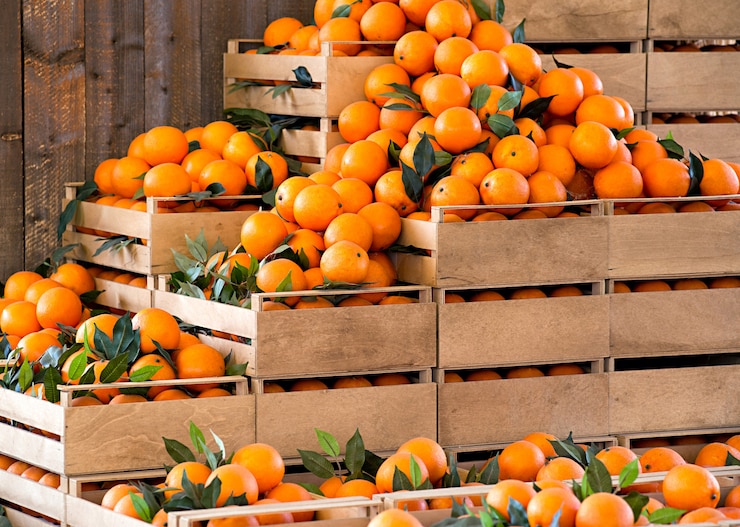
South Africa has claimed the position of the world’s largest citrus exporter by volume after recording an exceptional export season in 2025. The country overtook Spain after South African growers packed 203.4 million 15-kilogram cartons for export, representing an increase of almost 39 million cartons compared with 2024. The achievement marks a significant milestone for South Africa’s agricultural sector and highlights the scale and competitiveness of its citrus industry. Speaking at the 13th Citrus Research International Symposium at the Champagne Sports Resort in the Drakensberg, Minister of Agriculture Willie Aucamp confirmed the record performance and its importance to the country’s agricultural economy. The result places South Africa at the forefront of the global citrus export market while creating a stronger platform for future growth.
The 2025 export figure translates to approximately 2.9 million tons of citrus shipped to international markets. The record volume generated an estimated US$2.4 billion in export revenue, demonstrating the substantial economic contribution of the citrus sector. This performance extends beyond the value of fruit sold overseas because the industry supports a large network of workers and businesses throughout the agricultural supply chain. Approximately 140,000 people are directly employed on farms and in packhouses, while hundreds of thousands of additional livelihoods depend indirectly on the sector. These indirect opportunities extend across cold-chain logistics, processing, agricultural inputs, transportation and international distribution, making citrus a significant contributor to South Africa’s broader economy.
South Africa’s global citrus success is supported by access to a wide range of international markets. The country exports citrus to major destinations across the European Union, the United Kingdom, the Middle East, Asia, China, Japan, South Korea, India and North America. Maintaining this diverse market presence helps reduce dependence on any single destination while providing growers with opportunities to respond to changing consumer demand. International markets also create strict requirements around fruit quality, plant health, food safety and treatment protocols, meaning South African exporters must consistently meet demanding standards. The ability to operate successfully across these markets reflects the industry’s investment in production systems, research, quality management and international market relationships.
Science and biosecurity are central to protecting South Africa’s position as a leading citrus exporter. Phytosanitary compliance starts in the orchard, which means growers must manage plant health risks long before fruit reaches a port for export. Effective pest surveillance, early detection and scientifically sound risk management help protect both domestic production and South Africa’s reputation among international trading partners. The Department of Agriculture, the National Plant Protection Organisation of South Africa, research institutions and producers all have important roles to play in maintaining these standards. Continued cooperation between government, scientists and the private sector will be essential as South Africa seeks to increase exports while meeting increasingly complex international plant health requirements.
Recent progress in market access demonstrates the value of scientific research combined with technical diplomacy. In China, negotiations have resulted in expanded market opportunities through more flexible temperature treatment regimes, creating potential benefits for exporters and improving the efficiency of export processes. South Africa has also secured a breakthrough in India through approval for cold treatment while citrus is in transit. This development can help optimise shipping logistics and potentially improve the efficiency of reaching the Indian market. These achievements show that market access is not simply a matter of producing more fruit, but also depends on technical negotiations, evidence-based protocols and cooperation between government authorities, researchers and industry representatives.
The record 2025 season also strengthens the case for further expansion of South Africa’s citrus industry. The Citrus Growers’ Association has established the Vision 260 target, which aims to increase annual citrus exports to 260 million cartons by 2032. Reaching this target would represent substantial additional growth from the 203.4 million cartons exported in 2025. The expansion is also projected to create approximately 100,000 additional jobs, demonstrating the potential economic and social benefits of continued investment in the sector. Achieving the target, however, will require careful planning, strong infrastructure, sufficient research capacity and continued access to international markets.
Plant health will remain one of the most important priorities as the citrus industry pursues Vision 260. An expanding export sector must maintain effective systems for identifying and managing pests and diseases while ensuring that production meets the requirements of importing countries. Climate conditions can add further pressure because changing temperatures, rainfall patterns and extreme weather events can affect production and increase certain agricultural risks. Research will therefore be essential in developing improved production methods and strengthening the industry’s ability to respond to emerging threats. Investment in plant health services and scientific capacity can help protect existing markets while supporting the safe expansion of exports into new destinations.
Market diversification will also be important for maintaining South Africa’s global citrus leadership. International trade conditions can change quickly due to tariffs, regulatory requirements, geopolitical developments, logistics costs and consumer demand. Having access to a broad range of markets gives exporters more flexibility when conditions change in individual destinations. At the same time, maintaining existing markets requires constant engagement with trading partners and continued compliance with technical standards. South Africa’s future success will depend not only on producing larger volumes but also on building resilient trade relationships and identifying new opportunities for high-quality citrus exports.
The citrus industry’s record performance highlights the importance of collaboration across the agricultural value chain. Growers, packhouses, researchers, government officials, logistics companies, exporters and international buyers all contribute to the movement of South African citrus from orchards to consumers around the world. The 13th Citrus Research International Symposium provides an important platform for these stakeholders to examine research findings, discuss industry challenges and identify opportunities for innovation. Research and practical agricultural experience must continue working together if the sector is to increase productivity while protecting plant health and meeting global market requirements. The industry’s ability to translate scientific knowledge into practical solutions will be a major factor in determining whether the next phase of growth can be achieved sustainably.
South Africa’s emergence as the world’s leading citrus exporter by volume is a major achievement for the country’s agricultural sector and the thousands of people whose livelihoods depend on it. The record 203.4 million cartons exported in 2025 demonstrate the industry’s production capacity, while the estimated US$2.4 billion in export revenue highlights its economic importance. The next challenge will be to build on this success without compromising plant health, environmental sustainability, product quality or market access. With Vision 260 setting an ambitious target of 260 million cartons by 2032, continued investment in research, biosecurity, technical diplomacy, infrastructure and market diversification will be critical. If these priorities remain firmly in place, South Africa’s citrus industry can strengthen its position in global markets while creating further employment and economic opportunities across the agricultural value chain.
Join 'Farmers Mag' WhatsApp Channel
Get the latest Farming news and tips delivered straight to your WhatsApp
CLICK HERE TO JOIN