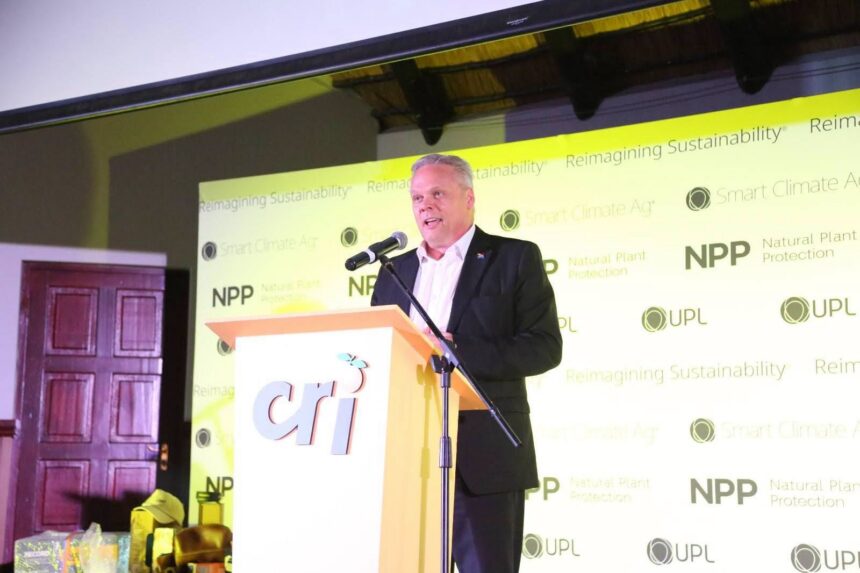
Minister Willie Aucamp has placed leadership, research and innovation at the centre of efforts to strengthen the Southern African citrus industry. Delivering the keynote address at the 13th Citrus Research Symposium welcome dinner in the Drakensberg, Minister Aucamp highlighted the need to turn scientific research into practical solutions that can deliver measurable benefits across the citrus value chain. His message comes at a time when producers and industry stakeholders face increasing pressure to improve productivity, remain competitive and secure access to international markets. The minister stressed that research should not remain confined to laboratories, universities or scientific publications, but should translate into tools and approaches that producers can apply in real farming environments. This focus on practical impact is expected to play an important role in shaping the future of citrus production across Southern Africa.
The 13th Citrus Research Symposium is taking place from 23 to 26 August 2026 in the Drakensberg, bringing together key stakeholders from across the agricultural and research sectors. Researchers, universities, the Agricultural Research Council, the Citrus Research Institute and representatives from the private sector are participating in discussions focused on the latest developments in citrus research. The symposium provides an important platform for sharing two years of research findings while creating opportunities for collaboration between scientists, industry experts and citrus producers. Such collaboration is essential because challenges affecting citrus production often require solutions that combine scientific knowledge with practical farming experience. By bringing different parts of the industry together, the event aims to help accelerate the movement of new knowledge from research institutions into the orchards and businesses that depend on it.
Minister Aucamp’s emphasis on productivity reflects the need for citrus producers to continually improve how they use land, water, labour, technology and other production resources. Research and innovation can help farmers respond to production challenges while improving the efficiency and quality of their operations. Advances in areas such as plant health, pest and disease management, climate resilience, orchard management and post-harvest handling can have a direct effect on the industry’s performance. The ability to develop and adopt these solutions will become increasingly important as producers navigate changing environmental conditions and growing demands from domestic and international markets. Strong links between research organisations and the citrus industry can therefore help ensure that scientific discoveries address the challenges producers face on the ground.
Competitiveness also remains a major consideration for the Southern African citrus sector, particularly because citrus production is closely connected to export markets. Producers need to meet strict quality, food safety and market requirements while managing production costs and maintaining reliable supply. Research can support these objectives by helping the industry develop more efficient production systems, improve fruit quality and address emerging threats to plant health. Innovation can also contribute to better decision-making through technologies that provide farmers with more accurate information about orchard conditions, crop performance and resource use. By investing in research and making sure that its findings reach producers, the industry can strengthen its ability to compete in demanding markets.
Market access is another area where research and innovation can make a significant difference to the citrus industry. International buyers increasingly expect producers to meet detailed standards relating to quality, traceability, food safety, sustainability and environmental performance. Meeting these expectations requires more than simply increasing production, as producers must also understand and respond to changing market requirements. Research institutions and private sector partners can help develop solutions that allow farmers to maintain quality while reducing unnecessary costs and improving sustainability. The ability to anticipate market changes and respond through innovation can give the Southern African citrus industry greater resilience in an increasingly competitive global agricultural environment.
Sustainability formed another important part of the message delivered at the symposium, particularly as the industry considers its long-term future. Citrus production depends on the responsible management of natural resources and requires farmers to balance productivity with environmental considerations. Research can support this balance by identifying more efficient ways to use water, improve soil health, manage pests and diseases and reduce production losses. Innovation can also help producers adapt to changing climatic conditions and protect the long-term productivity of citrus-growing regions. For the industry to remain economically viable for future generations, sustainability needs to be considered alongside productivity, competitiveness and market access.
The involvement of the Agricultural Research Council, the Citrus Research Institute, universities and private sector stakeholders demonstrates the value of partnerships in agricultural research. Each organisation brings different expertise, resources and experience to the research process, creating opportunities for stronger and more practical solutions. Universities can contribute scientific knowledge and new research approaches, while specialised research institutions can focus on industry-specific challenges. The private sector and producers can provide valuable insight into commercial realities and the practical conditions under which new technologies and farming methods must operate. Bringing these perspectives together can help ensure that research responds to real industry needs and produces outcomes that can be adopted at scale.
The symposium also provides an opportunity to examine research findings from the past two years and consider how they can shape future priorities. Sharing research results allows stakeholders to identify developments that have potential for commercial application while also highlighting areas where further investigation is required. This process is important because agricultural innovation rarely ends with a single research project. New findings often lead to additional questions, testing and collaboration before a solution can be implemented effectively across different farming environments. Continued engagement between researchers and industry participants can help shorten this journey from discovery to application.
Minister Aucamp’s approach places leadership at the centre of this process by recognising that research investment alone is not enough to guarantee meaningful change. Effective leadership can help create an environment where researchers, farmers, businesses and government work towards shared priorities. It can also support stronger coordination between different parts of the agricultural sector and encourage greater investment in innovation. The minister’s message therefore extends beyond the symposium itself, highlighting the importance of building an industry that can adapt to new challenges while taking advantage of emerging opportunities. A coordinated approach can help ensure that research becomes a practical driver of growth rather than remaining separate from the day-to-day realities of citrus production.
The 13th Citrus Research Symposium comes at an important point for the Southern African citrus industry as stakeholders look for ways to build a stronger and more sustainable value chain. The discussions taking place in the Drakensberg provide an opportunity to connect scientific research with commercial priorities and the practical needs of producers. Minister Willie Aucamp’s call to move from research to innovation and from innovation to measurable impact reinforces the need for action beyond the sharing of information. The future strength of the citrus sector will depend on its ability to turn knowledge into practical solutions that improve productivity, competitiveness, market access and sustainability. With continued collaboration between government, researchers, universities, industry organisations, producers and the private sector, research and innovation can play a central role in securing a stronger future for Southern African citrus.
Join 'Farmers Mag' WhatsApp Channel
Get the latest Farming news and tips delivered straight to your WhatsApp
CLICK HERE TO JOIN