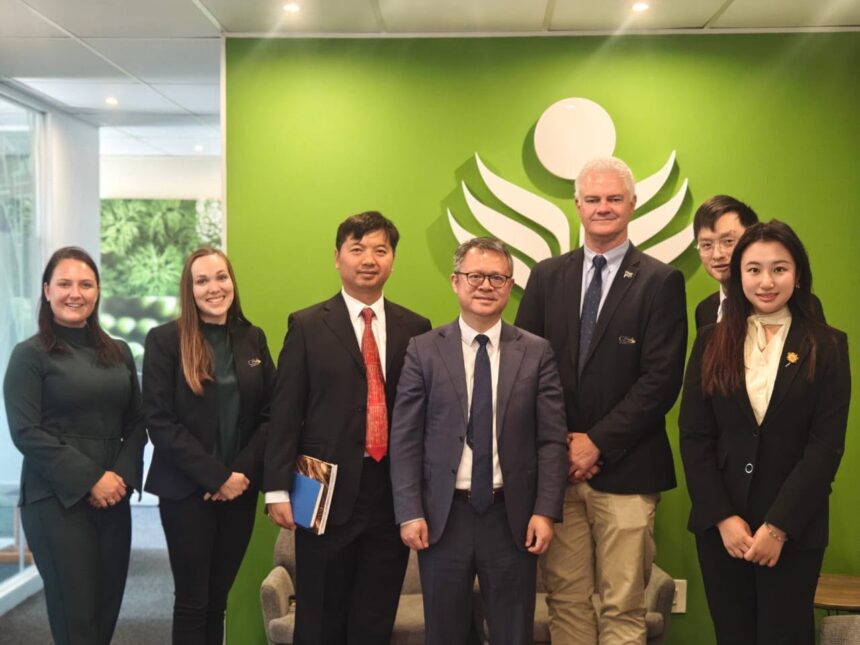
Agri SA and Grain SA are strengthening discussions around agricultural trade and investment between South Africa and China following a productive engagement with the Economic and Commercial Counsellor of the Embassy of the People’s Republic of China in South Africa. The meeting focused on identifying opportunities to expand bilateral trade, improve market access and attract greater investment into the South African agricultural sector. Growing engagement from Chinese delegations reflects increasing interest in South African agricultural products and the potential of the country’s farming sector to supply international markets. Imports from South Africa have reportedly increased by 30% over the past year, highlighting the growing commercial relationship between the two countries. For South African farmers, stronger trade relations with China could create additional opportunities to expand production, access new markets and participate more actively in international agricultural value chains.
The Bilateral Trade Agreement signed in May 2026 is expected to play an important role in creating new opportunities for South African agricultural exporters. One of the key developments is the removal of tariffs on soybeans, barley and canola, which could improve the competitiveness of South African products in the Chinese market. Lower tariffs can reduce some of the costs associated with exporting agricultural commodities and potentially make products more attractive to international buyers. For farmers and grain producers, improved access to a major global market could create stronger demand and encourage greater investment in production capacity. The impact will depend on farmers and exporters being able to meet market requirements, maintain consistent supply and take advantage of the opportunities created through the agreement.
Grain SA economist Margaret Pienaar contributed to the discussions by presenting an overview of current grain market conditions and export opportunities to China. Understanding market conditions is essential for farmers and agricultural businesses when making production and investment decisions. International demand, commodity prices, logistics, exchange rates and trade policies can all influence the viability of agricultural exports. Providing market information to international stakeholders can also help strengthen understanding of South Africa’s grain production capacity and identify potential areas for future trade. The engagement therefore created an opportunity to connect market analysis with the broader objective of expanding agricultural exports.
Soybeans emerged as an important example of the potential for stronger agricultural trade between South Africa and China. The recent export of 200,000 tons of soybeans to Guangzhou by LDC was welcomed as a positive development and marked the first shipment of its kind since 2023. The shipment demonstrates that South African agricultural commodities can access the Chinese market when the necessary commercial and trade conditions are in place. It also provides an indication of the potential scale of future exports if market access continues to improve. For soybean producers and the wider agricultural value chain, renewed shipments to China could create opportunities to increase production and strengthen participation in export markets.
The removal of tariffs on soybeans could further support this opportunity by improving the conditions under which South African producers compete in China. Soybeans are an important agricultural commodity with applications across food, animal feed and other industries, creating demand in several parts of the agricultural economy. Increased exports could have implications beyond farmers because higher production can generate activity across input suppliers, transport companies, storage facilities, processors and other businesses. Stronger export demand can also encourage producers to assess whether additional investment in production capacity is commercially viable. The benefits will depend on efficient supply chains and the ability of the sector to deliver products that meet the requirements of Chinese buyers.
Barley and canola also stand to benefit from the improved trading conditions created by the bilateral agreement. Both commodities form part of important agricultural value chains and can contribute to diversification within the grain sector. Greater access to international markets can provide farmers with additional options when considering which crops to produce and where to sell them. Export opportunities can also help reduce dependence on a limited number of markets, although producers must carefully consider production costs, prices and demand before changing their planting decisions. Continued engagement between agricultural organisations and Chinese trade representatives can help identify opportunities and improve understanding of market requirements.
The growing interest from Chinese delegations is another indication of the potential importance of the relationship between the two agricultural sectors. Regular engagement allows South African agricultural organisations to communicate directly with potential buyers, investors and trade representatives. It also gives Chinese stakeholders an opportunity to understand South Africa’s production capabilities and the opportunities available across the agricultural value chain. Strong commercial relationships are often built over time through consistent communication and reliable trade. Continued interaction could therefore help transform individual export opportunities into broader and more sustainable agricultural partnerships.
Investment is another area where stronger bilateral relations could benefit South African agriculture. Expanding agricultural exports often requires investment in infrastructure, storage, logistics, processing and production capacity. International investment can contribute to this development when it is aligned with the needs of farmers and the broader agricultural value chain. Greater investment could also support value addition within South Africa, allowing more agricultural products to be processed locally before reaching international markets. For rural communities, increased agricultural investment can create opportunities for employment and business activity while strengthening the infrastructure that supports farming.
Market access remains one of the most important factors in determining whether farmers can benefit from international trade agreements. A tariff reduction can create an opportunity, but farmers still need reliable logistics, appropriate quality standards, market information and access to buyers. Agricultural organisations such as Agri SA and Grain SA can play an important role in helping producers understand changing market conditions and engage with stakeholders involved in international trade. Government and industry cooperation will also be important in addressing barriers that could prevent farmers from taking full advantage of new opportunities. Strong coordination can help ensure that trade agreements translate into practical benefits across the agricultural sector rather than benefiting only a limited number of large exporters.
The renewed soybean trade with Guangzhou provides an encouraging example of what can happen when market access and commercial opportunities align. A shipment of 200,000 tons represents a significant volume and demonstrates the capacity for South African agricultural products to participate in international supply chains. The return of soybean exports to China after a period without such shipments also creates an opportunity to build momentum through continued engagement. If the relationship develops further, additional commodities and agricultural products could potentially gain stronger access to the Chinese market. This could create a broader export base and provide farmers with more opportunities to participate in international trade.
The meeting between Agri SA, Grain SA and the Chinese Embassy’s Economic and Commercial Counsellor reflects the growing importance of international markets to the future of South African agriculture. The May 2026 Bilateral Trade Agreement, the removal of tariffs on key commodities and the renewed soybean shipment to Guangzhou have created positive conditions for further engagement. Continued discussions will be important to identify investment opportunities, address market access challenges and ensure that farmers are positioned to benefit from expanding trade. Stronger agricultural ties with China could support production, value chains and rural economies while providing South African farmers with access to a major international market. Building on this momentum will require continued cooperation between government, agricultural organisations, exporters and producers, but the opportunities created by stronger bilateral trade provide a positive foundation for the growth of South African agriculture.
Join 'Farmers Mag' WhatsApp Channel
Get the latest Farming news and tips delivered straight to your WhatsApp
CLICK HERE TO JOIN