
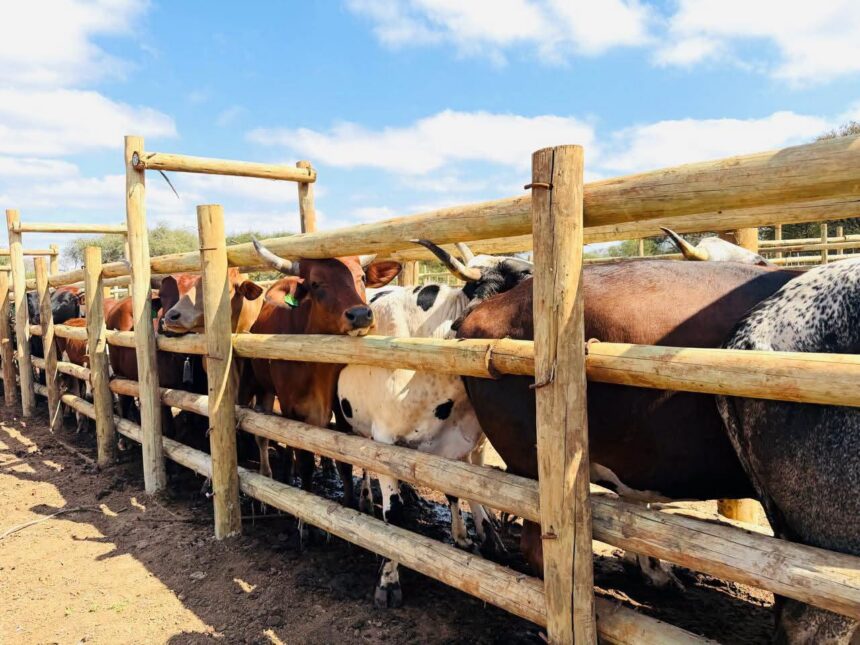
Farmers in Mbaula Village are set to benefit from improved livestock management infrastructure following the official handover of a newly completed, state-of-the-art Animal Handling Facility. The facility represents an important investment in the local agricultural sector and is expected to provide livestock farmers with a safer and more suitable environment for managing their animals. The handover forms part of efforts to strengthen rural agricultural infrastructure and support communities that depend on livestock farming for their livelihoods. The MEC attended the programme alongside Acting Mayor of Greater Giyani Local Municipality, Councillor Christina Zitha, and Acting Mayor of Mopani District Municipality, Councillor Star Mbalati. The development is expected to improve access to appropriate animal handling services while supporting better livestock management practices among farmers in Mbaula Village and surrounding communities.
Before the official handover, the MEC and the delegation visited the Ngove Tribal Authority for a courtesy engagement with Hosi Penny Ngove, who is also the Chairperson of the Limpopo House of Traditional Leaders. The engagement provided an opportunity to involve traditional leadership in an agricultural development initiative that directly affects the local farming community. Hosi Ngove’s participation reflects the important role traditional authorities play in rural development and community engagement. Following the courtesy visit, the delegation proceeded to Mbaula Village for the official programme and handover of the new facility. The sequence of events highlighted the importance of cooperation between government, traditional leadership and local municipalities when delivering agricultural infrastructure to rural communities.
The new Animal Handling Facility is designed to provide farmers with a dedicated space where livestock can be safely managed during essential agricultural and animal health activities. Proper facilities are important when farmers need to handle animals for identification, treatment, vaccination, inspection and other routine procedures. Without suitable infrastructure, livestock handling can become difficult and may increase the risk of injury to animals and people. A properly designed facility can help farmers and animal health officials carry out these activities in a more controlled and organised environment. The investment can therefore contribute to improved animal welfare while making important livestock management procedures more efficient.
For livestock farmers, access to reliable animal handling infrastructure can make a meaningful difference to day-to-day farming operations. Cattle and other livestock need to be handled regularly for health checks, disease prevention, treatment and management purposes. Farmers also need to be able to separate and control animals safely when veterinary or agricultural services are required. A dedicated facility can make these activities easier while reducing the risks associated with handling animals in unsuitable areas. The Mbaula Village facility therefore provides a practical resource that can support farmers as they work to maintain healthier and more productive livestock.
Animal health is closely linked to the sustainability and profitability of livestock farming. Diseases can reduce productivity, cause animal losses and create financial pressure for farmers, particularly where producers have limited resources. Regular health interventions and early detection of potential problems can help reduce these risks. Appropriate animal handling facilities can support veterinary and agricultural officials when conducting inspections, administering treatments or implementing disease prevention measures. By improving the conditions under which animals are handled, the new facility can contribute to stronger livestock health management within the community.
The facility can also support efforts to improve livestock management practices among farmers in Mbaula Village. Farmers who have access to appropriate infrastructure can be encouraged to adopt more organised approaches to animal identification, health monitoring and routine management. A central facility can also create a practical point where farmers interact with agricultural officials and receive guidance on livestock-related issues. This interaction can help improve awareness of disease prevention, animal welfare and responsible livestock management. Over time, consistent use of the facility could contribute to stronger farming practices across the local agricultural community.
The involvement of local government leaders adds further significance to the handover. Acting Greater Giyani Local Municipality Mayor Councillor Christina Zitha and Acting Mopani District Municipality Mayor Councillor Star Mbalati joined the MEC during the programme, demonstrating cooperation between provincial and local government structures. Agricultural development often requires coordination across different institutions because farmers depend on a range of services and infrastructure. Local municipalities can support community development and planning while provincial agricultural authorities provide specialised agricultural services and technical support. Working together can help ensure that investments such as the Mbaula Animal Handling Facility are integrated into broader rural development efforts.
Traditional leadership also has an important role to play in ensuring that agricultural infrastructure benefits the communities it is intended to serve. Hosi Penny Ngove welcomed the MEC at the Ngove Tribal Authority before the delegation proceeded to Mbaula Village. As Chairperson of the Limpopo House of Traditional Leaders, his involvement also reflects the wider importance of traditional institutions in rural development. Traditional leaders can help strengthen communication between government and communities while encouraging responsible use of public infrastructure. Continued engagement between traditional authorities and agricultural officials can help ensure that farmers understand the purpose of the facility and use it effectively.
The investment in Mbaula Village also has the potential to contribute to wider rural economic development. A healthier and better-managed livestock sector can create demand for agricultural inputs and services, including veterinary care, feed, transport and livestock marketing. Farmers who are able to protect the health and productivity of their animals are better positioned to maintain sustainable farming businesses. Improved infrastructure can also strengthen the ability of agricultural authorities to deliver services to rural producers. The benefits of the facility could therefore extend beyond animal handling to support the broader livestock value chain in the surrounding area.
The long-term success of the new facility will depend on how effectively it is maintained and used by the farming community. Farmers will need to take responsibility for using the infrastructure appropriately and keeping the facility in good condition. Agricultural authorities will also need to continue providing relevant technical and animal health support so that farmers can make full use of the investment. Regular engagement with livestock producers can help identify challenges and ensure that the facility continues to meet local needs. Proper management will be essential if the project is to deliver lasting value to Mbaula Village and surrounding farming communities.
The handover of the state-of-the-art Animal Handling Facility in Mbaula Village marks an important development for local livestock farmers and the broader rural agricultural sector. By providing a dedicated space for safe and organised animal management, the facility can support better livestock health, animal welfare and farming practices. The participation of the MEC, local government leaders and traditional leadership demonstrates the importance of cooperation in delivering infrastructure that responds to community needs. With responsible use, proper maintenance and continued agricultural support, the facility can become a valuable resource for livestock producers. Its establishment strengthens the foundation for healthier animals, more efficient livestock management and more resilient farming livelihoods in Mbaula Village.
Join 'Farmers Mag' WhatsApp Channel
Get the latest Farming news and tips delivered straight to your WhatsApp
CLICK HERE TO JOIN