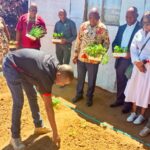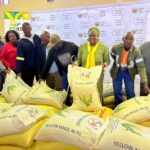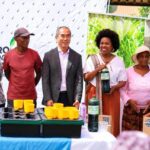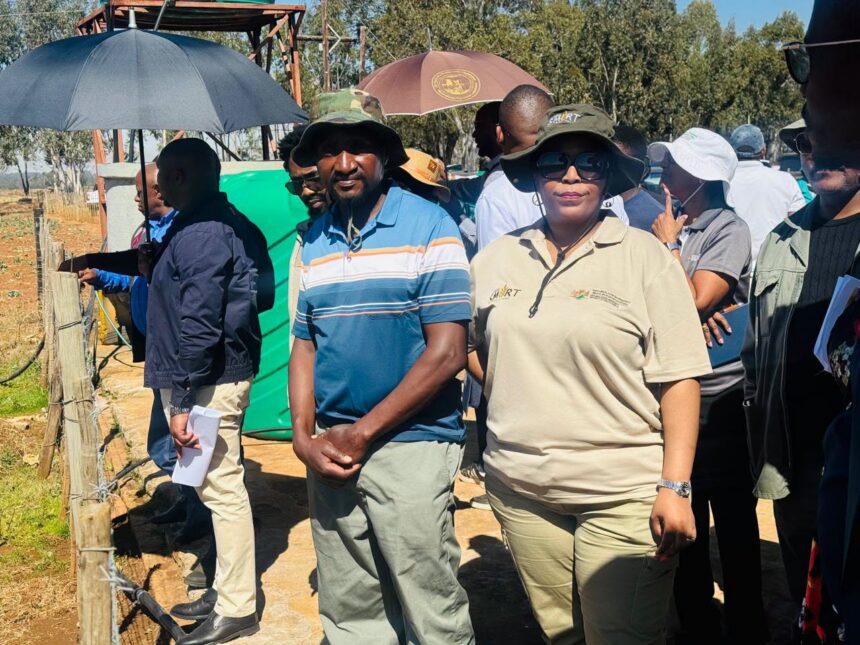
The Young Blood agricultural project in Belfast, Emakhazeni Local Municipality, offers a strong example of how a small household farming initiative can develop into a larger commercial agricultural enterprise through determination, government support and access to productive land. What began with six members planting crops primarily for household consumption has grown into a 40.6-hectare farming operation on Portion 3 of Tweefontein 357 JT, where the group currently leases land for its agricultural business. The project’s development reflects the potential that exists when emerging farmers receive practical support, infrastructure, training and market opportunities. It also demonstrates why continued monitoring is important to ensure that public investment reaches farmers and contributes to sustainable production. The Young Blood project was recently visited by the National Council of Provinces as part of a follow-up oversight programme focused on assessing the support provided and determining whether the investment has delivered meaningful value.
The NCOP oversight visit provided an opportunity to assess the project’s progress on the ground and understand how government interventions have affected its agricultural activities. Oversight visits play an important role in determining whether funded projects are receiving the infrastructure and services required to become sustainable businesses. They can also help identify challenges that farmers face after receiving initial support, particularly in areas such as water availability, livestock management, production, training and access to markets. In the case of Young Blood, the visit allowed officials and representatives to see how support has contributed to the group’s transition from small-scale household production towards a more structured agricultural enterprise. The presence of provincial and municipal leadership also highlighted the importance of cooperation between different levels of government in supporting emerging farmers.
The Department of Agriculture, Rural Development, Land and Environmental Affairs supported the Young Blood project with dam refurbishment, an intervention that can have a direct impact on the group’s ability to sustain agricultural production. Reliable access to water remains one of the most important requirements for farming, particularly when producers want to increase the scale and consistency of their operations. The project also received two water tanks that draw water from a spring, providing an additional source of water for its agricultural activities. These investments can strengthen the farm’s resilience by improving its ability to manage available water resources. Infrastructure such as dams and water storage systems can also help farmers make better use of natural water sources while reducing some of the risks associated with unreliable water access.
Livestock development has formed another part of the support received by Young Blood. During the 2023/24 financial year, the project received a set of 13 Boer goats through the Masibuyele Esibayeni programme. The introduction of Boer goats gives the members an opportunity to expand their livestock activities while building productive assets that can contribute to the long-term growth of the farm. Livestock can provide an additional income stream for agricultural projects while also creating opportunities for breeding and herd development. However, successful livestock production requires proper animal health management, feeding, breeding practices, record keeping and access to markets. The support received by Young Blood therefore provides a foundation, but continued management and technical guidance remain essential if the goat enterprise is to reach its full potential.
Project chairperson Vusi Mbethe expressed satisfaction with the support that Young Blood continues to receive from agricultural authorities and other stakeholders. According to Mbethe, the assistance extends beyond physical infrastructure and includes training designed to strengthen the group’s farming knowledge and business capacity. The project also receives regular visits for extension and advisory services, allowing agricultural officials to provide guidance on production practices and address challenges that may arise. Market linkages have also formed part of the support, which is particularly important for farmers who need reliable buyers for their produce. These combined interventions show that agricultural development requires more than simply providing equipment or livestock, because farmers also need knowledge, technical support and access to markets.
The Young Blood project’s connection to the Government Nutrition Programme is another important part of its agricultural journey. The project is SAGAP-certified and sells its produce to Phambili Ngombono Trading, which then supplies the produce to the Government Nutrition Programme. This market connection provides the farmers with an established route for getting their agricultural products to consumers through a structured supply chain. Access to reliable markets can help emerging farmers plan production more effectively because they have greater visibility over where their produce will be sold. It can also encourage farmers to improve quality standards and maintain the necessary certifications required by institutional buyers. For Young Blood, the relationship demonstrates how market access can help turn agricultural production into a more sustainable commercial activity.
The project’s progress from household consumption to commercial production also illustrates the importance of starting with available resources and building gradually. Many agricultural ventures begin at a small scale, with families or community groups producing food primarily for their own needs. As skills improve and production increases, farmers can begin looking for opportunities to sell surplus produce and develop more structured business operations. Young Blood’s expansion onto a 40.6-hectare leased farm demonstrates how such growth can create new possibilities for production and income generation. The six members have therefore moved beyond simply producing food for themselves and are now managing an agricultural business with broader economic ambitions.
Land access remains a significant consideration for emerging farmers seeking to establish sustainable agricultural enterprises. Leasing 40.6 hectares gives Young Blood access to a larger production area while allowing the members to operate on land without necessarily having to purchase it outright. The arrangement also creates a responsibility to use the available land productively and maintain the infrastructure supporting the farming operation. Continued access to appropriate technical advice can help the group make informed decisions about crop production, livestock management and the use of natural resources. As the business develops, effective planning will be important to ensure that the land generates sufficient production and income to support the members and sustain the project.
The involvement of MEC Khethiwe Moeketsi, Nkangala District Municipality Executive Mayor Councillor Thomas Ngwenya, Legislature Deputy Speaker Sam Masango and other MPLs during the oversight visit underlines the wider importance of the project. Their participation created an opportunity to engage directly with the farmers and assess whether government interventions are producing practical results. Such visits can also help strengthen communication between farmers and institutions responsible for agricultural development. For emerging farmers, direct engagement with officials can provide an opportunity to raise concerns, identify gaps in support and discuss opportunities for future growth. Effective oversight should therefore remain focused not only on the money already invested but also on what is required to help projects become commercially sustainable.
The upcoming Comprehensive Agricultural Support Programme application represents another potential opportunity for Young Blood. With the CASP application period closing on September 11, the project plans to submit an application for further support. Additional assistance could help the group address identified production needs and strengthen the infrastructure or resources required for expansion. However, future funding should continue to be linked to clear production objectives, measurable outcomes and sound business planning. The experience of Young Blood shows that agricultural support can have greater impact when infrastructure investment is combined with training, extension services, advisory support and market access.
The Young Blood project has travelled a significant distance from its beginnings as a six-member initiative focused on household food production. Its development into a 40.6-hectare agricultural business in Belfast demonstrates what can happen when farmers combine commitment with access to land, infrastructure, livestock support, technical advice and markets. The NCOP follow-up oversight visit provided an important opportunity to assess the value of the investment made so far and to understand the practical impact of the support received by the farmers. With continued access to appropriate services and a successful CASP application, the project has an opportunity to strengthen its production and expand its contribution to the local agricultural economy. Young Blood’s story shows that emerging agricultural enterprises need sustained support and strong management to progress from small-scale food production into viable businesses that can create income, strengthen food supply chains and contribute to rural economic development.
Join 'Farmers Mag' WhatsApp Channel
Get the latest Farming news and tips delivered straight to your WhatsApp
CLICK HERE TO JOIN