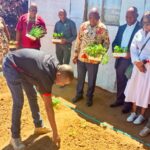
The North West Department of Agriculture and Rural Development is set to strengthen agricultural production and market access with the launch of seven new agricultural value-adding facilities across the province. North West MEC for Agriculture and Rural Development, Madoda Sambatha, will officially launch the facilities as part of ongoing efforts to support farmers and grow the provincial agricultural economy. The facilities are located in Mogogelo, Bloemhof, Taung, Kgomo-Kgomo, Tlhatlhaganyane and two sites in Mahikeng. The investment is designed to address some of the infrastructure challenges that have made it difficult for smallholder, emerging and commercial farmers to expand their businesses. By improving access to processing, storage and marketing infrastructure, the department aims to create stronger links between farmers and markets while supporting rural economic development.
The seven facilities form part of a broader effort to strengthen the agricultural value chain in the North West. The project includes five vegetable packhouses, one lucerne packhouse and one red meat abattoir, giving farmers access to infrastructure that can support activities beyond primary production. Farmers often face challenges when they have limited access to facilities where agricultural products can be sorted, processed, packaged and stored before reaching consumers. These challenges can affect the quality of products, increase post-harvest losses and limit farmers’ ability to negotiate with buyers. The new facilities are intended to help close these infrastructure gaps and give producers greater opportunities to participate in higher-value activities within the agricultural sector.
The vegetable packhouses will provide several services designed to improve how fresh produce moves from farms to markets. These services will include grading, sorting, washing, packaging and storage, allowing farmers to prepare vegetables according to market requirements. Proper grading and sorting can help producers separate produce according to quality and size, while washing and packaging can improve presentation and handling. Storage facilities can also give farmers more flexibility when managing their produce after harvesting. By bringing these services closer to production areas, the facilities could help farmers reduce logistical challenges and improve their ability to supply formal markets.
The availability of vegetable packhouses could be particularly important for smallholder and emerging farmers who may not have the financial resources to establish their own processing and packing infrastructure. Access to shared facilities can allow producers to benefit from services that would otherwise require significant capital investment. It can also create opportunities for farmers to work together, increase volumes and meet the requirements of larger buyers. Consistent quality and reliable packaging are often important when supplying formal retail, institutional or wholesale markets. Improved access to these services can therefore help farmers move from simply producing agricultural commodities towards building more commercially sustainable farming businesses.
The lucerne packhouse will provide specialised infrastructure for farmers producing lucerne, with services including baling, packaging and storage. Lucerne is an important livestock feed and can form part of the agricultural value chain connecting crop producers with livestock farmers. Proper baling and packaging can make the product easier to handle, transport and market, while suitable storage can help protect the quality of the feed. Farmers can benefit when agricultural products are handled in a way that supports efficient distribution and reduces unnecessary losses. The facility is therefore expected to provide additional support for lucerne producers seeking to strengthen their commercial operations.
The red meat abattoir will provide livestock farmers with access to slaughtering and meat processing services. This type of infrastructure is important because livestock farmers need reliable facilities to move animals from primary production into the formal meat value chain. An abattoir can provide a structured point where animals are processed for market while supporting compliance with applicable meat safety and veterinary requirements. Improved access to local processing infrastructure can also reduce some of the logistical barriers faced by farmers who need to transport livestock or carcasses over long distances. The facility could therefore help create stronger connections between livestock producers, meat processors and consumers.
The agricultural infrastructure investment is also expected to contribute to local economic development in rural communities. New facilities can create direct employment opportunities while generating additional demand for transport, maintenance, packaging, logistics and other services. As farmers increase production and access new markets, their businesses may create further employment opportunities on farms and throughout the agricultural value chain. Rural communities can benefit when agricultural activity generates income that circulates through local businesses. The department’s investment therefore extends beyond infrastructure itself and aims to create broader economic opportunities linked to agriculture.
Improved market access could also help farmers increase the scale and commercial value of their operations. When producers have better access to processing and storage facilities, they may be able to plan production around the needs of specific buyers and markets. This can create opportunities to increase volumes, improve product quality and develop more reliable supply relationships. For emerging farmers in particular, access to appropriate infrastructure can support the transition from small-scale production towards more commercially focused enterprises. The department expects these investments to contribute to the commercialization of emerging farmers while also supporting established commercial producers.
The facilities are being developed across several areas of the North West, including Mogogelo, Bloemhof, Taung, Kgomo-Kgomo, Tlhatlhaganyane and Mahikeng. Their geographic distribution is significant because farmers in different parts of the province face different production and market access challenges. Locating agricultural infrastructure closer to farming communities can reduce the distance farmers need to travel to access essential value-adding services. This can be particularly beneficial for producers dealing with fresh vegetables and other products that require careful handling after harvest. Local infrastructure can also encourage more agricultural activity around the facilities and create opportunities for businesses that support farmers.
The launch of the seven facilities reflects the department’s broader objective of strengthening the provincial agricultural value chain. Agriculture contributes to food production and rural livelihoods, but its economic impact can grow when farmers have access to infrastructure that enables them to participate in processing, packaging and marketing. Value addition can allow a greater portion of the economic value generated by agricultural products to remain within farming communities and the province. Stronger value chains can also create opportunities for new businesses and partnerships between producers, processors, buyers and service providers. The department’s investment is therefore aimed at creating a more connected agricultural economy rather than focusing only on primary production.
For farmers, the success of these facilities will depend on effective management, accessibility and strong relationships with the communities they are intended to serve. Farmers will need to understand the services available and how they can use the facilities to improve their production and market strategies. Buyers and other market participants will also play an important role by creating demand for products supplied through the infrastructure. Continued engagement between government, farmers and the private sector can help ensure that the facilities operate in ways that respond to real market needs. When infrastructure is matched with production, skills, finance and reliable markets, it can make a stronger contribution to agricultural growth.
The official launch will take place on Monday, 24 August 2026, at 09:00 at MOR Farming Farm in Bloemhof. The event will provide an opportunity to showcase the infrastructure and highlight the role that agricultural value-adding facilities can play in supporting farmers across the province. The launch also gives stakeholders an opportunity to focus attention on the importance of investment in rural agricultural infrastructure. For farmers and communities, the facilities represent potential opportunities to improve production, strengthen market participation and develop agricultural businesses. Their long-term impact will depend on continued use, effective management and the ability of farmers to connect increased production with sustainable markets.
The launch of seven agricultural value-adding and market access facilities marks an important investment in the future of agriculture in the North West. Five vegetable packhouses, a lucerne packhouse and a red meat abattoir will provide farmers with services that can improve processing, storage, packaging and access to markets. These facilities have the potential to support smallholder, emerging and commercial farmers while creating employment and stimulating rural economic activity. By investing in infrastructure that strengthens the agricultural value chain, the North West Department of Agriculture and Rural Development is creating opportunities for farmers to expand their businesses and capture more value from their production. The initiative represents a significant step towards a stronger, more commercially focused and more inclusive agricultural sector in the province.
Join 'Farmers Mag' WhatsApp Channel
Get the latest Farming news and tips delivered straight to your WhatsApp
CLICK HERE TO JOIN