
Protecting crops from insects requires far more than simply identifying a pest and applying a control product. For Lugisani Mulaudzi, Junior Researcher in Entomology at the Agricultural Research Council Grain Crops, effective crop protection starts with understanding how pests behave, how they interact with crops and how they respond to different control measures. Her research focuses on important field crops including maize, sorghum, sunflower and soybean, where insect pests can cause significant production losses if they are not properly managed. Her work combines scientific research with practical agricultural applications that can help farmers make better pest management decisions. By studying insects and developing knowledge that can be shared with farmers and other agricultural stakeholders, Mulaudzi is contributing to efforts to strengthen crop production and improve the resilience of South Africa’s agricultural sector.
Mulaudzi’s work covers several insect pests that pose challenges to grain and field crop production. These include Fall Armyworm, Busseola fusca, Chilo species, cutworms and bollworm, all of which can affect crops in different ways and at different stages of development. Understanding these pests is essential because each species has its own behaviour, life cycle and response to environmental conditions and control measures. Farmers need accurate information to determine which pests are present, how severe an infestation is and which management options are appropriate. Mulaudzi’s research helps generate this information by examining pest populations and their responses in agricultural environments.
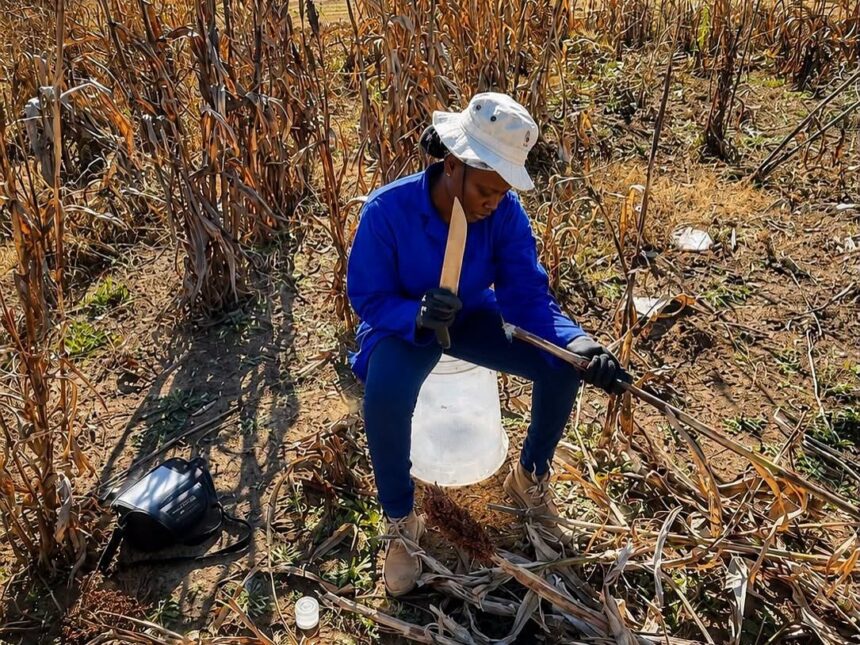
One of the important aspects of her research involves pest sampling, which provides researchers with information about the presence, distribution and levels of insect populations in crops. Regular sampling can help identify pest problems before they become severe and can provide data that supports more informed management decisions. Researchers can use this information to track changes in pest populations and assess whether particular control strategies are working effectively. Sampling also contributes to a better understanding of how pest populations vary between crops, locations and seasons. This type of evidence-based approach is important for developing pest management strategies that respond to actual conditions rather than relying on assumptions.
Resistance monitoring is another important component of Mulaudzi’s work because insect populations can change in response to repeated exposure to control measures. When pests develop resistance, products or technologies that previously provided effective control may become less effective. Monitoring allows researchers to detect changes in pest susceptibility and investigate whether resistance is emerging or increasing within particular populations. This information can help researchers and agricultural stakeholders develop appropriate strategies to preserve the effectiveness of available pest management technologies. Resistance management is particularly important for long-term crop protection because farmers need control options that remain effective across multiple growing seasons.
Her research also includes evaluating Bt and TELA maize hybrids, which are technologies developed to provide protection against certain insect pests. Evaluating these hybrids under different conditions helps researchers understand their performance and the level of protection they can provide against target pests. Scientific assessment is important because crop protection technologies need to be monitored continuously as pest populations and agricultural conditions change. Research can also provide information about how these technologies fit into broader integrated pest management programmes. Mulaudzi’s involvement in this work connects laboratory and field research with practical questions that matter to farmers producing maize and other important crops.
The significance of this research extends beyond individual insects because pest damage can have direct consequences for farm productivity and profitability. Insects can damage leaves, stems, roots, ears, grains and other plant structures, depending on the species involved. Severe infestations can reduce crop yields and affect the quality of harvested produce, creating additional financial pressure for farmers. Effective pest management therefore forms an important part of protecting investment in seed, fertiliser, labour, machinery and other agricultural inputs. Research that improves the understanding of pests can help farmers use available resources more efficiently while reducing unnecessary crop losses.
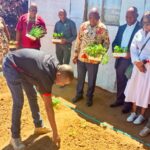
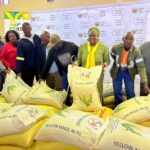
Mulaudzi also places strong emphasis on sharing scientific knowledge with the people who can use it in practice. Her work includes farmer training, student demonstrations, mentorship and stakeholder engagement, allowing research findings to move beyond the research environment. Farmer training can help producers understand how to identify pests, monitor their crops and make informed decisions about management options. Student demonstrations can provide young people with practical exposure to entomology and agricultural research, helping develop the next generation of scientists and agricultural professionals. Stakeholder engagement also creates opportunities for researchers to understand the challenges faced by farmers and other industry participants.
The ability to communicate research findings effectively is particularly important in agricultural science because research only has practical value when relevant information reaches the people who need it. Farmers operate under different environmental, financial and production conditions, so technical recommendations need to be presented in ways that are clear and useful. Mulaudzi’s involvement in training and engagement allows her to connect scientific findings with practical farming realities. This two-way interaction can also help researchers identify questions that require further investigation. By combining research with education and communication, she is helping create stronger links between scientific institutions and agricultural communities.
Her mentorship work also highlights the importance of developing skills and interest in agricultural science among students and young professionals. Entomology requires knowledge of insect biology, crop production, ecology, research methods and pest management, making it an important field within agricultural research. Exposing students to practical research can help them understand how scientific knowledge is developed and applied to real agricultural challenges. Mentorship can also provide young researchers with guidance as they develop their own careers and research interests. Mulaudzi’s involvement in this area demonstrates that agricultural research is not only about solving current problems but also about building the expertise needed to address future challenges.
Mulaudzi is now pursuing her PhD at the University of Pretoria, where she is continuing to develop her knowledge and research capabilities. Her doctoral studies come at a time when agriculture faces increasing pressure to produce more food while managing pests effectively and responsibly. Farmers need approaches that can respond quickly to changing pest populations, emerging resistance and evolving environmental conditions. Future pest management is likely to require stronger integration of monitoring, technology, biological control and other approaches rather than relying on a single method. Mulaudzi’s continued academic development positions her to contribute to this evolving area of agricultural science.
Among the areas she is looking towards are early warning systems, biological control and entomopathogenic approaches. Early warning systems could help farmers and agricultural authorities identify developing pest threats sooner, allowing management measures to be considered before populations reach damaging levels. Biological control focuses on using natural enemies or other biological processes to help suppress pest populations and can form part of integrated pest management strategies. Entomopathogenic approaches involve organisms that can cause disease in insects and may offer additional tools for managing particular pest species. Continued research into these approaches could contribute to more diverse and adaptable crop protection systems.
The future of crop protection will require researchers, farmers, industry stakeholders and policymakers to work together as pest threats continue to change. Climate conditions, farming practices, crop varieties and pest movement can all influence the development and distribution of insect populations. Research therefore needs to remain responsive to changes in agricultural environments while producing information that farmers can use in practical settings. Mulaudzi’s work reflects this need by combining pest research with resistance monitoring, technology evaluation, farmer education and stakeholder engagement. Her focus on emerging approaches also points towards a future in which crop protection increasingly relies on integrated systems that combine several complementary tools.
Lugisani Mulaudzi’s work demonstrates how entomology can make a direct contribution to the protection of South Africa’s food production systems. From studying Fall Armyworm and other economically important pests to monitoring resistance and evaluating Bt and TELA maize hybrids, her research addresses challenges that affect farmers in the field. Her commitment to farmer training, mentorship and stakeholder engagement also ensures that scientific knowledge can reach audiences beyond research institutions. As she continues her PhD studies at the University of Pretoria, her interest in early warning systems, biological control and entomopathogenic approaches points towards new possibilities for managing crop pests. Through research, education and collaboration, Mulaudzi is helping strengthen the scientific foundation needed to protect crops, support farmers and develop more effective pest management solutions for the future.
Join 'Farmers Mag' WhatsApp Channel
Get the latest Farming news and tips delivered straight to your WhatsApp
CLICK HERE TO JOIN