
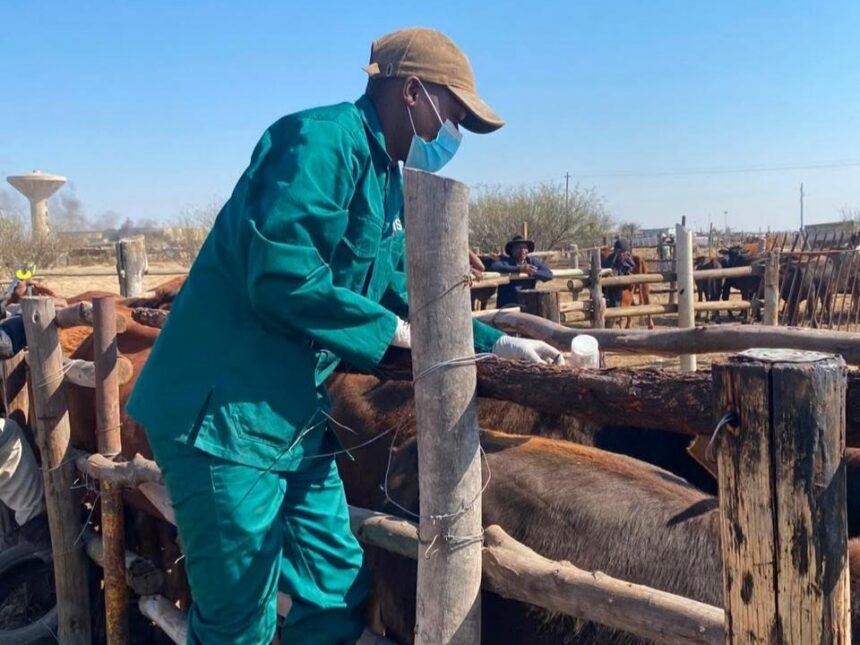
South Africa’s fight against Foot-and-Mouth Disease (FMD) has reached an important milestone, with Animal Health Technicians administering more than 100,000 vaccine doses across affected areas as part of the national vaccination roll-out campaign. Working alongside state veterinarians, these frontline teams are taking essential animal health services directly to livestock farmers and rural communities. Their work is helping strengthen the country’s response to FMD while supporting farmers who face the ongoing risks associated with disease outbreaks. Red Meat Industry Services (RMIS) is among the partners supporting these efforts, recognising the importance of protecting livestock and maintaining the strength of South Africa’s red meat value chain. The achievement demonstrates how collaboration between government, farmers, animal health professionals and industry partners can strengthen disease-control efforts.
Animal Health Technicians perform a vital role in the national FMD response, with responsibilities that extend well beyond administering vaccines. They work directly with livestock owners, assist veterinary teams with disease-control measures and provide farmers with practical guidance on animal health. Their field-based work also supports stronger biosecurity by helping farmers understand and apply measures designed to limit the spread of disease. This direct contact with farming communities is particularly important during an outbreak because farmers need timely information and practical support. Through their continued work alongside livestock owners, Animal Health Technicians are helping strengthen the response to FMD at farm level.
The administration of more than 100,000 vaccine doses represents a significant operational achievement. Each vaccination requires coordination between technicians, veterinarians and livestock owners to ensure that animals are properly managed during the process. Teams also need to reach farms and livestock communities across affected areas, which can involve significant travel and logistical challenges. The milestone therefore reflects the dedication of professionals who continue working in the field to reach as many animals as possible. It also demonstrates the importance of maintaining sufficient capacity and coordination throughout a national disease-control campaign.
For livestock farmers, FMD can create serious challenges that extend beyond animal health. Outbreaks can disrupt livestock movements, affect sales and create uncertainty across the farming and meat production sectors. Farmers may also face additional costs when implementing disease-control measures or responding to restrictions. Protecting livestock through vaccination and other control measures can help reduce these risks and support the stability of farming businesses. The work of Animal Health Technicians therefore contributes directly to efforts to protect the economic interests of livestock producers and the communities that depend on them.
Red Meat Industry Services plays an important role in supporting the broader red meat value chain and has been recognised among the partners contributing to the vaccination effort. Effective FMD control is particularly important for the red meat sector because healthy livestock form the foundation of production, processing, trade and market activity. Disease outbreaks can affect producers, feedlots, transport operators, abattoirs, processors and other businesses throughout the value chain. Supporting animal health interventions can therefore contribute to protecting the wider industry from disruptions caused by disease. RMIS’s involvement reflects the importance of industry participation in strengthening South Africa’s response to livestock health challenges.
The partnership between government, industry organisations and farmers also highlights the need for a coordinated approach to FMD management. Government veterinary services provide technical direction and regulatory oversight, while Animal Health Technicians help deliver services directly in farming areas. Farmers play an essential role by making their livestock available for vaccination and complying with disease-control requirements. Industry partners such as Red Meat Industry Services can provide additional support and help reinforce the importance of animal health throughout the livestock value chain. Each part of this partnership contributes to a stronger and more coordinated response.
Biosecurity remains essential even as vaccination coverage increases. Farmers need to continue controlling the movement of livestock and maintaining appropriate hygiene and access controls around their animals. They should also monitor their herds carefully and report suspected cases to veterinary authorities without delay. Animal Health Technicians can assist farmers by providing practical guidance on these measures and reinforcing veterinary recommendations during field visits. Consistent application of biosecurity practices can help reduce opportunities for FMD to spread between farms and livestock populations.
Strong disease control also supports market access, which is important for the sustainability of South Africa’s livestock industry. Farmers depend on functioning markets to sell animals and generate income, while processors and other businesses depend on reliable supplies of healthy livestock. Disease outbreaks can interfere with these relationships and create additional pressure across the value chain. Reducing the impact of FMD can therefore support greater stability for farmers and businesses operating within the red meat sector. This is one reason why collaboration between animal health authorities and organisations such as Red Meat Industry Services remains important.
The involvement of the FirstRand Foundations Fund, Kagiso Trust and Red Meat Industry Services demonstrates the value of partnerships in supporting animal health programmes. Resources and support from industry and development partners can help strengthen the capacity of teams working in affected communities. These contributions can support efforts to reach more livestock owners and ensure that disease-control interventions are delivered where they are needed. Partnerships also help bring different areas of expertise together around a shared objective. In the case of FMD, that objective is to protect livestock, support farmers and strengthen the resilience of the agricultural sector.
The achievement of more than 100,000 vaccine doses should be viewed as an important step rather than the end of the FMD response. Continued vaccination, disease surveillance, biosecurity and responsible livestock movement will remain important while affected areas continue managing the disease. Farmers must continue cooperating with Animal Health Technicians and state veterinarians and should report suspected infections promptly. Industry organisations will also have an important role to play in supporting disease-control efforts and communicating the economic importance of maintaining healthy livestock. Continued collaboration will be essential to sustaining the progress already made.
The more than 100,000 FMD vaccine doses administered by Animal Health Technicians demonstrate what can be achieved through coordinated action in the field. Their work is helping protect livestock while supporting farmers, strengthening biosecurity and contributing to the protection of market access. The involvement of Red Meat Industry Services, alongside the FirstRand Foundations Fund, Kagiso Trust, government veterinary services and livestock farmers, highlights the importance of a united response to one of the major animal health challenges facing the sector. FMD control requires continued commitment because vaccination must work alongside surveillance, biosecurity and responsible animal movement. As the national vaccination campaign continues, the combined efforts of Animal Health Technicians, farmers, government and industry partners will remain critical to protecting South Africa’s livestock and strengthening the future of the red meat value chain.
Join 'Farmers Mag' WhatsApp Channel
Get the latest Farming news and tips delivered straight to your WhatsApp
CLICK HERE TO JOIN