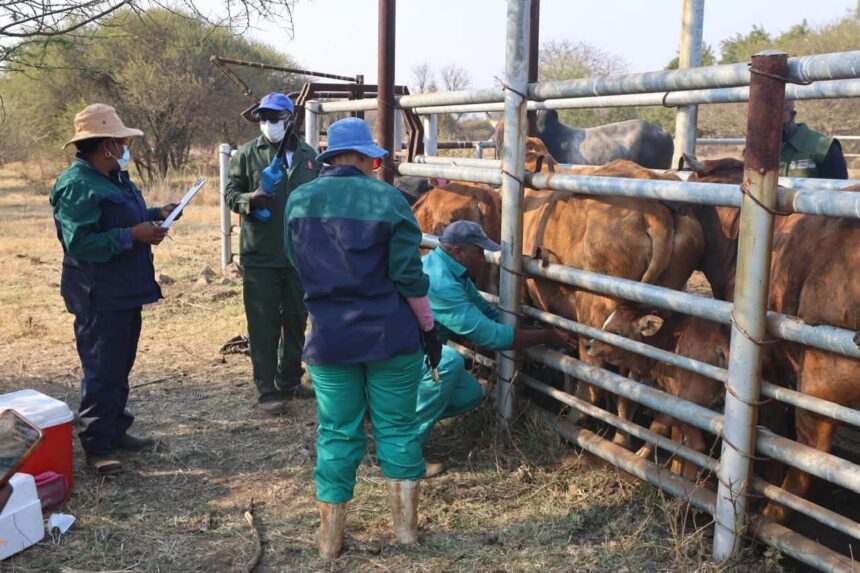
The North West Department of Agriculture and Rural Development (DARD) has made significant progress in its efforts to control Foot-and-Mouth Disease (FMD), with more than 1.3 million livestock animals vaccinated since the province launched its mass vaccination campaign in March 2026. The programme forms part of a coordinated response to the continued presence of FMD and aims to protect the province’s livestock industry from further disease spread. DARD is working alongside livestock farmers, veterinary services, Animal Health Technicians and other industry stakeholders to expand vaccination coverage and strengthen disease control. The department has received more than 1.57 million doses of FMD vaccine and has successfully vaccinated 1,315,401 animals. This represents more than 80% coverage of the provincial target herd of approximately 1.4 million animals and provides an important boost to efforts to protect livestock, food security and farming livelihoods.
The mass vaccination campaign began in March 2026 as part of wider measures to contain FMD across the North West province. Foot-and-Mouth Disease is a highly contagious viral disease that affects cloven-hoofed animals, including cattle, pigs, sheep and goats, and outbreaks can cause serious disruption to livestock production and agricultural trade. The disease can spread rapidly between susceptible animals through direct contact and through contaminated materials, equipment, vehicles and other pathways. Vaccination forms an important part of the response because it can help reduce the severity and spread of infection when combined with other disease control measures. The scale of the North West campaign demonstrates the importance of coordinated action between government officials and livestock owners in managing the outbreak.
The province has so far received 1,570,100 doses of the FMD vaccine, allowing veterinary teams and animal health personnel to reach a large proportion of the target livestock population. A total of 1,315,401 animals have been vaccinated, taking coverage beyond 80% of the provincial target herd of 1.4 million animals. This level of vaccination represents substantial progress, particularly given the size of the livestock population and the logistical challenges involved in reaching farms and affected areas. The programme depends heavily on cooperation from livestock farmers who must make animals available for vaccination and follow instructions from veterinary authorities. Continued vaccination will remain important as government teams work to reach farmers and livestock that have not yet been covered.
Despite the progress achieved through vaccination, FMD remains a serious concern in the North West. As of 14 August 2026, the province had recorded 479 confirmed FMD cases across all four districts. The Dr Ruth Segomotsi Mompati District was the most affected, with 213 confirmed cases, while Ngaka Modiri Molema District recorded 93 cases. Dr Kenneth Kaunda District had 92 confirmed cases and Bojanala District recorded 81 cases, showing that the outbreak continues to affect communities across the province rather than being limited to one geographic area.
Of the 479 confirmed cases recorded in the province, 333 remained active and were being monitored and managed by veterinary teams as of 14 August 2026. A further 146 cases had been closed, providing an encouraging indication that disease management efforts are producing results in some affected areas. Closed cases have been recorded in areas including Molopo, Rustenburg and Mahikeng, where veterinary authorities have been implementing measures to manage and contain the disease. The closure of cases does not mean that farmers can relax their disease prevention practices because continued vigilance remains necessary to prevent new infections. Instead, the progress provides evidence that vaccination, surveillance and other control measures can contribute to improved disease management when consistently implemented.
The department has emphasised that vaccination alone cannot eliminate the risks associated with FMD. Strong biosecurity practices remain essential because vaccinated animals can still be exposed to infection and disease can continue to spread if livestock movements and contact between herds are not properly controlled. Farmers are therefore encouraged to follow veterinary regulations governing the movement of animals and to maintain accurate records that support livestock traceability. Good farm biosecurity can include controlling access to livestock areas, managing contact between different herds and ensuring that equipment, vehicles and other potential sources of contamination are handled appropriately. These measures become particularly important during an outbreak because preventing new infections can reduce pressure on farmers, veterinary services and the broader agricultural sector.
The MEC for Agriculture and Rural Development, Sambatha, welcomed the progress but warned livestock farmers against becoming complacent. The MEC called on farmers to continue cooperating with veterinary officials and to comply with disease control and biosecurity measures introduced to contain the outbreak. The department also acknowledged the concerns of farmers who are still waiting for vaccination teams to reach their livestock. According to the MEC, veterinary and animal health teams are continuing their work to reach remaining farmers and ensure that livestock are vaccinated while other necessary disease control measures are implemented. The appeal for patience reflects the scale of the campaign and the need to coordinate vaccination activities across a large provincial livestock population.
The department has stressed that the success of the FMD vaccination programme depends on cooperation from every part of the livestock sector. Farmers have an important role to play by making animals available for vaccination, controlling animal movements and maintaining effective biosecurity on their properties. They must also report suspected cases as soon as possible so that veterinary authorities can investigate potential outbreaks and take appropriate action. Delays in reporting suspected infections can increase the risk of transmission and make containment more difficult. Early reporting therefore remains one of the most important responsibilities of livestock owners during an active disease outbreak.
Livestock traceability is another important part of the province’s FMD response. Farmers are urged to maintain accurate records of their animals and comply with requirements relating to animal identification and movement. Traceability allows veterinary authorities to better understand where animals have moved and identify farms or herds that may have been exposed to infection. This information can help officials conduct disease investigations and respond more quickly when new cases are suspected or confirmed. Responsible livestock movement is particularly important during an outbreak because unnecessary movement can create additional opportunities for the virus to spread between farms and communities.
Livestock owners who suspect that their animals may have FMD are encouraged to report immediately to the nearest State Veterinarian, private veterinarian, Animal Health Technician or Extension Officer. Prompt reporting gives veterinary teams an opportunity to investigate the situation and implement appropriate disease control measures. Farmers should not ignore symptoms or move potentially infected animals while waiting for professional guidance because doing so could increase the risk of transmission. Working closely with veterinary professionals also helps farmers understand the requirements that apply to their particular area. Consistent communication between livestock owners and animal health authorities is therefore essential to maintaining effective disease surveillance.
The North West vaccination campaign also has implications for food security and rural livelihoods because livestock production supports many farming households and contributes to the broader agricultural economy. FMD outbreaks can disrupt livestock operations and create uncertainty for farmers who depend on healthy animals for income and food production. Protecting livestock through vaccination, surveillance, controlled movement and biosecurity can help reduce the potential economic impact of the disease. The department’s progress in vaccinating more than 1.3 million animals represents a major operational achievement, but the continued presence of active cases shows that further work remains necessary. Sustained cooperation between government and farmers will be critical as the province works towards reducing the number of active cases and preventing new infections.
The progress recorded by the North West Department of Agriculture and Rural Development demonstrates the scale of the province’s response to Foot-and-Mouth Disease, with more than 1.3 million animals vaccinated and 146 confirmed cases already closed as of 14 August 2026. However, the 333 active cases across the province show that the outbreak remains a significant concern and that disease control efforts must continue. Vaccination will need to remain closely linked to surveillance, strict biosecurity, responsible livestock movement and rapid reporting of suspected infections. Farmers who have not yet been reached are being urged to remain patient and cooperate with veterinary teams as the campaign continues. With government officials, veterinary professionals, Animal Health Technicians and livestock owners working together, the province can strengthen its efforts to contain FMD, protect livestock and safeguard the livelihoods and food security of communities that depend on agriculture.
Join 'Farmers Mag' WhatsApp Channel
Get the latest Farming news and tips delivered straight to your WhatsApp
CLICK HERE TO JOIN