

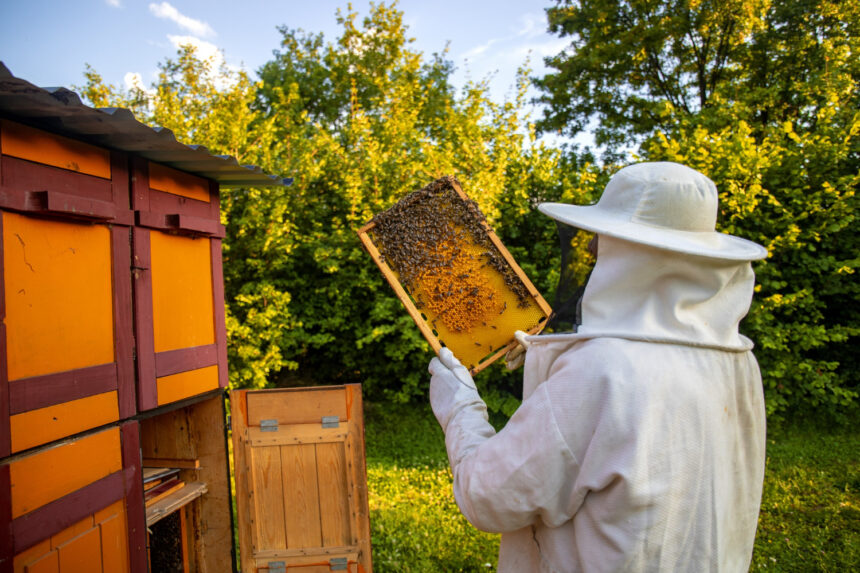
South Africa’s honey industry took centre stage as the University of Pretoria and the Academy of Science of South Africa’s Forum on Food Safety brought together researchers, government representatives, industry stakeholders, regulators and beekeepers to examine the country’s honey value chain. The event highlighted the important connection between beekeeping, crop production, food safety and agricultural markets. From the work of bees in pollinating crops to the production, processing and sale of honey, each stage contributes to the broader agricultural economy. Discussions focused on how science, innovation and collaboration can help strengthen the sector while improving product quality and consumer confidence. For farmers and beekeepers, the discussions also highlighted the opportunities that can emerge when agricultural production is supported by research, responsible practices and strong market systems.
Beekeeping plays an important role in agriculture because bees contribute far more than honey production. Through pollination, bees support the reproduction of many flowering plants and help farmers produce crops that depend on effective pollination. Fruit, vegetable and seed producers can benefit from healthy bee populations because pollination can directly influence crop development and yields. Beekeepers can also provide pollination services to farmers, creating an additional source of income alongside honey production. Protecting bee populations and maintaining healthy colonies is therefore important for both the honey industry and the wider agricultural sector.
The honey value chain begins with healthy bee colonies and suitable forage, but the process does not end when honey is harvested from the hive. Honey needs to be handled, processed, packaged and stored appropriately before it reaches consumers. Farmers and beekeepers who want to build sustainable businesses need to understand how each stage can affect the quality and marketability of their products. Good production and handling practices can help protect honey from contamination while maintaining its characteristics. Understanding the complete value chain can also help producers identify opportunities to improve their businesses and reach higher-value markets.
Food safety was a central issue during the discussions because consumers need confidence that honey and other agricultural products are safe for consumption. For beekeepers, food safety begins with responsible hive management and continues through harvesting, handling and storage. Producers also need to understand the requirements that apply to honey production and marketing so they can meet the expectations of regulators and buyers. Maintaining good hygiene and appropriate handling procedures can reduce risks and protect the reputation of individual producers and the wider industry. Strong food safety practices can therefore become an important part of building a sustainable agricultural business.
Honey quality and authenticity are also important considerations for farmers and beekeepers seeking to develop strong brands and reliable markets. Consumers increasingly want to know what they are buying, where it comes from and whether the product meets expected quality standards. Clear information and responsible labelling can help producers build stronger relationships with customers. Maintaining consistent quality can also help small and emerging beekeepers compete in a market where consumer confidence plays an important role. Research and testing can support these efforts by providing scientific information that helps identify and address quality concerns.
The involvement of researchers at the event highlighted the important role that science can play in solving challenges faced by farmers and beekeepers. Research can provide information about bee health, honey quality, production methods, environmental conditions and potential food safety risks. Scientific findings can help producers make better-informed decisions about how they manage their operations. Innovation can also introduce new technologies and practices that improve efficiency, monitoring and quality control. Connecting researchers with people working directly in agriculture can help ensure that scientific knowledge addresses real challenges faced by producers.
Bee health deserves particular attention because productive honey operations depend on strong and healthy colonies. Bees can face a range of pressures, including disease, pests, environmental changes and reduced access to suitable forage. Farmers and beekeepers can work together to create environments that support healthy bee populations by protecting flowering plants and using agricultural practices responsibly. Maintaining diverse sources of forage can also help provide bees with access to food throughout different periods of the year. Supporting bee health benefits beekeepers while also strengthening pollination services available to farmers.
The event also demonstrated the importance of cooperation between farmers and beekeepers. Farmers can benefit from pollination services while beekeepers can gain access to suitable environments where their colonies can forage. Good communication between the two groups can help ensure that agricultural activities are managed in ways that reduce unnecessary risks to bees. This includes greater awareness of how farm management decisions can affect pollinator health. Stronger relationships between crop farmers and beekeepers can create benefits for both sides while supporting broader agricultural productivity.
Government and regulators also have an important role in creating a stable environment for the honey industry. Clear standards and effective regulatory systems can help protect consumers while giving responsible producers a framework within which to operate. Regulations relating to food safety, product quality and marketing can influence how honey businesses produce and sell their products. Farmers and beekeepers who understand these requirements can better prepare their businesses for formal markets and potential expansion. Regular engagement between regulators, producers and industry organisations can also help identify challenges and improve communication around regulatory requirements.
For farmers looking to diversify their agricultural enterprises, beekeeping can provide an opportunity to develop an additional income stream while contributing to pollination. Honey production can be integrated into suitable farming environments where adequate forage and appropriate management conditions exist. Farmers can explore opportunities in honey, beeswax, pollination services and other bee-related products depending on their resources and market access. However, successful beekeeping requires knowledge, appropriate equipment, responsible colony management and an understanding of market requirements. Access to training, agricultural extension services and industry networks can help new entrants build the skills needed to manage a productive operation.
The discussions also highlighted the importance of adding value within South Africa’s agricultural sector. Producing raw agricultural commodities is only one part of the farming economy, while processing, packaging, branding and direct marketing can create additional opportunities. Honey producers who develop strong quality systems and attractive products may be able to access different customer segments and markets. Value addition can help producers retain more economic value from their products while creating opportunities for small agricultural businesses to grow. A stronger honey value chain can therefore contribute to employment, rural economic activity and agricultural development.
The gathering at the University of Pretoria also provided an opportunity for stakeholders to build relationships and share experiences. Farmers and beekeepers often face practical challenges that can benefit from input from researchers, regulators and other industry participants. At the same time, researchers and policymakers gain valuable insights when they engage directly with people working in agricultural production. These exchanges can help identify gaps in knowledge, training, regulation and support. Continued collaboration can make it easier to develop practical solutions that strengthen the honey sector and benefit producers across South Africa.
The South African honey industry has significant links to the broader agricultural economy, making its development relevant to farmers beyond those directly involved in beekeeping. Healthy bees support pollination, while responsible honey production creates opportunities for agricultural diversification and rural enterprise development. Food safety, quality assurance and consumer confidence are equally important for ensuring that producers can participate successfully in formal markets. The engagement between the University of Pretoria, ASSAf’s Forum on Food Safety, government, regulators, industry and beekeepers showed the value of bringing these different perspectives together. By combining scientific knowledge with practical farming experience, South Africa can strengthen its honey value chain, support bee health, create opportunities for farmers and build greater trust in locally produced honey.
Join 'Farmers Mag' WhatsApp Channel
Get the latest Farming news and tips delivered straight to your WhatsApp
CLICK HERE TO JOIN