

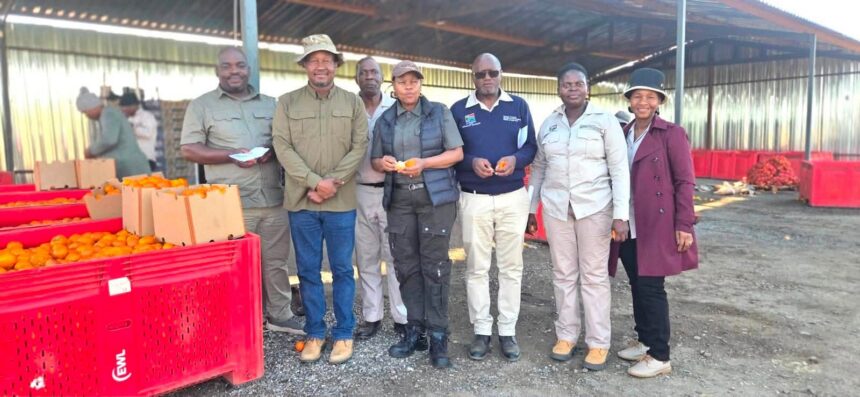
Limpopo Department of Agriculture and Rural Development MEC Ms Nakedi Grace Kekana has continued to strengthen the province’s agricultural development agenda through a site visit to Manini Holdings, a major citrus production hub in Limpopo. The visit formed part of the MEC’s ongoing monitoring engagements aimed at assessing agricultural projects and understanding the opportunities and challenges facing producers on the ground. Following earlier visits to Afrikan and Kopano Farms, the MEC toured the Manini Holdings citrus farm to inspect progress and gain a closer view of its production activities. The engagement highlighted the growing importance of large-scale agricultural enterprises in creating employment, supporting local economies and expanding the province’s agricultural production capacity. It also demonstrated the Limpopo Department of Agriculture and Rural Development’s focus on ensuring that agricultural development translates into meaningful economic opportunities for communities.
Citrus production is an important part of Limpopo’s agricultural economy, with the province’s climate and agricultural resources supporting the cultivation of a range of citrus varieties. Large citrus operations require significant investment in land preparation, irrigation, orchards, machinery, labour, packhouse operations, logistics and market access. When these components work together effectively, citrus farming can generate economic activity well beyond the boundaries of individual farms. Production creates demand for agricultural inputs and services while harvesting, packing, transportation and related activities provide employment opportunities. Developments such as Manini Holdings therefore have the potential to contribute to a broader agricultural value chain that benefits producers, workers and surrounding communities.
The MEC’s visit to Manini Holdings also reflects the importance of monitoring agricultural projects directly rather than relying solely on reports and administrative information. Site visits allow government officials to observe progress, engage with producers and identify issues that may require attention. They also provide an opportunity to understand how government support and agricultural policies are affecting projects at operational level. Direct engagement with farming enterprises can help identify opportunities to improve production, strengthen infrastructure and support long-term sustainability. For the Limpopo Department of Agriculture and Rural Development, these engagements provide valuable insight into the realities of commercial agriculture and the interventions needed to support continued growth.
The visit followed earlier monitoring engagements at Afrikan and Kopano Farms, showing a broader effort by the provincial department to remain connected with agricultural projects across Limpopo. Monitoring different farms and agricultural enterprises can help government develop a clearer picture of the province’s production landscape and the factors influencing agricultural performance. Each farming operation faces its own combination of production, infrastructure, labour, financing, environmental and market considerations. Regular engagement gives government and producers an opportunity to discuss these issues and identify practical ways of strengthening agricultural businesses. It can also help ensure that promising agricultural projects receive the attention and support required to reach their full potential.
Manini Holdings stands out because of the scale of its citrus production activities and its potential contribution to the agricultural economy. Citrus farming can generate employment throughout the year, although labour requirements may increase significantly during periods such as harvesting and packing. Beyond direct farm employment, commercial citrus production can support opportunities for transport operators, agricultural input suppliers, maintenance providers, equipment businesses and other service providers. A productive citrus enterprise can therefore become part of a wider network of economic activity in rural areas. Supporting the growth of such enterprises can help Limpopo strengthen its agricultural value chains while creating opportunities for people living in nearby communities.
Job creation remains a key consideration in agricultural development, particularly in rural areas where employment opportunities can be limited. Commercial farms can provide direct jobs while also stimulating indirect employment through agricultural services and local businesses. The expansion of citrus production can increase demand for skilled and semi-skilled workers in areas such as orchard management, irrigation, machinery operation, harvesting, sorting, packing and logistics. Developing these opportunities can also contribute to skills development by giving workers practical experience in modern agricultural production systems. The continued growth of commercial agriculture in Limpopo could therefore support both employment creation and the development of a stronger rural workforce.
The citrus industry also has potential to contribute to local economic development through market participation and agricultural value addition. Citrus fruit can enter domestic markets or international supply chains, creating opportunities for producers to generate income and contribute to the province’s agricultural exports. However, successful citrus production requires careful attention to quality, plant health, water management, orchard productivity, post-harvest handling and market requirements. Farmers and agricultural businesses must also manage production costs and respond to changing market conditions. Government engagement can play a role in creating an environment where productive agricultural enterprises can overcome challenges and expand their contribution to the economy.
The visit to Manini Holdings comes as Limpopo continues to position agriculture as an important driver of economic growth and rural development. The province has significant agricultural potential, but unlocking that potential requires investment, infrastructure, technical expertise, market access and effective partnerships between government and the private sector. Commercial agricultural projects can contribute to this process by increasing production and creating opportunities throughout the agricultural value chain. Government monitoring and engagement can help identify barriers that could limit growth while encouraging projects that demonstrate strong economic potential. This combination of private investment and public sector support can help create a more productive and competitive agricultural sector.
For local communities, the growth of agricultural enterprises can provide benefits that extend beyond employment. Increased economic activity can create demand for local services and contribute to the circulation of income within surrounding towns and rural communities. Agricultural development can also create opportunities for small businesses to participate in supply chains by providing services, products and support to larger farming operations. Where opportunities for skills development and enterprise participation are deliberately strengthened, commercial agriculture can become an important platform for broader rural economic development. This makes projects such as Manini Holdings significant not only as farming operations but also as potential contributors to regional development.
The MEC’s continued engagement with agricultural projects also sends a message about the importance of accountability, monitoring and collaboration in achieving agricultural development objectives. Visiting farms and speaking directly with producers allows government to better understand what is working and where additional interventions may be required. It also creates space for agricultural businesses to communicate their experiences and discuss the practical conditions affecting their operations. Strong relationships between government and producers can help build a more responsive agricultural support system. Such partnerships are particularly important when the objective is to expand production while ensuring that agricultural growth creates lasting benefits for communities.
The site visit to Manini Holdings highlights the role that large-scale citrus production can play in shaping Limpopo’s agricultural future. As the province seeks to expand commercial agriculture, create employment and stimulate rural economic activity, productive farming enterprises will remain important components of that strategy. The continued monitoring of projects such as Manini Holdings, Afrikan and Kopano Farms provides an opportunity to track progress and strengthen collaboration between government and the agricultural sector. With sustained investment, effective support and strong market connections, Limpopo can build on its agricultural strengths and create more opportunities across its farming communities. The message from the latest engagement is clear: Limpopo agriculture is gaining momentum, and continued support for productive agricultural enterprises can help turn that momentum into jobs, investment, stronger value chains and long-term economic development.
Join 'Farmers Mag' WhatsApp Channel
Get the latest Farming news and tips delivered straight to your WhatsApp
CLICK HERE TO JOIN




