

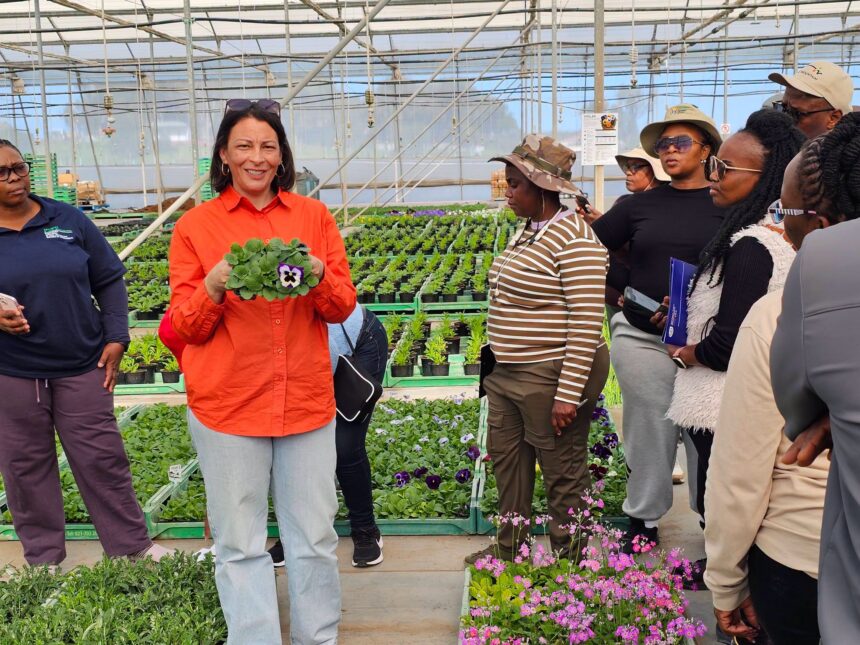
Participants in the 2027/28 Extension and Advisory Services Strategic Planning Session took their discussions beyond the meeting room yesterday and into the field, visiting agricultural projects in the Western Cape to see how support programmes translate into practical results. The field visits created an opportunity for stakeholders to connect strategic planning with the everyday realities of agricultural enterprises. Among the projects visited was Tri Toad (Pty) Ltd, a 100% black-owned nursery in the Cape Metropole owned by Ms Sheena Paulus. The nursery has established a strong presence in the horticultural sector, producing vegetable and herb seedlings alongside other horticultural products. The visit demonstrated how targeted government support, innovation and effective extension services can help agricultural enterprises strengthen their operations, expand their opportunities and contribute to the wider agricultural economy.
Tri Toad (Pty) Ltd provides an example of the important role that nurseries play within the agricultural value chain. The business produces vegetable and herb seedlings that can provide growers with planting material needed to establish and maintain productive crops. The quality and availability of seedlings can influence crop establishment, production outcomes and the ability of farmers to respond to market demand. A functioning nursery sector therefore supports more than individual businesses because it also contributes to the productivity of other producers who depend on reliable planting material. By visiting Tri Toad, participants were able to see how a specialised horticultural enterprise can support agricultural activity beyond its own operations.
The nursery is supported through the Comprehensive Agricultural Support Programme, commonly known as CASP, which provides assistance aimed at strengthening agricultural enterprises and improving their ability to participate in the sector. Support programmes such as CASP can play an important role when agricultural businesses require resources to improve their production capacity and operations. However, financial or material assistance alone does not guarantee long-term success, particularly in an agricultural environment that requires technical knowledge, planning and the ability to respond to changing conditions. This makes effective extension and advisory services an important part of agricultural support. The experience of Tri Toad demonstrates how targeted assistance can have greater value when it works alongside practical knowledge, innovation and ongoing guidance.
The field visit also highlighted the importance of taking strategic planning into real agricultural environments. Meetings and planning sessions can identify priorities, establish objectives and develop approaches for improving service delivery, but field visits provide a different perspective. They allow participants to observe how agricultural enterprises operate, identify practical challenges and understand how support affects businesses at ground level. This direct exposure can help decision-makers consider whether existing programmes are addressing the needs of agricultural enterprises effectively. It can also provide lessons that can be used when developing future strategies for extension and advisory services.
For Tri Toad, the combination of ownership, production and agricultural support provides an example of the opportunities that can emerge when black-owned enterprises receive appropriate assistance. The nursery’s performance in the horticultural sector demonstrates the potential for agricultural businesses to build sustainable operations while contributing to broader economic activity. Black ownership remains an important consideration in efforts to broaden participation in agriculture and create opportunities for historically underrepresented entrepreneurs. Supporting viable businesses can help strengthen participation across different parts of the agricultural value chain. It can also create opportunities for skills development, employment, market participation and further investment as enterprises grow.
Innovation is another important element highlighted by the visit. Horticultural businesses operate in an environment where producers need to maintain quality, manage resources efficiently and respond to changing market requirements. Seedling production requires attention to production practices, timing, quality and the needs of growers who depend on the nursery’s products. Extension services can help agricultural enterprises access information and technical guidance that supports better decision-making. When innovation is combined with practical support and market awareness, businesses can improve their ability to adapt and identify new opportunities.
The visit to Tri Toad also reinforced the connection between agricultural enterprises and the wider food system. Vegetable and herb production contributes to food availability, while the businesses that supply inputs such as seedlings form an important part of that production process. Strengthening these supporting businesses can therefore have wider benefits for farmers, markets and consumers. A successful nursery can help producers access planting material while also building demand for related agricultural services and products. This shows why agricultural development strategies need to consider the full value chain rather than focusing only on primary production.
Effective extension and advisory services can play a central role in helping enterprises move from receiving support to achieving sustainable growth. Extension practitioners can provide technical information, help businesses understand production challenges and connect producers with relevant opportunities. They can also help identify areas where additional intervention may be required before problems become more serious. For government and agricultural stakeholders, regular engagement with enterprises can provide useful feedback about what is working and where programmes need improvement. The Tri Toad visit provided a practical example of why these relationships matter when the goal is to turn agricultural strategies into measurable outcomes.
The 2027/28 Extension and Advisory Services Strategic Planning Session therefore gained an important practical dimension through the Western Cape project visits. Participants were able to see how agricultural support operates outside the planning environment and how different forms of assistance can influence the development of an enterprise. The experience at Tri Toad showed that agricultural growth depends on more than resources alone because businesses also need knowledge, innovation, market opportunities and effective advisory support. These factors can work together to strengthen enterprises and improve their ability to contribute to the agricultural economy. Lessons from the field can help ensure that future extension strategies remain focused on the practical needs of farmers and agricultural businesses.
The visit to Tri Toad ultimately illustrated the connection between policy, support and real economic activity. A 100% black-owned nursery in the Cape Metropole is producing vegetable and herb seedlings while participating in the wider horticultural value chain, demonstrating what targeted support can help make possible. Its progress provides useful lessons for stakeholders responsible for planning and delivering agricultural extension and advisory services. The experience also reinforces the value of visiting projects directly to understand their achievements, challenges and future needs. From plans to practice, from seedlings to opportunity and from support to growth, the Western Cape field visit showed how effective agricultural support can help turn strategic priorities into practical results.
Join 'Farmers Mag' WhatsApp Channel
Get the latest Farming news and tips delivered straight to your WhatsApp
CLICK HERE TO JOIN




