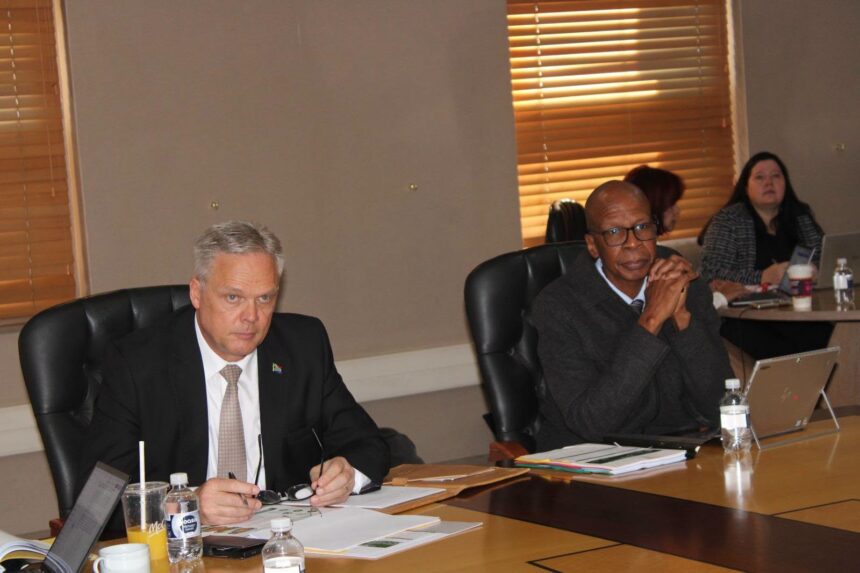
South Africa’s agricultural sector continues to play a critical role in supporting food security, economic growth, job creation and rural development. To ensure the industry remains competitive and prepared for future challenges, strong cooperation between government and its agricultural institutions is essential. As part of his ongoing engagements with key stakeholders, Minister Willie Aucamp is meeting with the Department of Agriculture’s public entities to strengthen collaboration and align strategic priorities that will shape the future of South African agriculture. The discussions reflect a shared commitment to building a modern, resilient and sustainable agricultural sector that benefits farmers, agribusinesses and consumers across the country. By bringing together leading agricultural organizations, the engagements aim to improve coordination and ensure that resources and expertise are directed toward achieving common national objectives.
The engagement includes several of South Africa’s most important agricultural public entities, each with a unique role in supporting the country’s farming industry. These include the National Agricultural Marketing Council, the Perishable Products Export Control Board, the Agricultural Research Council, Onderstepoort Biological Products SOC Ltd and the South African Veterinary Council. Together, these organizations provide essential services that support agricultural production, market development, research, animal health and regulatory oversight. Their work influences every stage of the agricultural value chain, from scientific research and farm production to product exports and food safety. Strengthening collaboration among these institutions creates opportunities to improve service delivery and better address the needs of farmers and the broader agricultural sector.
One of the key priorities discussed during the engagement is expanding market access for South African agricultural products. Access to domestic and international markets is essential for the long-term success of farmers, particularly as global demand for high-quality agricultural products continues to grow. The National Agricultural Marketing Council plays an important role in providing market intelligence, policy advice and support that helps improve the competitiveness of the agricultural industry. Meanwhile, the Perishable Products Export Control Board contributes by ensuring that exported agricultural products meet strict quality and safety standards required by international markets. Together, these institutions help South African farmers access new trading opportunities while strengthening the country’s reputation as a reliable supplier of quality agricultural products.
Agricultural research and innovation also form a central part of the discussions because continuous scientific advancement is essential for improving productivity and sustainability. The Agricultural Research Council conducts research that helps farmers address challenges such as climate change, pests, diseases, declining soil health and changing market demands. Through the development of improved crop varieties, livestock breeding programs and modern production techniques, research institutions provide practical solutions that strengthen agricultural performance. Innovation also supports more efficient use of natural resources while helping producers reduce production costs and improve yields. Continued investment in research ensures that South African agriculture remains competitive in an increasingly complex global environment.
Animal health remains another major priority for the country’s agricultural sector, particularly as livestock diseases continue to pose risks to production and international trade. Healthy livestock populations contribute directly to food security, farmer profitability and export opportunities. Onderstepoort Biological Products SOC Ltd plays an important role in developing and supplying vaccines that protect animals against various diseases affecting livestock across South Africa. Disease prevention programs supported by vaccination and veterinary services help reduce production losses while protecting the country’s valuable livestock industry. Strong animal health systems also build confidence among international trading partners and support the continued growth of livestock exports.
The South African Veterinary Council contributes to the agricultural sector by ensuring high professional standards within veterinary and animal health services. Effective regulation supports ethical practice, professional development and quality veterinary care that benefits farmers and livestock owners. Well-trained veterinary professionals are essential for disease surveillance, emergency response, food safety and animal welfare throughout the country. Their work extends beyond treating sick animals to supporting preventative healthcare, biosecurity and disease control programs. Maintaining high professional standards strengthens confidence in South Africa’s animal health system and contributes to the long-term sustainability of livestock production.
Collaboration among these public entities allows government to develop more coordinated responses to the challenges facing agriculture today. Climate variability, emerging animal diseases, rising production costs and increasing global competition require integrated solutions that combine research, regulation, market development and technical support. By working together, institutions can share expertise, avoid duplication of effort and improve the effectiveness of agricultural programs. This collaborative approach enables government to respond more efficiently to the needs of commercial farmers, smallholder producers and emerging agricultural enterprises. Strong partnerships also create opportunities for innovation that support long-term growth across the agricultural sector.
The discussions also recognize the importance of creating an environment where farmers can adopt new technologies and improve production efficiency. Advances in precision agriculture, biotechnology, digital farming tools and improved animal health management continue to transform agricultural production around the world. Public institutions play an important role in ensuring that these innovations become accessible to South African farmers through research, training and extension support. Helping producers adopt modern technologies strengthens productivity while improving resilience against climate and market challenges. Investment in innovation supports sustainable agricultural development while increasing the competitiveness of South African farming.
Regulatory oversight remains essential for maintaining food safety, protecting consumers and supporting international trade. Strong regulatory systems ensure that agricultural products meet national and global quality standards while protecting the integrity of the food supply chain. Public entities work together to develop policies, monitor compliance and maintain confidence in South African agricultural products both locally and abroad. Effective regulation also supports environmental sustainability, responsible farming practices and animal welfare across the sector. By strengthening regulatory frameworks, government creates a more stable environment for agricultural investment and long-term industry growth.
The engagement between Minister Willie Aucamp and the Department of Agriculture’s public entities demonstrates the importance of coordinated leadership in shaping the future of South African agriculture. Bringing together organizations responsible for market development, research, innovation, animal health and regulatory oversight creates valuable opportunities to strengthen collaboration and align strategic priorities. Their collective efforts will help improve productivity, expand market access, protect animal health and support sustainable agricultural growth. As the agricultural sector continues to adapt to changing economic, environmental and global challenges, strong partnerships between government institutions will remain essential for delivering practical solutions that benefit farmers and rural communities. Through continued collaboration and shared commitment, South Africa is better positioned to build a resilient, competitive and future-focused agricultural sector that supports economic development and national food security.
Join 'Farmers Mag' WhatsApp Channel
Get the latest Farming news and tips delivered straight to your WhatsApp
CLICK HERE TO JOIN