The Limpopo Department of Agriculture and Rural Development (LDARD), in partnership with the Department of Employment and Labour and the Department of Agriculture, Land Reform and Rural Development, recently hosted a Compensation for Occupational Injuries and Diseases Act (COIDA) awareness workshop at Kalahari Waterfront in the Vhembe District. The event brought together farm employers, employees, government officials and other stakeholders with the shared goal of improving understanding of labour legislation and promoting safer working conditions across the agricultural sector. The workshop highlighted the critical role that compliance with COIDA plays in protecting workers who may suffer occupational injuries or diseases while carrying out their duties. By creating a platform for education and engagement, the initiative reinforced the government’s commitment to ensuring that agricultural workplaces remain safe, fair and compliant with South African labour laws. The workshop also demonstrated the importance of collaboration between different government departments in addressing challenges facing farming communities and agricultural businesses.
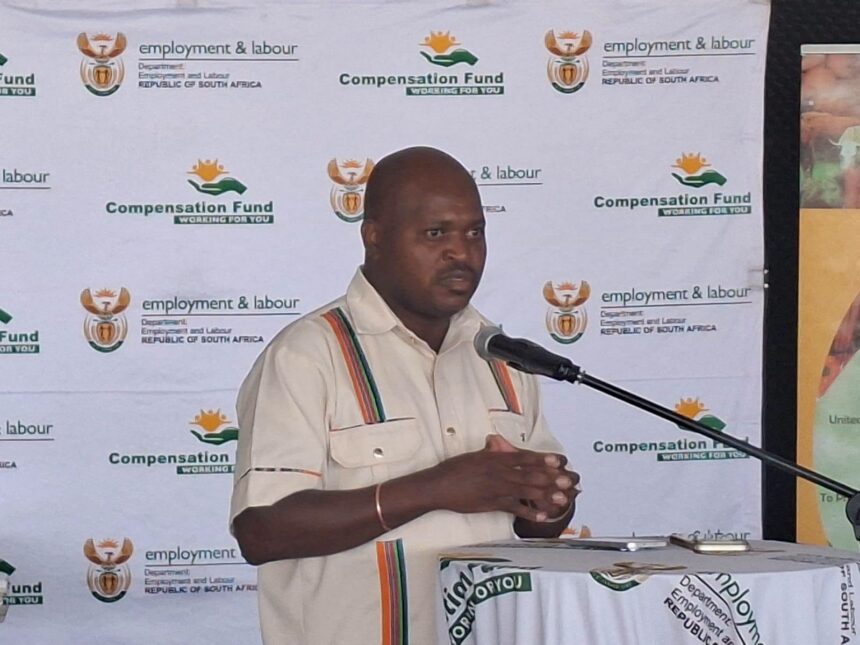
A major focus of the workshop was the importance of employer compliance with the Compensation for Occupational Injuries and Diseases Act. Speaking during the event, Limpopo Chief Director for Provincial Operations in the Department of Employment and Labour, Mr Vuledzani Netshituka, emphasized that employer participation is essential to maintaining the long-term sustainability of the Compensation Fund. He explained that employers who register and contribute to the fund help ensure that employees receive financial support and medical assistance when they experience work-related injuries or occupational diseases. Compliance with labour legislation also strengthens workplace accountability while reducing the risks associated with unsafe working environments. His message reinforced the idea that protecting workers is not only a legal responsibility but also an investment in the future of South Africa’s agricultural industry.
The Compensation for Occupational Injuries and Diseases Act provides important protection for workers across various industries, including agriculture, where employees often perform physically demanding and potentially hazardous tasks. Farm workers are regularly exposed to risks such as heavy machinery, chemicals, livestock, extreme weather conditions and repetitive physical labour. Through COIDA, eligible employees who suffer work-related injuries or contract occupational diseases can receive compensation, medical treatment and other forms of assistance without having to prove employer negligence. The legislation also provides financial protection for employers by establishing a structured compensation system that manages workplace injury claims. Increasing awareness of these protections helps both employers and employees better understand their legal rights and responsibilities while encouraging proactive compliance.
The workshop was specifically designed to strengthen compliance among farm employers while educating employees about the protections available to them under the law. Participants received practical information on registration requirements, employer obligations, reporting procedures and the importance of maintaining accurate employment records. Officials explained how proper compliance contributes to healthier working environments by encouraging employers to adopt stronger occupational health and safety measures. Open discussions allowed participants to ask questions about the legislation and gain clarity on common compliance challenges affecting agricultural businesses. These interactive sessions helped create a better understanding of how COIDA operates in practice and how it benefits both workers and employers.
In addition to labour law compliance, the workshop highlighted the broader goal of promoting safer and more secure workplaces throughout Limpopo’s agricultural sector. Occupational safety remains a priority as farming activities often involve hazardous equipment, dangerous chemicals and demanding physical conditions that increase the likelihood of workplace accidents. Government officials encouraged employers to regularly assess workplace risks, provide appropriate protective equipment and ensure that employees receive adequate safety training. Preventative measures not only reduce injuries but also improve productivity by creating healthier working environments where employees can perform their duties with greater confidence. A strong culture of workplace safety ultimately benefits businesses, workers and the wider agricultural economy.
Another important presentation during the workshop was delivered by Acting Deputy Director for LandCare and Land Use, Mr Aluwani Ratshitanga. He encouraged farmers to comply fully with COIDA requirements to improve their eligibility for opportunities linked to the Expanded Public Works Programme (EPWP). Compliance with labour legislation strengthens the credibility of agricultural businesses when participating in government-supported development programmes. Farmers who meet legal requirements are often better positioned to access support initiatives that promote employment creation, rural development and sustainable farming practices. This message demonstrated how regulatory compliance can create opportunities that extend beyond legal obligations and contribute to long-term agricultural growth.
The workshop also addressed important issues relating to land restitution and land redistribution programmes. Participants received valuable information about ongoing government efforts to restore land rights to communities that were previously dispossessed while supporting equitable access to agricultural land. Discussions emphasized the importance of ensuring that land reform initiatives contribute to sustainable rural development while protecting the rights of vulnerable individuals living and working on farms. Officials explained available programmes and encouraged community members to engage with the relevant government departments for further assistance. These conversations highlighted the connection between land reform, agricultural development and social justice within rural communities.
Protecting the rights of farm dwellers and farm workers formed another significant part of the discussions. Government representatives emphasized that agricultural development must be accompanied by respect for labour rights, fair treatment and compliance with legislation designed to protect vulnerable workers. Participants explored ways to strengthen communication between employers and employees while promoting peaceful working relationships built on mutual understanding and legal compliance. Raising awareness of worker rights also helps reduce exploitation and encourages employers to adopt fair employment practices that comply with national legislation. Such efforts contribute to more stable farming operations and stronger rural communities.
Collaboration between multiple government departments played a key role in the success of the workshop. By combining expertise from the Department of Agriculture and Rural Development, the Department of Employment and Labour and the Department of Agriculture, Land Reform and Rural Development, participants received comprehensive information covering labour legislation, workplace safety, land reform and agricultural development. This integrated approach allows government institutions to address several challenges facing farming communities through coordinated support and education. Collaborative stakeholder engagement also creates opportunities for stronger partnerships between government, employers, employees and community organizations. These partnerships are essential for building a resilient agricultural sector capable of supporting economic growth and rural livelihoods.
The COIDA awareness workshop hosted in the Vhembe District reflects LDARD’s ongoing commitment to empowering farming communities through education, compliance and sustainable development initiatives. By promoting employer adherence to labour legislation, improving awareness of worker rights and encouraging safer workplaces, the department continues to strengthen South Africa’s agricultural sector from the ground up. The inclusion of discussions on land restitution, land redistribution and Expanded Public Works Programme opportunities further demonstrated the government’s holistic approach to rural development. As more farmers and agricultural employers embrace compliance with COIDA and other labour laws, workers will benefit from stronger protections while businesses gain greater stability and access to development opportunities. Through continued collaboration and awareness initiatives, LDARD is helping build a safer, more inclusive and more sustainable future for agriculture in Limpopo and across South Africa.
Join 'Farmers Mag' WhatsApp Channel
Get the latest Farming news and tips delivered straight to your WhatsApp
CLICK HERE TO JOIN